2026
The World’s 100 Best Archaeological Sites & Ruins
Excavated and ruined ancient cities, temples, tombs, theatres and stone circles.
The list
-
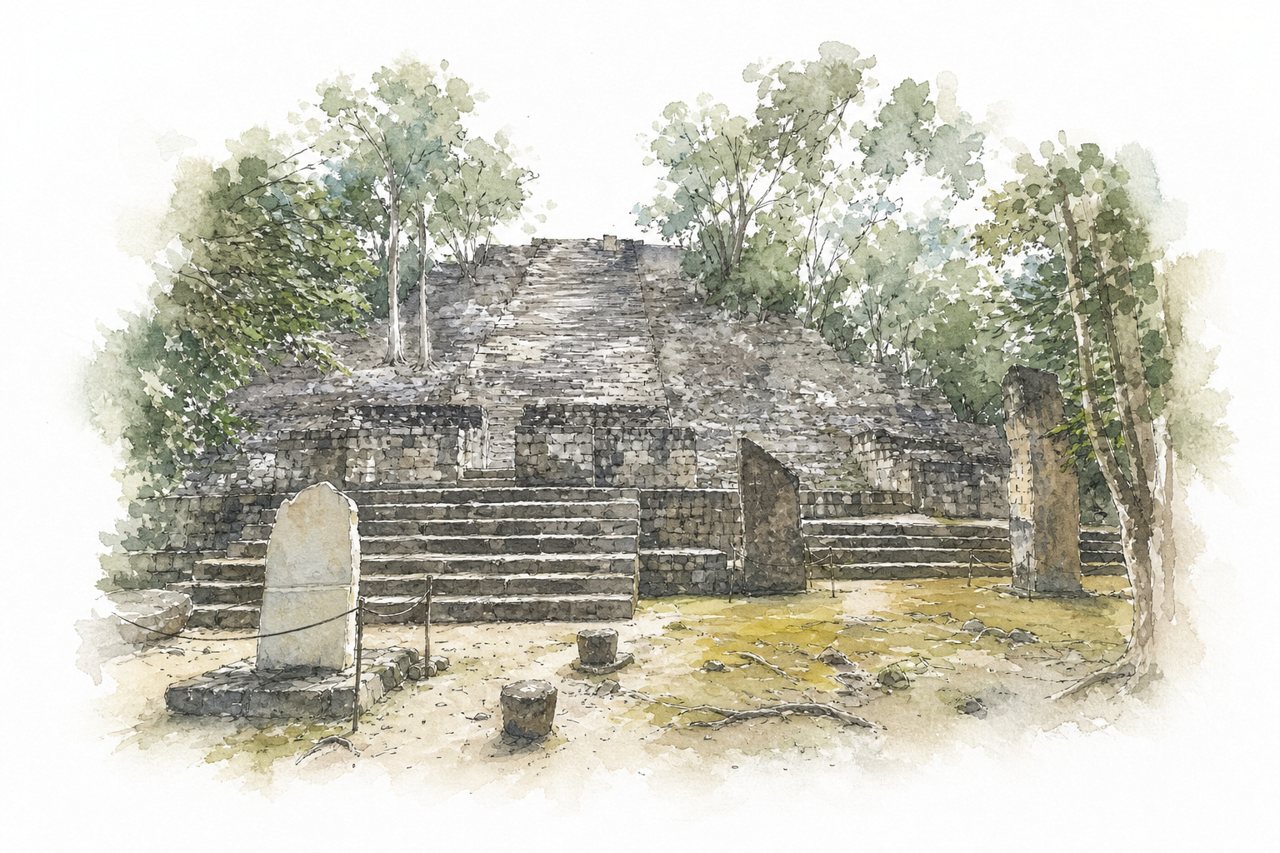
A Maya city ruin deep in the Calakmul Biosphere Reserve in Campeche, Mexico, reached by a long jungle road. Visitors walk forest paths between large stone pyramids and climb several of them for views over the canopy.
Highlights
- Structure II pyramid
- Climbable pyramids viewpoints
- Jungle canopy views
Good to know
- Entry fees paid at biosphere checkpoint and site
- Bring at least two litres of water
- Drive limited to 30 km/h on approach road
-
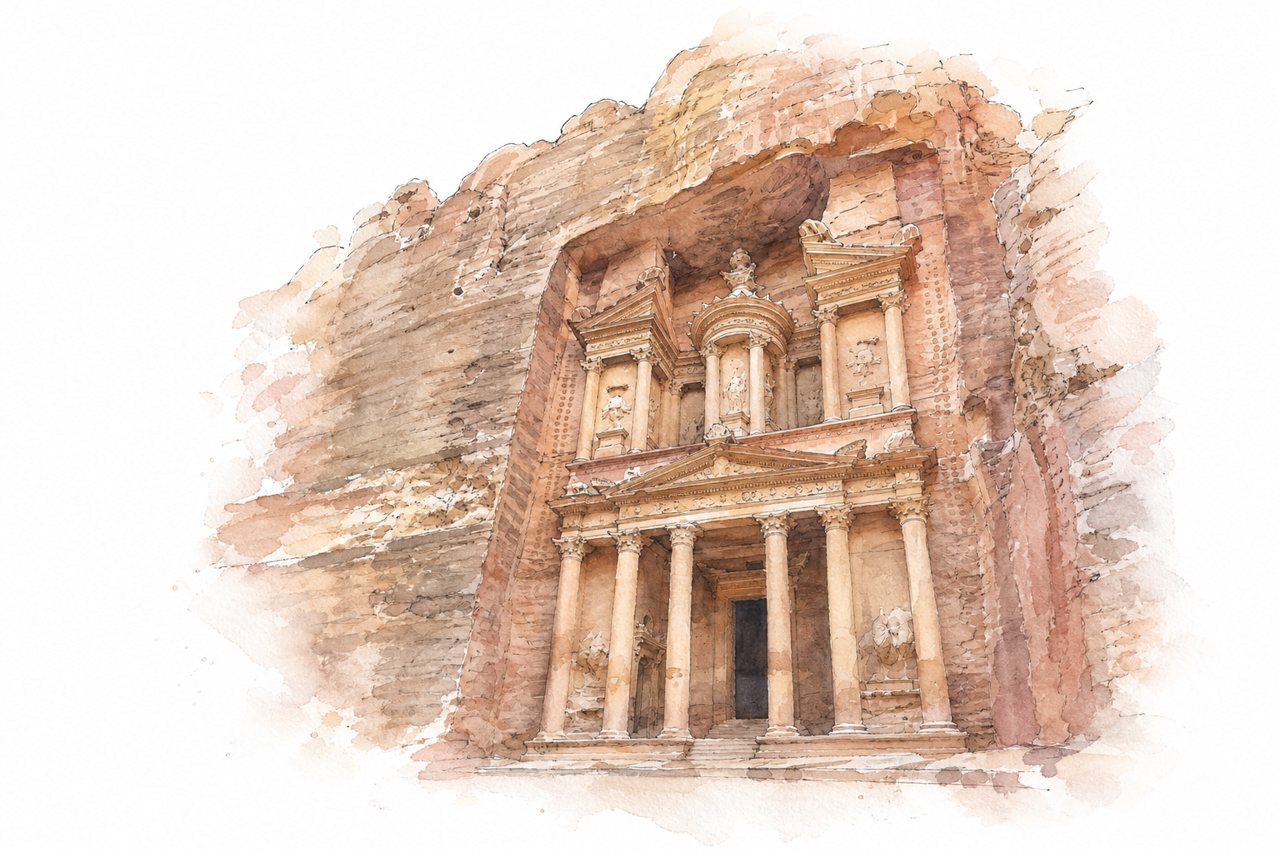
A Nabataean rock-carved city in southwestern Jordan, its tombs and temples cut into pink sandstone cliffs. Visitors walk the Siq gorge to reach the Treasury, then continue to the Monastery and other monuments.
Highlights
- The Treasury
- The Siq gorge
- The Monastery
Good to know
- Visitors need closed-toed walking shoes
- Arrive early to avoid crowds and heat
- Monastery climb has about 800 to 1,000 steps
-
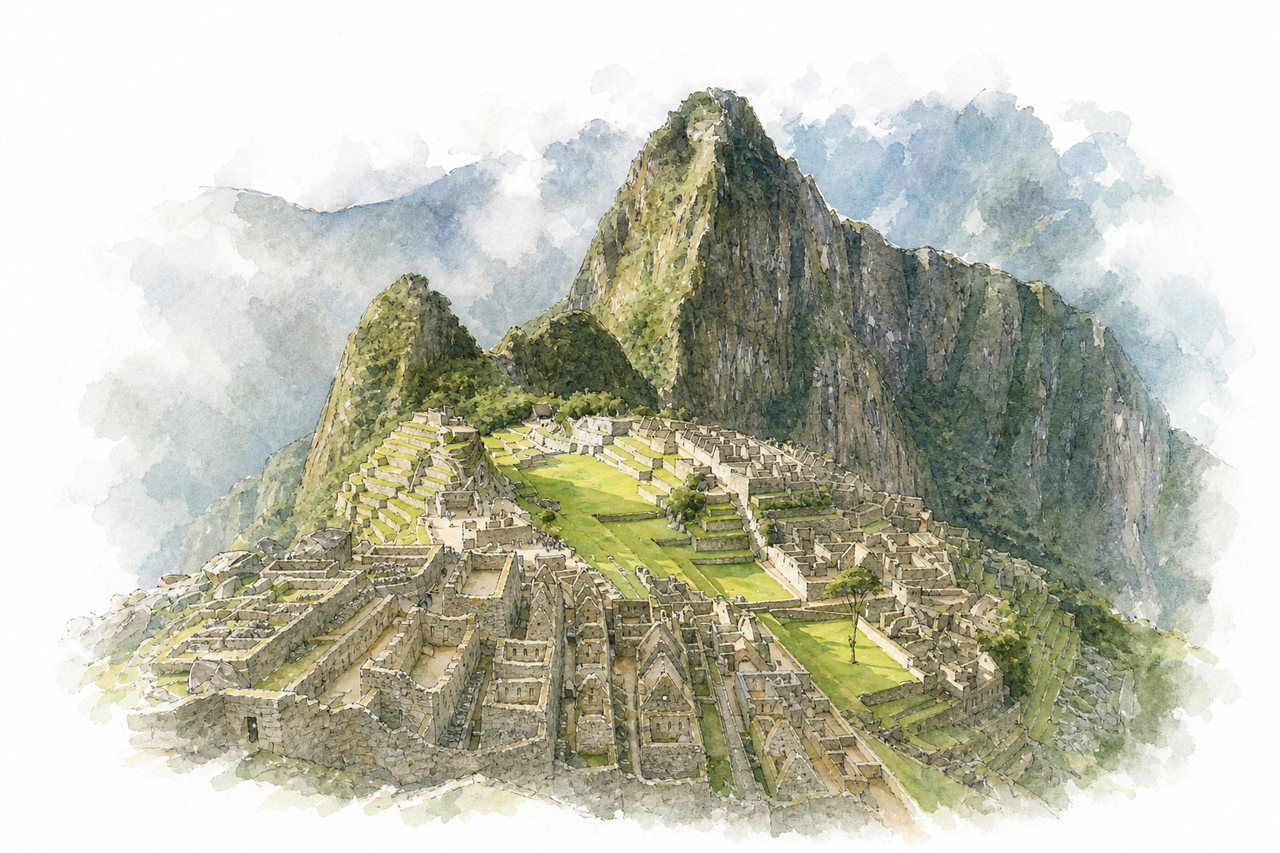
An Inca citadel in the Andes above the Urubamba River valley, in the Cusco region of Peru. Visitors walk stone terraces, streets and houses set among cloud-covered mountain peaks.
Highlights
- Inca stone walls
- Temple of the Sun
- Huayna Picchu summit
Good to know
- Tickets must be booked months in advance
- Bus from Aguas Calientes, about 15 minutes
- Circuits must be done one at a time
-
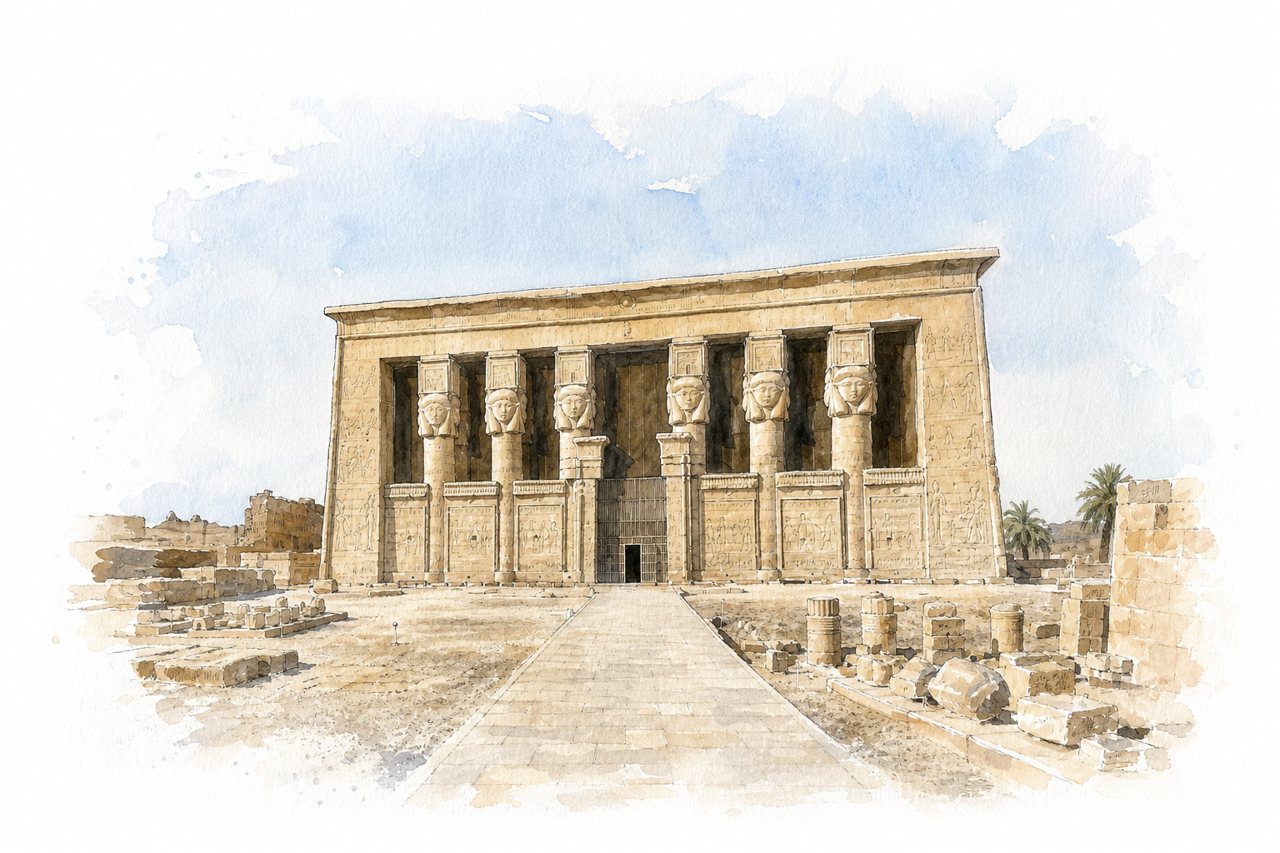
The Temple of Hathor at Dendera lies in Qena Governorate, about 60 kilometres north of Luxor on the west bank of the Nile. Visitors walk through the hypostyle hall with Hathor-headed columns, painted ceilings and reliefs, then the crypts and rooftop.
Highlights
- Hathor-headed columns
- Painted astronomical ceilings
- Crypt light bulb reliefs
Good to know
- Tickets bought at the entrance, extra tickets for crypt and roof
- Bring both cash and a card
- Arrive early to avoid tour bus crowds
-
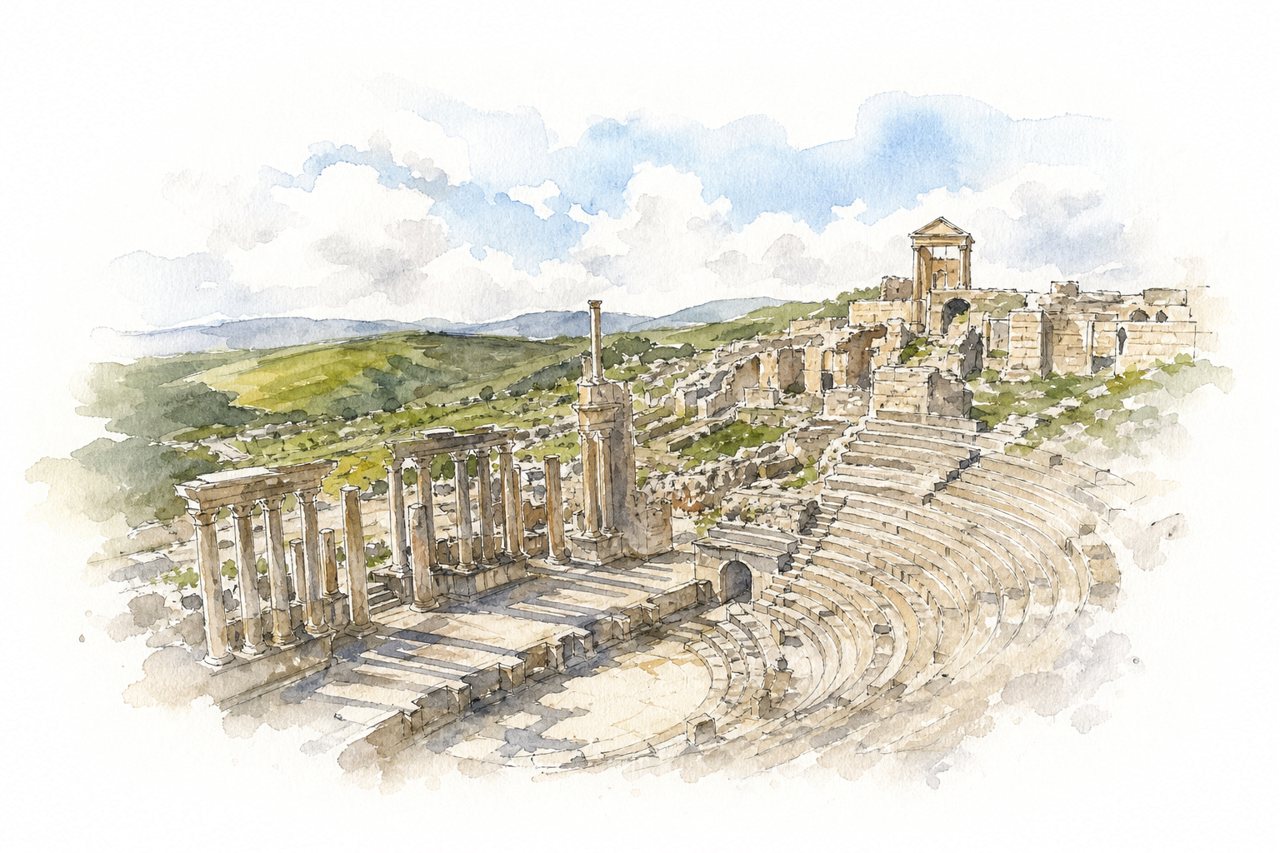
Set on a hill near Téboursouk in Tunisia, the ruins of a Roman city with Punic and Numidian features cover wide slopes. Visitors walk paved streets past the Capitol temple, the theatre, baths, houses and cisterns.
Highlights
- Capitol temple
- Roman theatre
- Libyco-Punic mausoleum
Good to know
- Entry about 8 TND for tourists
- Allow two to three hours
- Little shade, bring water and a hat
-
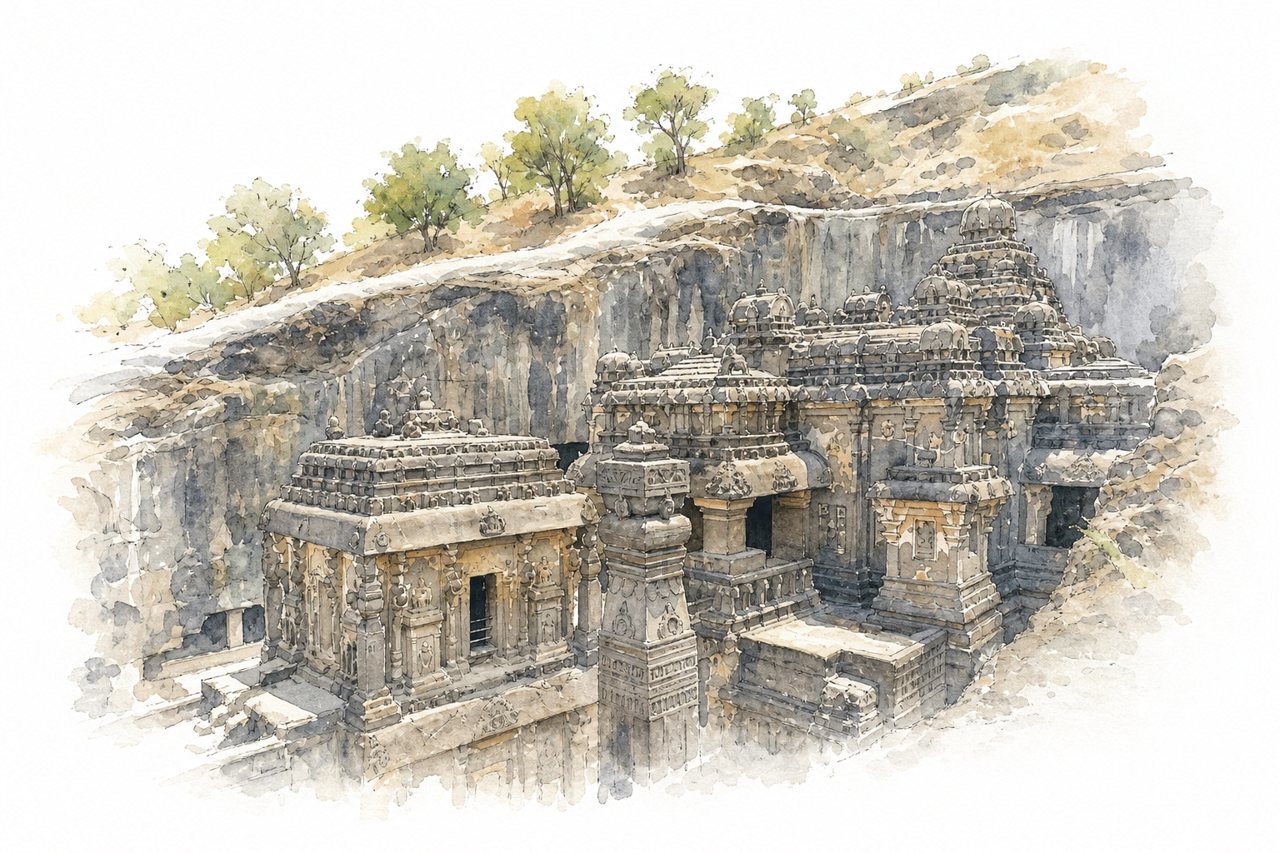
A cluster of 34 rock-cut caves in Maharashtra, India, carved into basalt cliffs. Visitors walk past Buddhist, Hindu and Jain caves, with the Kailasa Temple (Cave 16) at the centre.
Highlights
- Kailasa Temple (Cave 16)
- Buddhist caves 1 to 12
- Jain caves 30 to 34
Good to know
- Ticket costs ₹40, book online
- Caves 30 to 34 are far, use shuttle
- Wear hats, scorching sun, carry water
-
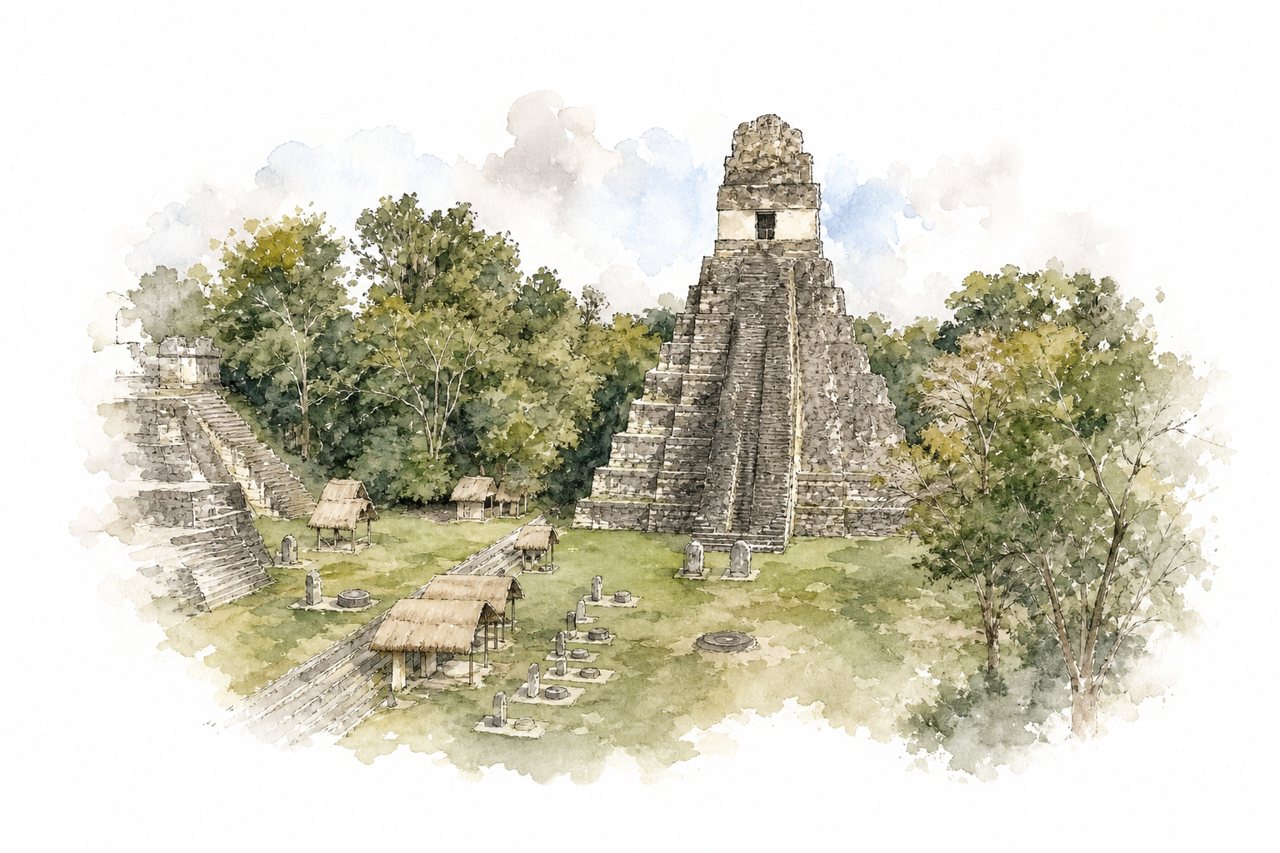
A Maya archaeological park in the Petén rainforest of northern Guatemala. Visitors walk forest paths between temples and pyramids rising above the jungle, with howler monkeys and other wildlife nearby.
Highlights
- Temple IV
- Great Plaza
- Temple I and Temple II
Good to know
- Tickets can be bought online in advance
- Entrance fee is 150 quetzales for foreigners
- Full day needed; sunrise and sunset tours need a guide
-
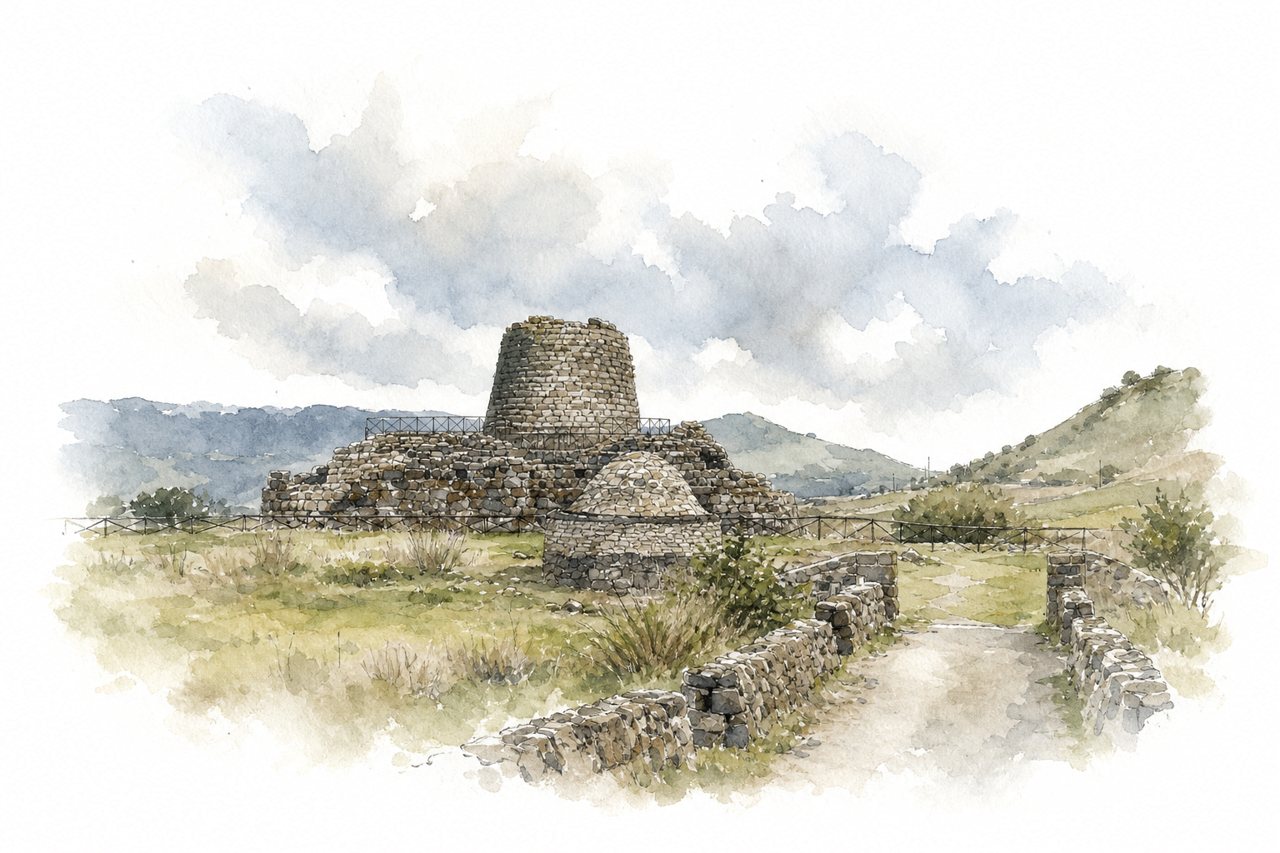
A Bronze Age stone tower near Torralba in northwestern Sardinia, built of basalt blocks. Visitors walk through its corridors, stairways and chambers and climb to the top for views over the plain.
Highlights
- Central keep tower
- Interior corridors and stairways
- Upper terraces panorama
Good to know
- Tickets €10, includes Torralba museum
- Guided tours included, Italian hourly, limited English
- Audio guide via QR code or app
-
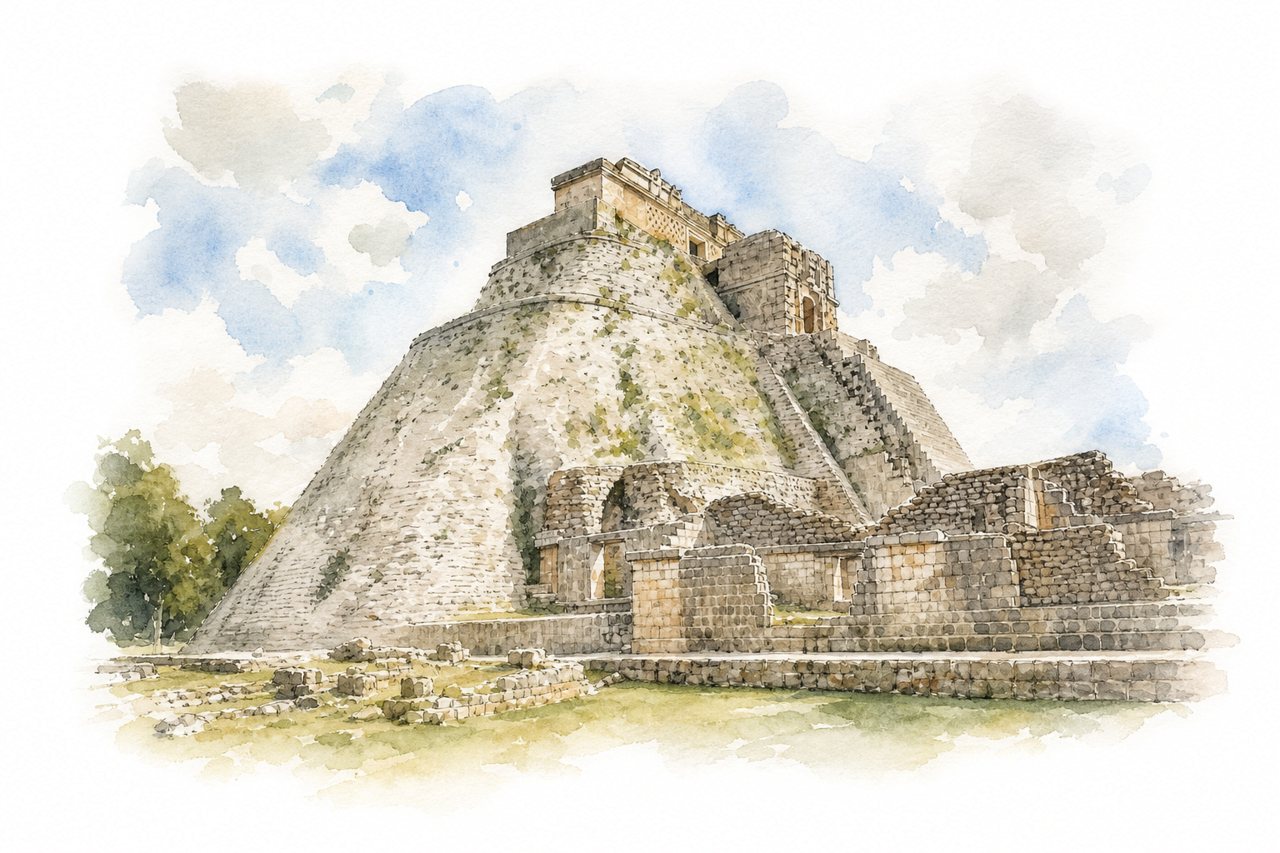
A Maya archaeological site in the Puuc region near Santa Elena, Yucatán, set in forest. Visitors walk among large restored structures and climb some of the ruins.
Highlights
- Pyramid of the Magician
- Nunnery Quadrangle
- Governor's Palace
Good to know
- Two separate tickets, state and federal, paid at different windows
- Allow two to three hours, bring water and a hat
- Arrive around 8 or 9 am to avoid heat and crowds
-
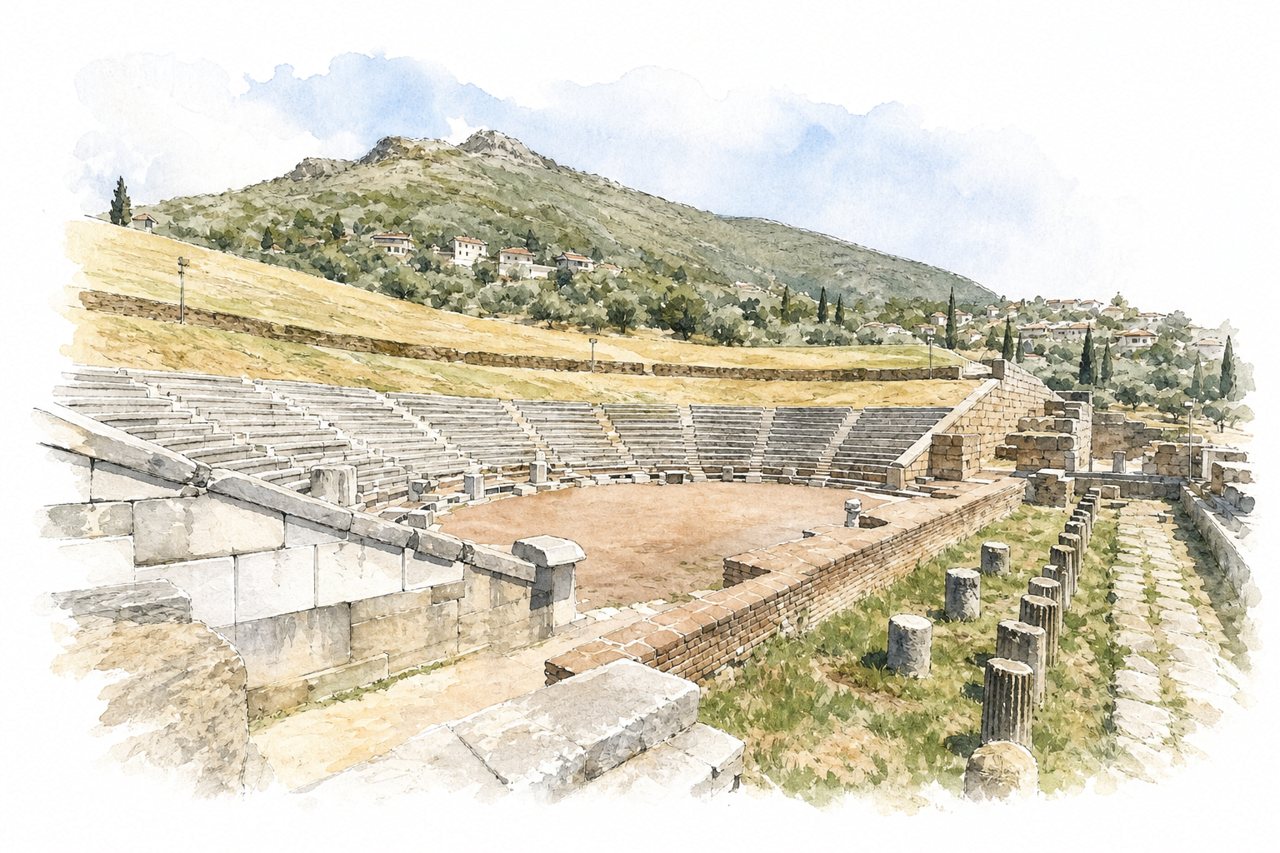
A large Hellenistic city ruin in the mountains of Messinia, southern Greek Peloponnese. Visitors walk among its city walls, gates, theatre, stadium, gymnasium and Asklepieion, with the stadium and small theatre well preserved.
Highlights
- Ancient Messene stadium
- Theatre and small theatre
- Arcadian Gate
Good to know
- Entry around €15 for the site
- Museum ticket costs extra
- Allow two to three hours
-
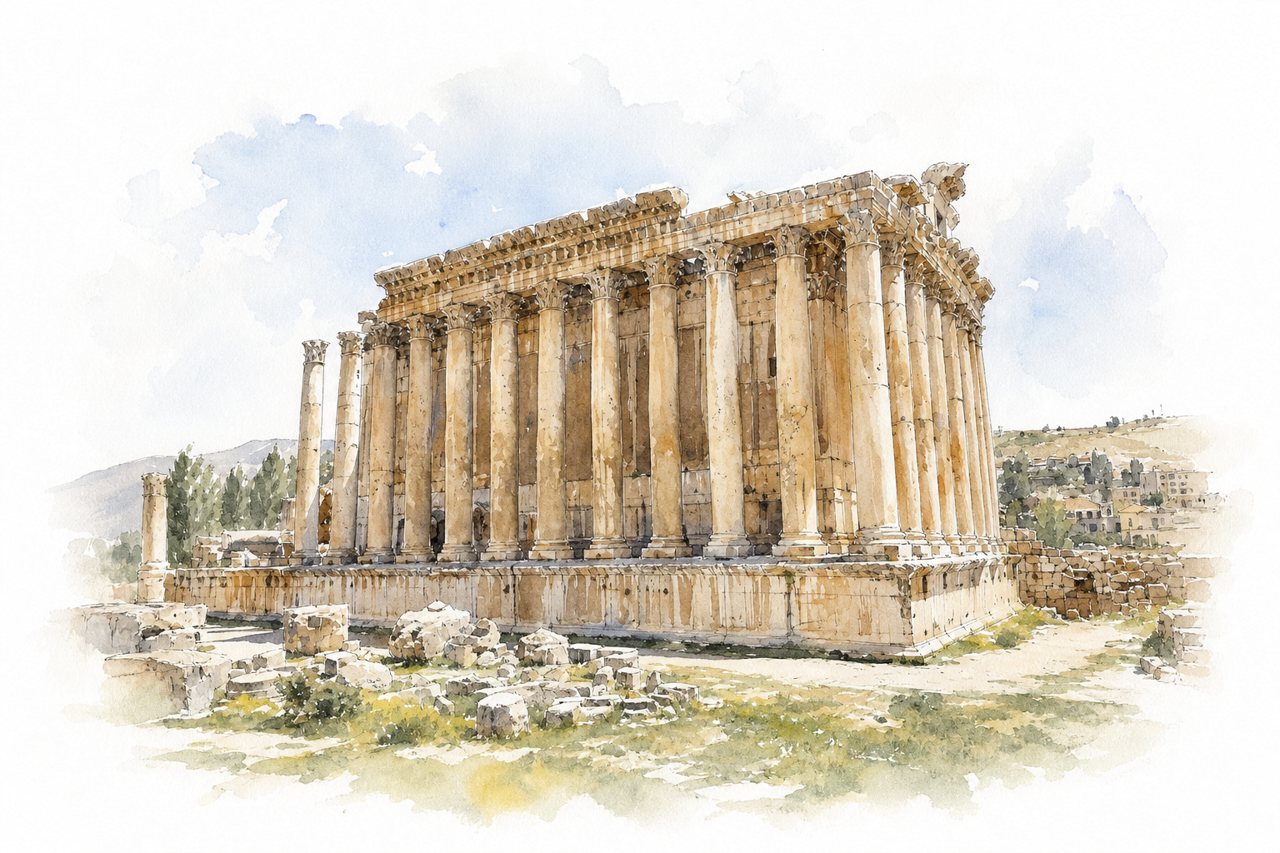
Roman-era temple complex in Lebanon's Beqaa Valley, known in antiquity as Heliopolis, City of the Sun. Visitors walk among columns and stone blocks of the Temple of Jupiter, the Temple of Bacchus and the Temple of Venus.
Highlights
- Temple of Jupiter
- Temple of Bacchus
- Temple of Venus
Good to know
- Entry fee differs by nationality, foreigners pay more
- Guided tours recommended, booked on site
- Summer heat is intense, bring hat and water
-
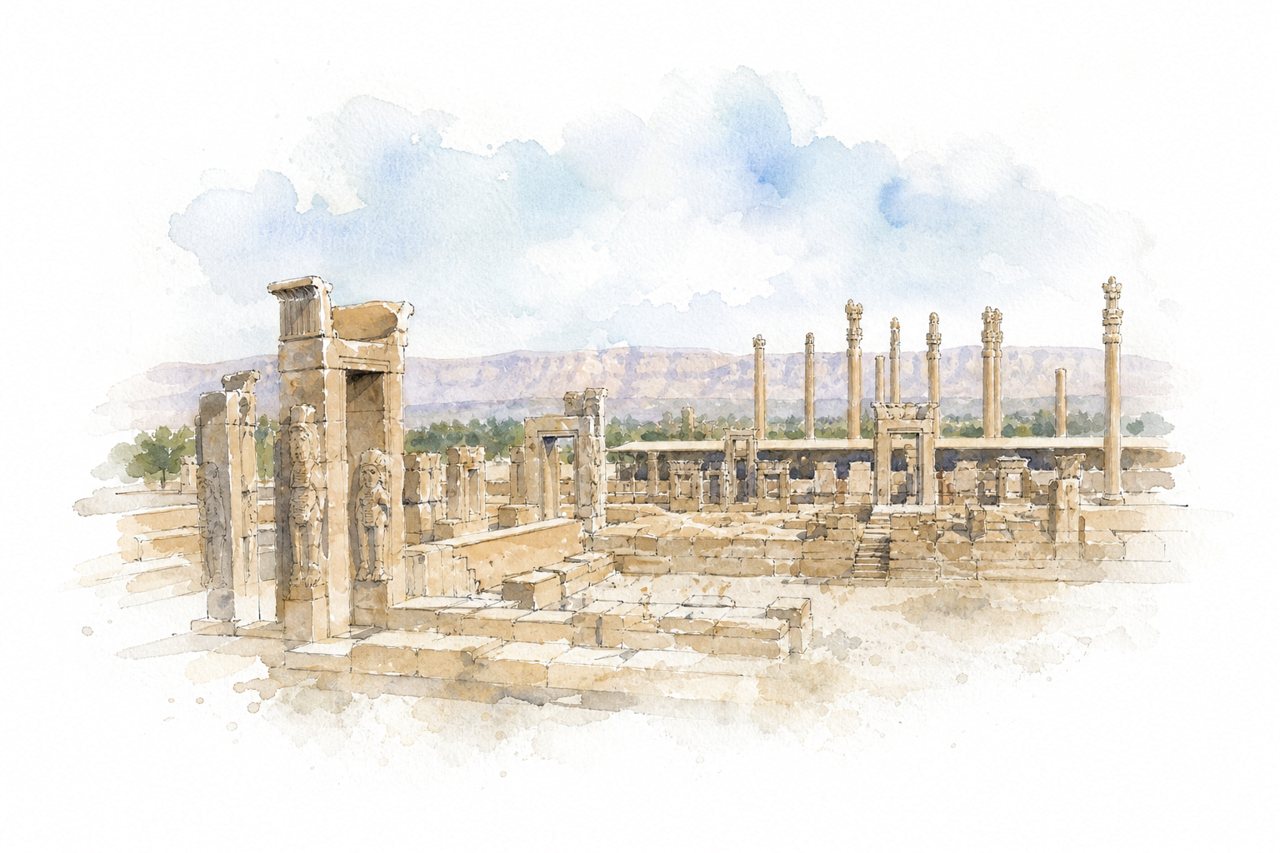
Persepolis, the ceremonial capital of the Achaemenid Persian Empire, lies on the Marvdasht Plain near Shiraz in Fars province, Iran. Visitors walk among stone palaces, tall columns, staircases and reliefs of delegations bringing tribute to the king.
Highlights
- Gate of All Nations
- Apadana Palace reliefs
- Hall of a Hundred Columns
Good to know
- Allow at least two to three hours
- Go in cooler months or early morning
- Guide or audio guide helps understanding
-
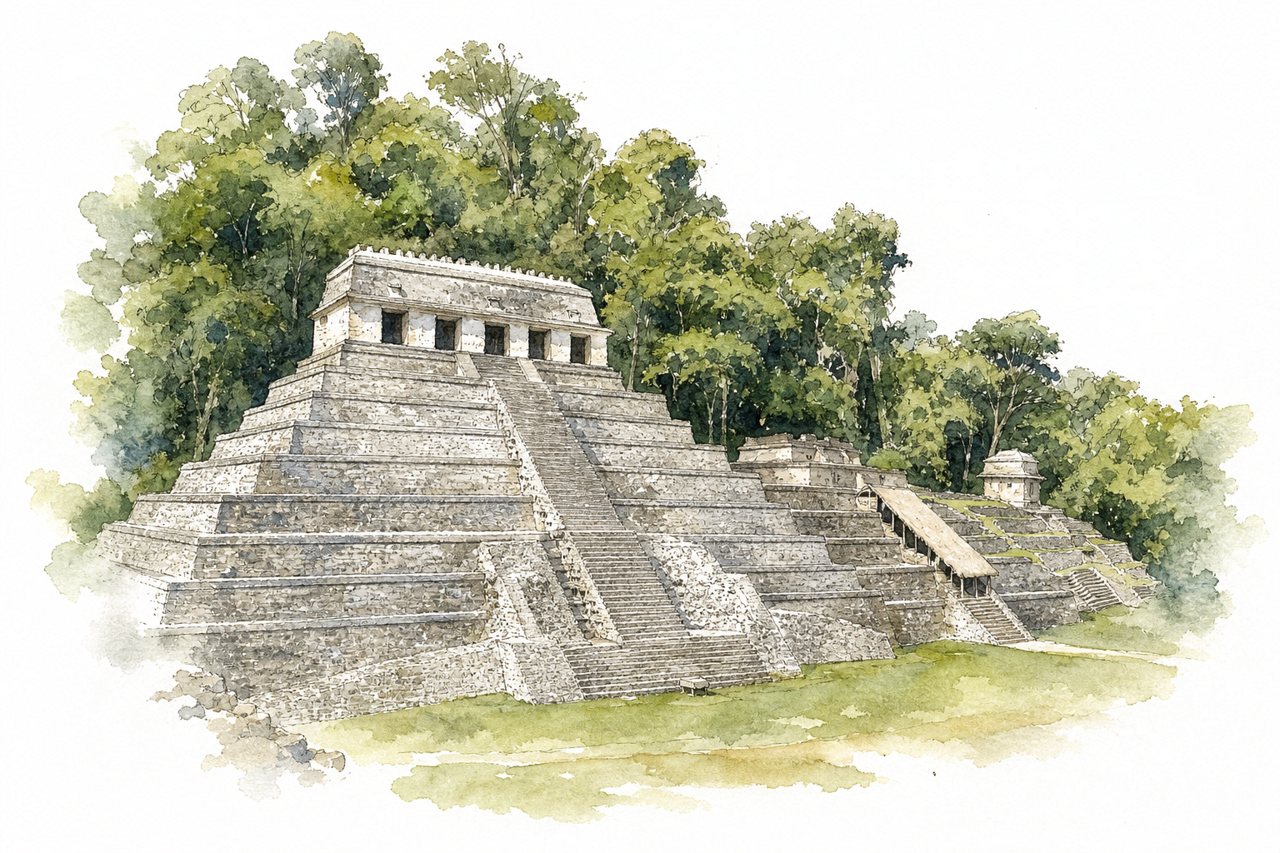
Mayan city in the jungle of Chiapas, Mexico, near the town of Palenque. Visitors walk among temples, palaces and pyramids, with howler monkeys calling from the forest.
Highlights
- Temple of the Inscriptions
- The Palace
- Plaza of the Sun
Good to know
- Cars must park about 4 km away
- Separate fees for national park and ruins
- Book a guide in advance, avoid entrance touts
-
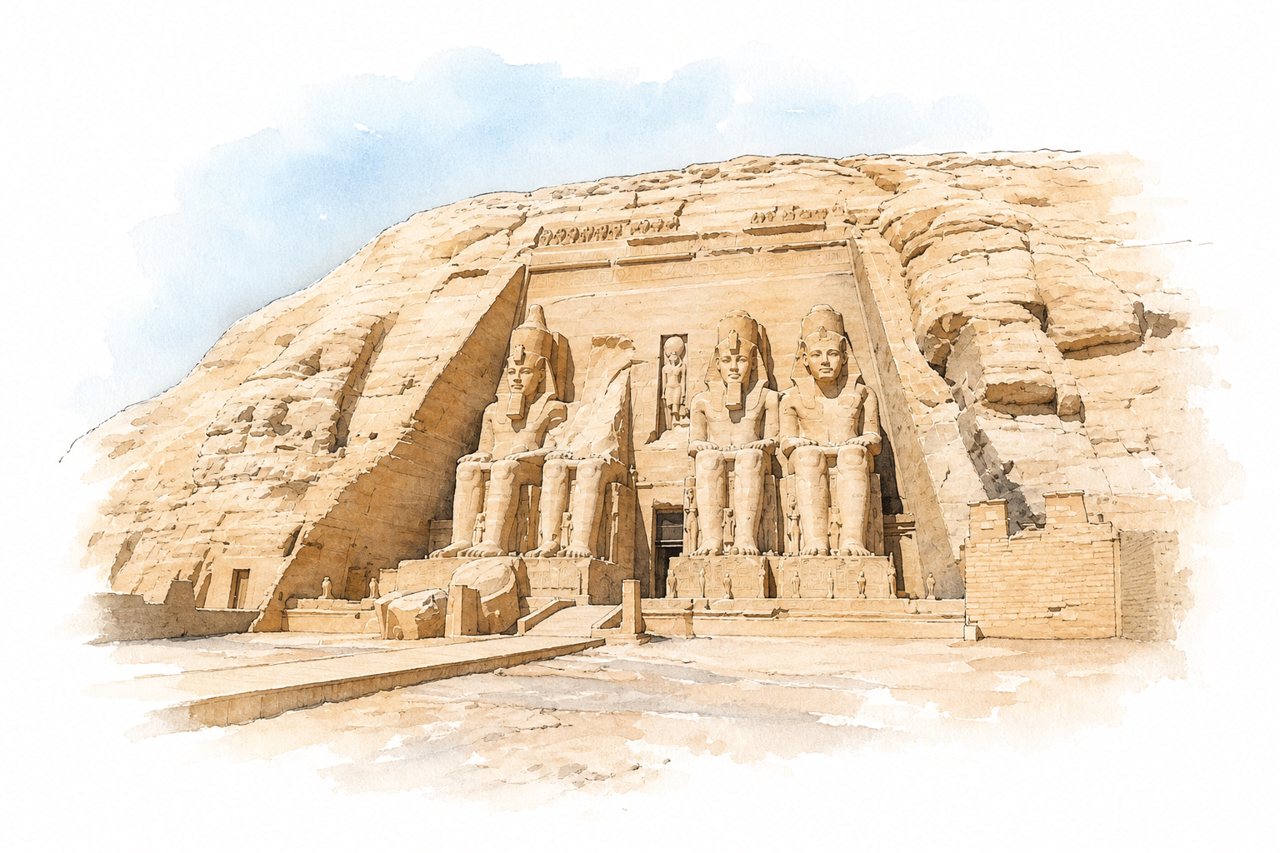
A pair of rock-cut temples in southern Egypt near the Sudan border, on the shore of Lake Nasser. Visitors walk to the façade with four colossal seated statues of Ramses II, then into the carved halls.
Highlights
- Four colossal statues of Ramses II
- Great Temple facade
- Small Temple for Nefertari
Good to know
- Tickets can be bought on-site, credit card only
- Opening hours 6 AM to 5 PM
- Allow one to two hours; 3.5 hours' drive from Aswan
-
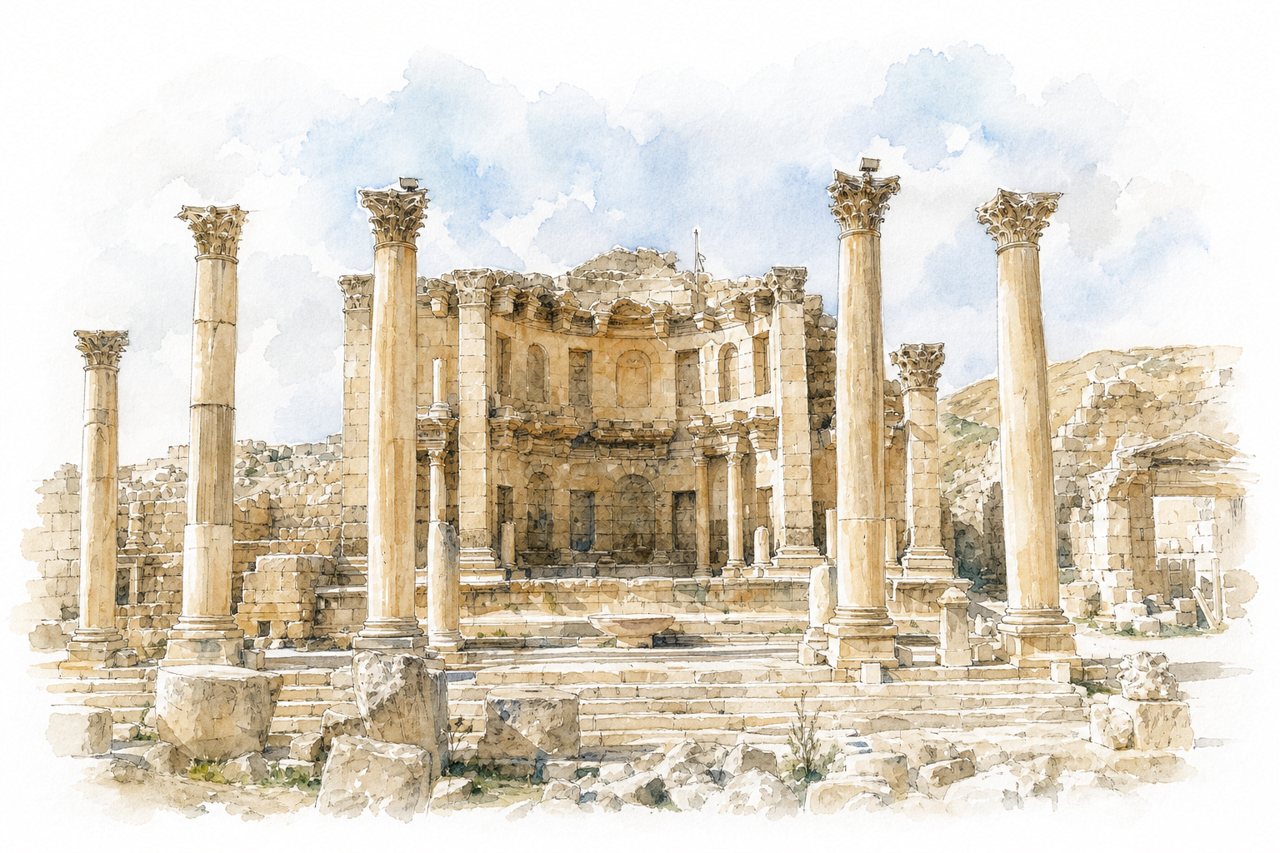
A Roman city ruin in northern Jordan, about 48 kilometres north of Amman, with origins in the Neolithic period. Visitors walk the Cardo Maximus past colonnades, squares and the Oval Plaza, and see the Hadrian's Arch, the Temple of Artemis and the South Theatre.
Highlights
- Arch of Hadrian
- South Theatre
- Cardo Maximus
Good to know
- Jordan Pass covers entry
- Two to three hours needed to walk the site
- Little shade and heavy heat, bring water
-
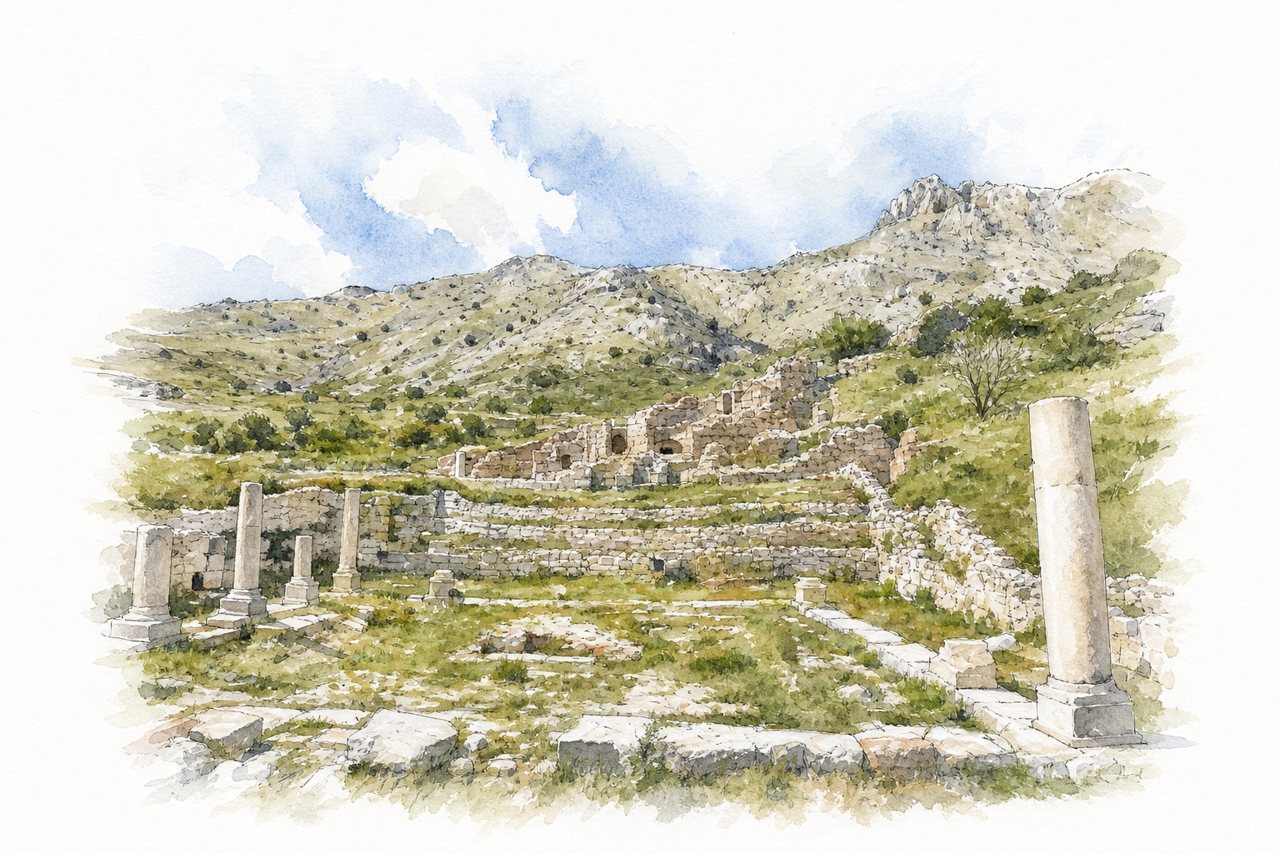
A large ancient city on the slopes of Akdağ in the Taurus Mountains near Ağlasun, Burdur, at 1450 to 1700 metres. Visitors walk among the theatre, baths, agora, and the Antonine Fountain, with mountain views.
Highlights
- Antonine Fountain
- Ancient theatre
- Upper agora
Good to know
- Museum Card is valid, tickets sold at entrance
- Allow 3 to 4 hours, uneven rocky paths
- Go early or late; summer heat, little shade
-
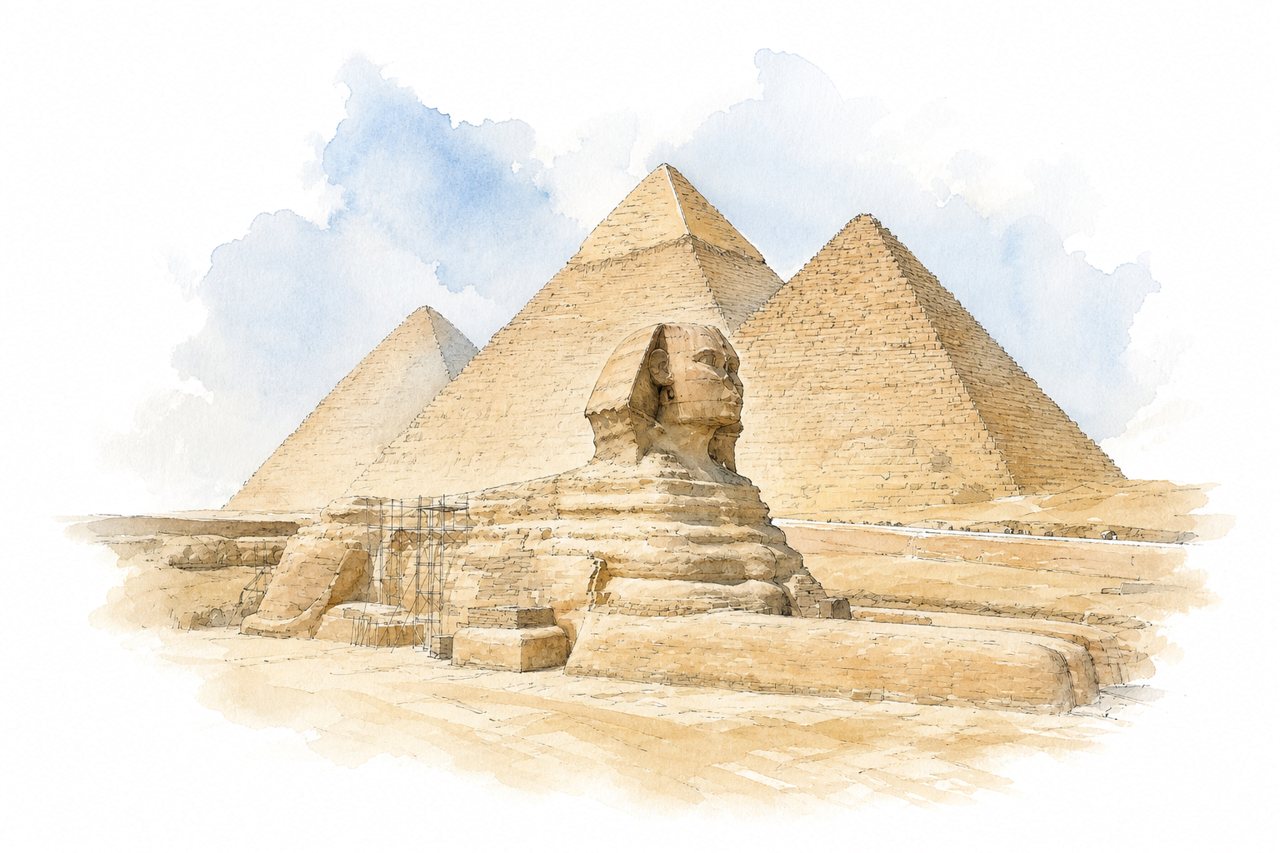
The Pyramids of Giza are ancient Egyptian tombs on the Giza plateau near Cairo. Visitors walk between the pyramids and the Sphinx by free shuttle buses, on foot, or by camel and horse.
Highlights
- Great Pyramid of Khufu
- Khafre pyramid
- Sphinx and walking platform
Good to know
- Book entry tickets online in advance
- Morning visits avoid heat and crowds
- Free electric shuttle buses run inside the site
-
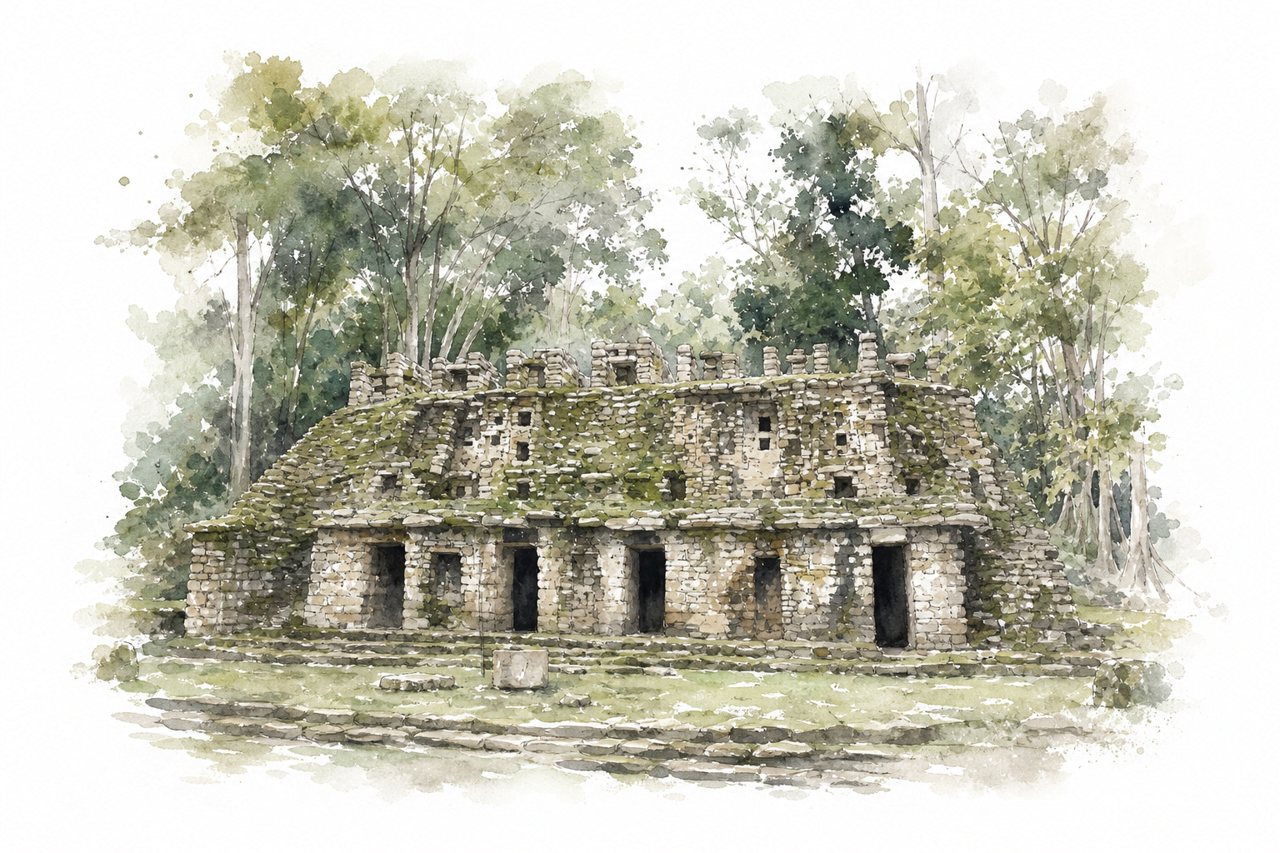
An ancient Maya city in the Lacandon jungle, on the Usumacinta River bordering Guatemala, reached only by boat. Visitors walk among temples, stelae and carved lintels, climbing steep stairs while howler monkeys call from the trees.
Highlights
- Small acropolis
- Labyrinth with bats
- Carved stone lintels
Good to know
- Boat from Frontera Corozal, 35 to 60 minutes
- Entrance 150 pesos, boat fare extra
- About two hours on site
-
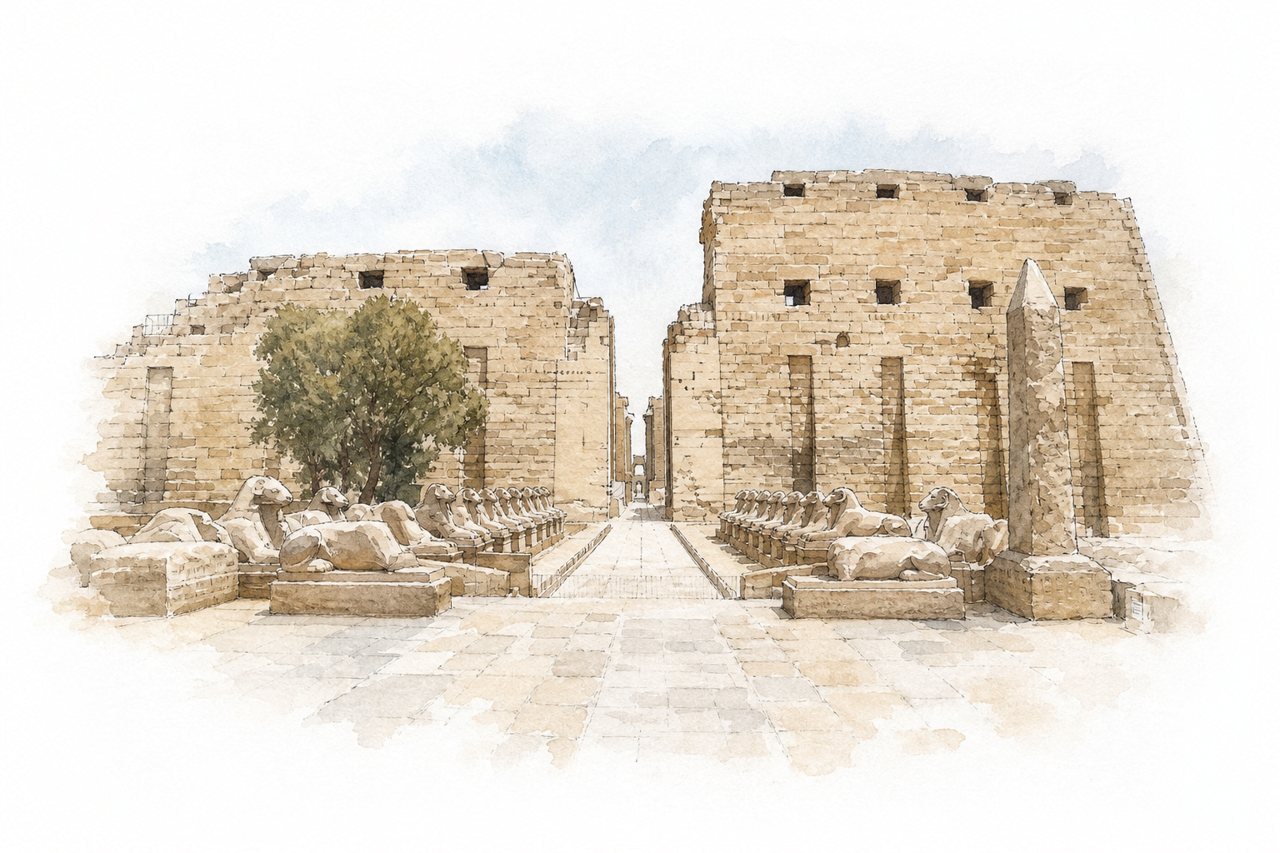
A vast temple complex on the east bank of the Nile in Luxor, dedicated to the god Amun-Ra. Visitors walk along the avenue of ram-headed sphinxes, through the Great Hypostyle Hall with its 134 columns, past obelisks and the sacred lake.
Highlights
- Great Hypostyle Hall
- Avenue of ram-headed sphinxes
- Obelisk of Hatshepsut
Good to know
- Go early in the morning to avoid heat and crowds
- Allow at least 3 hours for the visit
- Guides are recommended, as there are few information boards
-
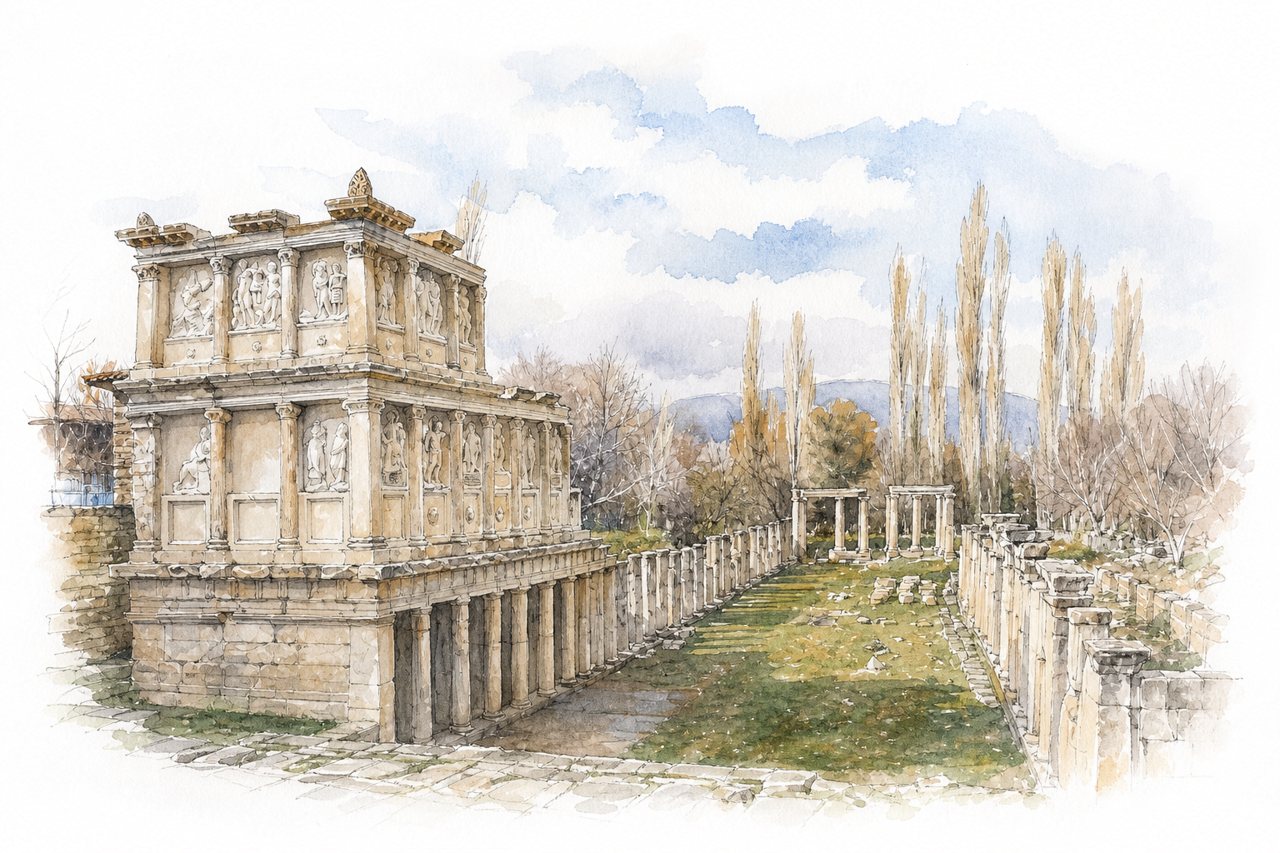
A Roman-era ancient city near Geyre in Karacasu, Aydın, dedicated to Aphrodite and on the UNESCO list. Visitors walk among the stadium, theatre, pool, Tetrapylon, Sebasteion reliefs and temple ruins.
Highlights
- Tetrapylon at the entrance
- Stadium
- Sebasteion reliefs
Good to know
- Entry fee 200 TL for adults, museum pass accepted
- Museum often closed, check before visiting
- Allow 2.5 to 3 hours, bring water and shade
-
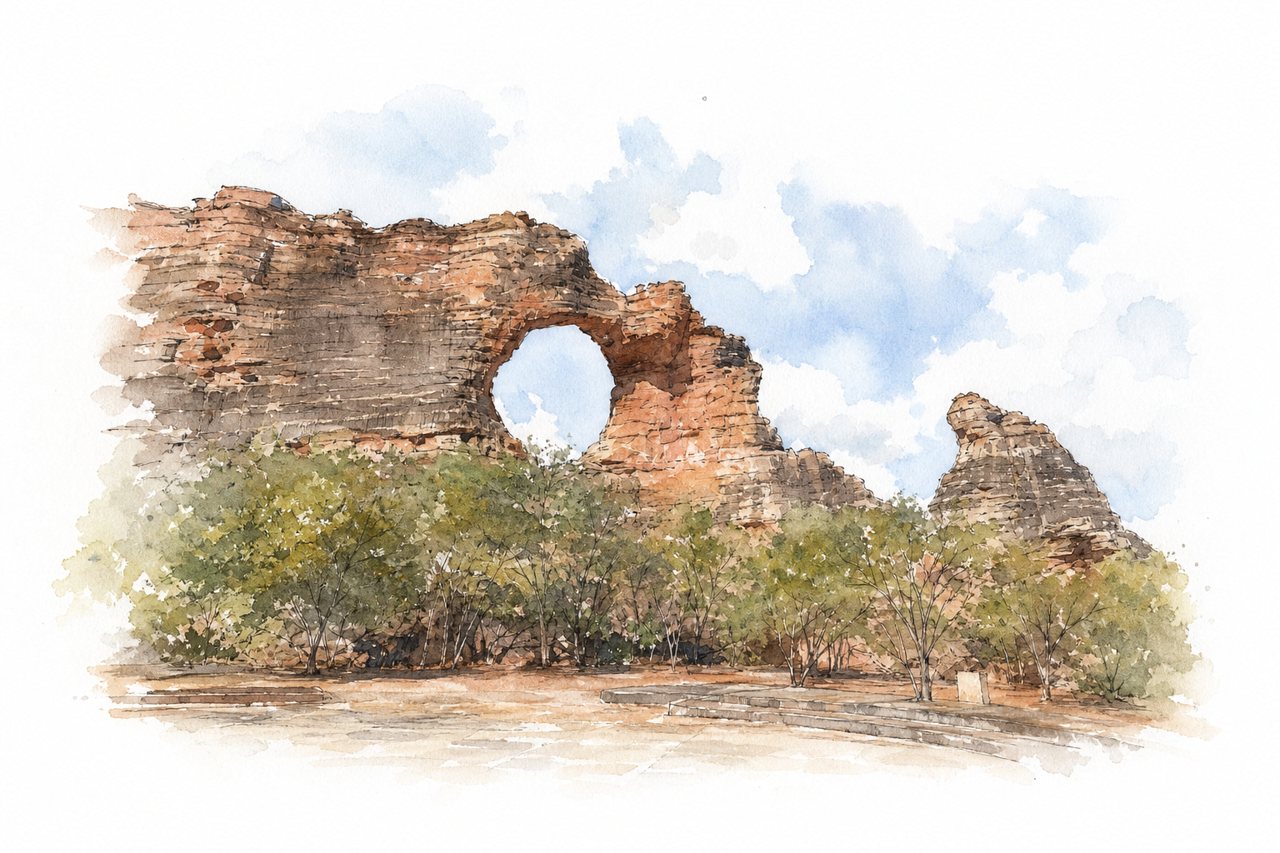
A conservation area of sandstone hills and caatinga scrubland in Piauí, Brazil, holding prehistoric rock paintings and excavated shelter sites. Visitors walk marked trails through the canyons and see rock art, the pierced rock and panoramic viewpoints.
Highlights
- Prehistoric rock paintings
- Pedra Furada pierced rock
- Panoramic viewpoint staircase
Good to know
- Mandatory local guide required to enter
- Very hot and dry, bring water
- Museums at the park entrance
-
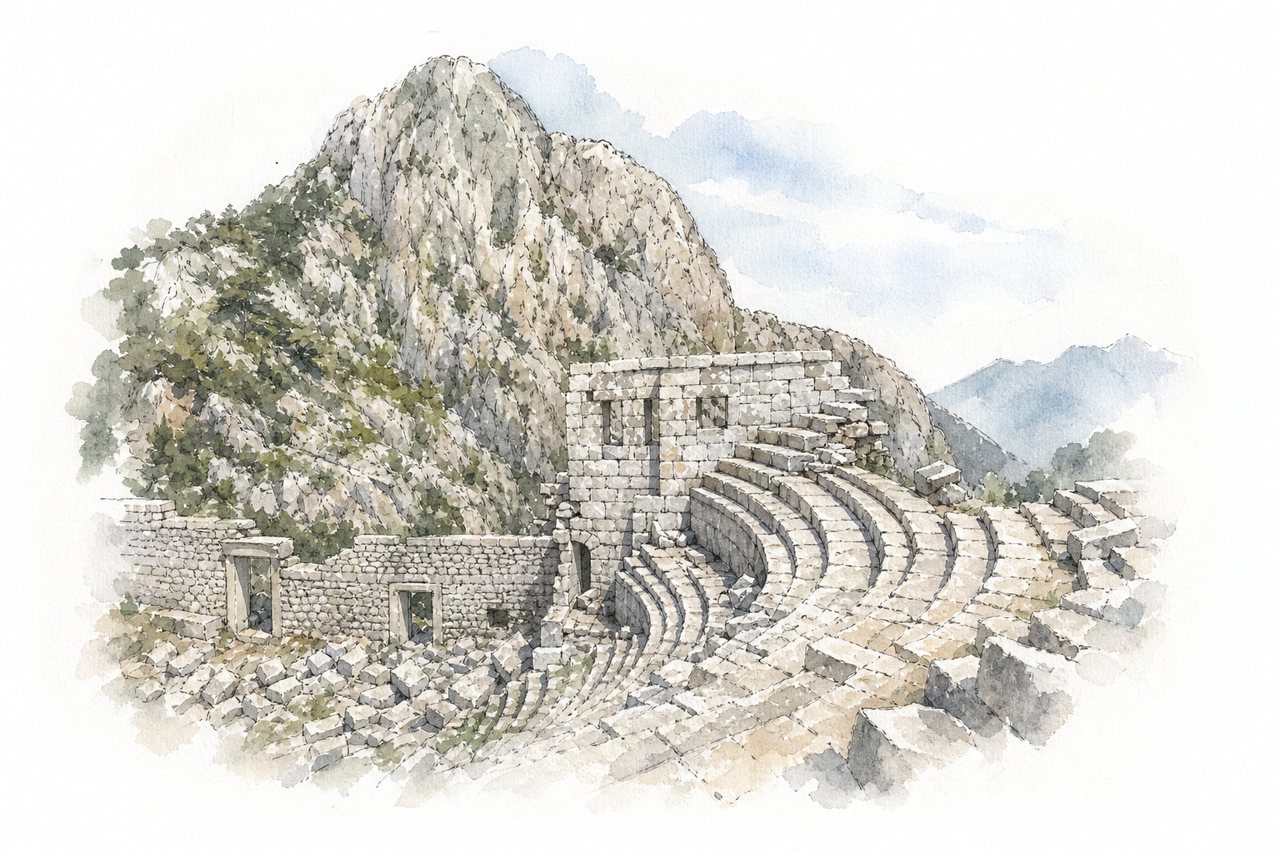
Pisidian hilltop city on Mount Güllük in the Taurus Mountains, about 30 km northwest of Antalya. Visitors climb a steep stone path past cisterns, sarcophagi and rock tombs to a theatre overlooking the valley.
Highlights
- Hellenistic theatre
- Rock tombs
- Temple of Zeus Solymeus
Good to know
- Museum Card accepted at the entrance
- Drive about 9 km uphill to parking
- Bring water and sturdy shoes
-
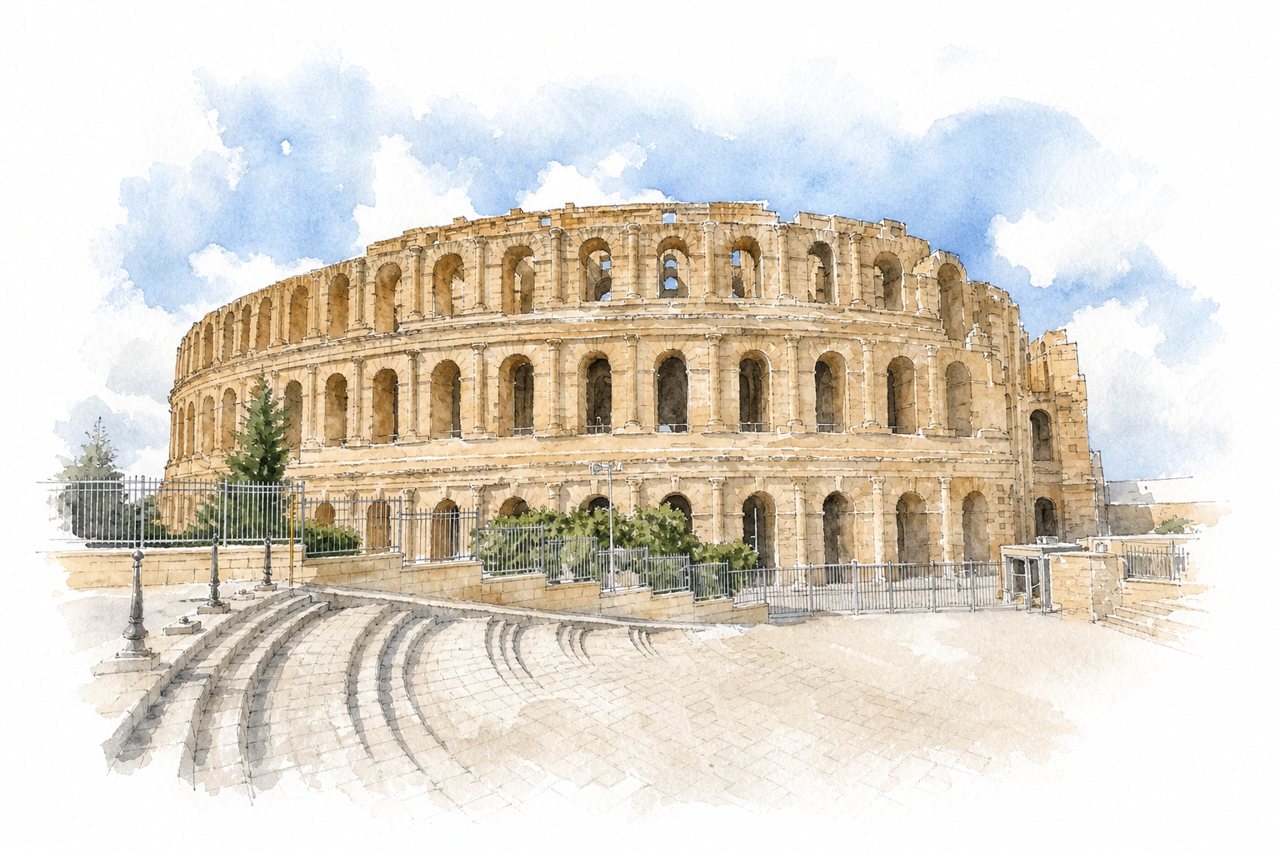
The Roman amphitheatre of El Jem, the ancient Thysdrus, stands in the middle of a small Tunisian town. Visitors walk through the tiers, arena, underground chambers and upper levels with views over the medina.
Highlights
- Underground chambers beneath the arena
- Upper tiers with medina views
- Archaeological museum nearby
Good to know
- Ticket costs about 20 dinars per person
- Ticket includes the archaeological museum on the same day
- Allow one to two hours; steep steps, sturdy shoes
-
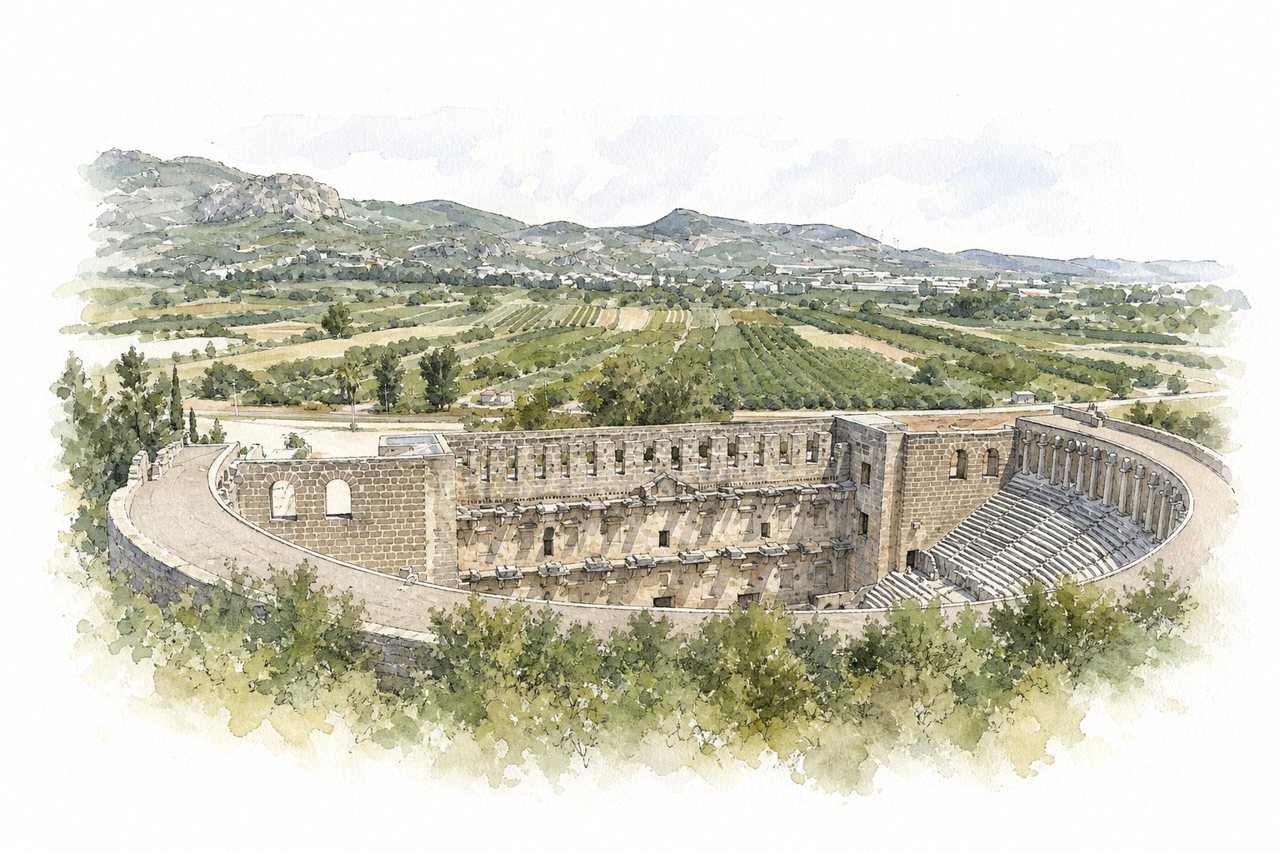
Roman theatre in Serik near Antalya, built in the 2nd century AD and still used for performances. Visitors walk up the semicircular seating to the stage building and, further up the hill, the ruins of houses, a basilica and an aqueduct.
Highlights
- Stage building
- Semicircular seating
- Upper gallery moldings
Good to know
- Museum Card accepted, foreigners pay €15
- Parking about 150 TL, or park roadside
- Wear sturdy shoes, bring hat and water
-
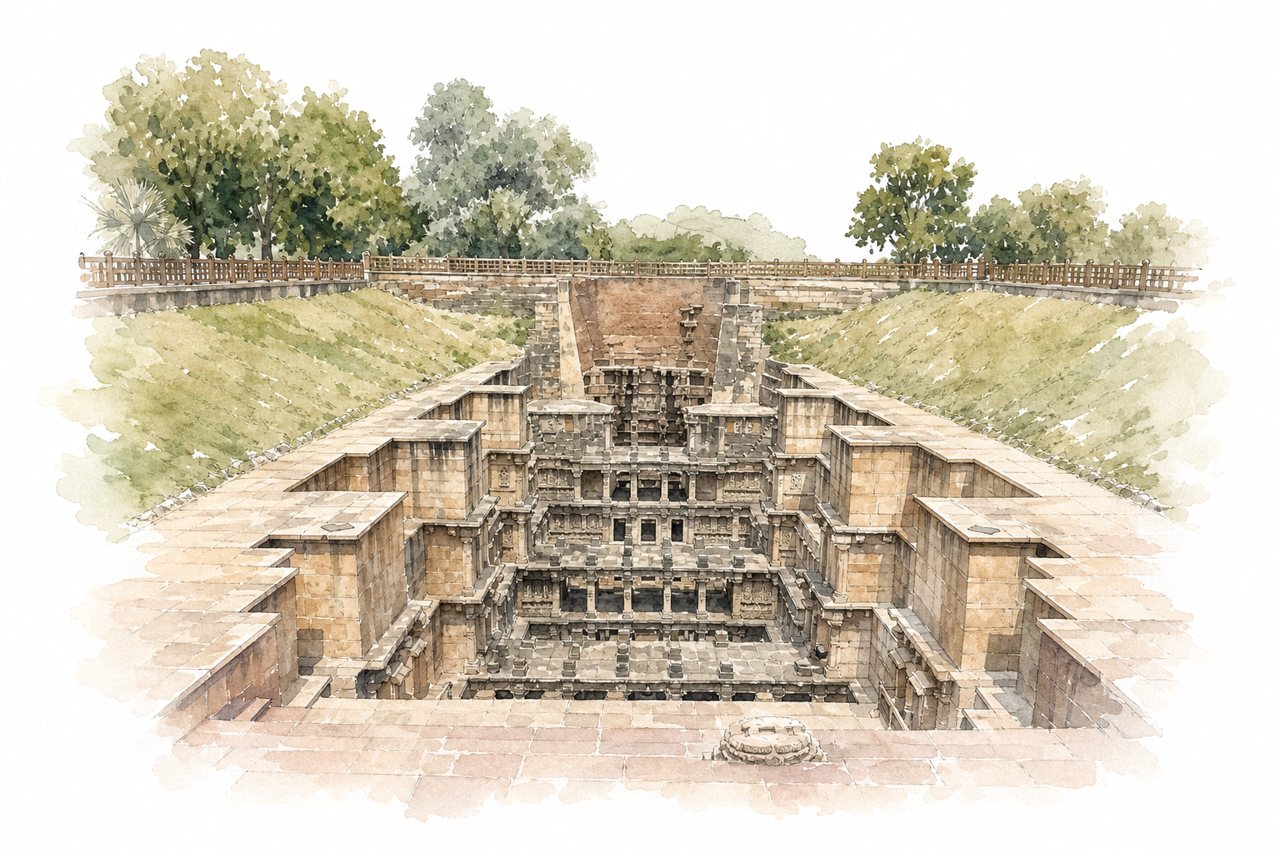
An 11th-century stepwell on the banks of the Saraswati River in Patan, Gujarat. Visitors descend several levels of steps past carved walls and pillars, with a garden around the entrance.
Highlights
- Carved pillars and walls
- Seven-level stepwell
- Deep circular well
Good to know
- Tickets bought online or at the entrance gate
- Ticket about Rs 40 for Indians
- Wear walking shoes, many stairs
-
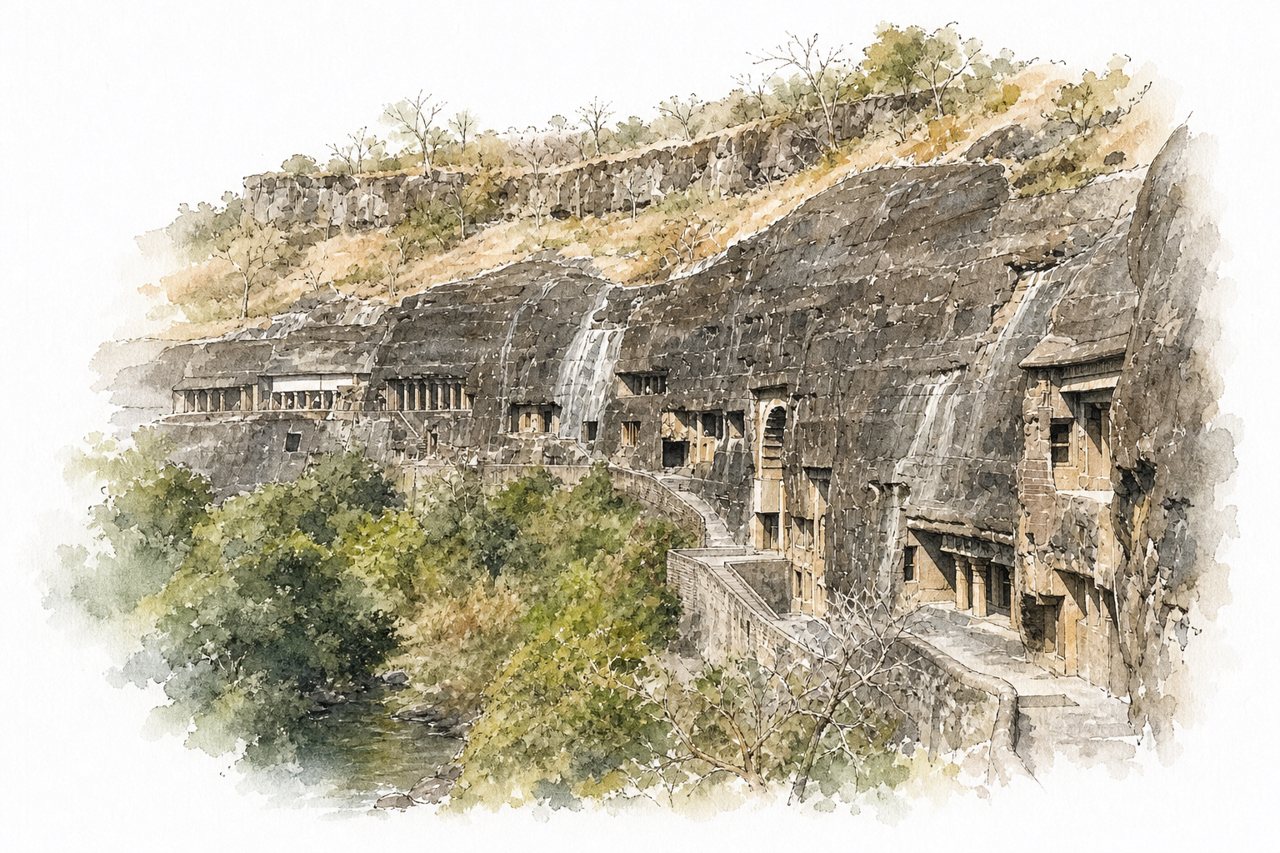
A group of rock-cut Buddhist caves carved into a horseshoe-shaped basalt cliff in Maharashtra, India. Visitors walk through the caves to see wall paintings, sculptures, prayer halls and monk residences, with a waterfall nearby in the rainy season.
Highlights
- Ancient wall paintings
- Buddha life and Jataka tale sculptures
- Shiva lingas in temples
Good to know
- Book entry tickets online through ASI website
- Allow four to eight hours to see caves
- Shuttle bus from parking; viewpoint steps down to caves
-
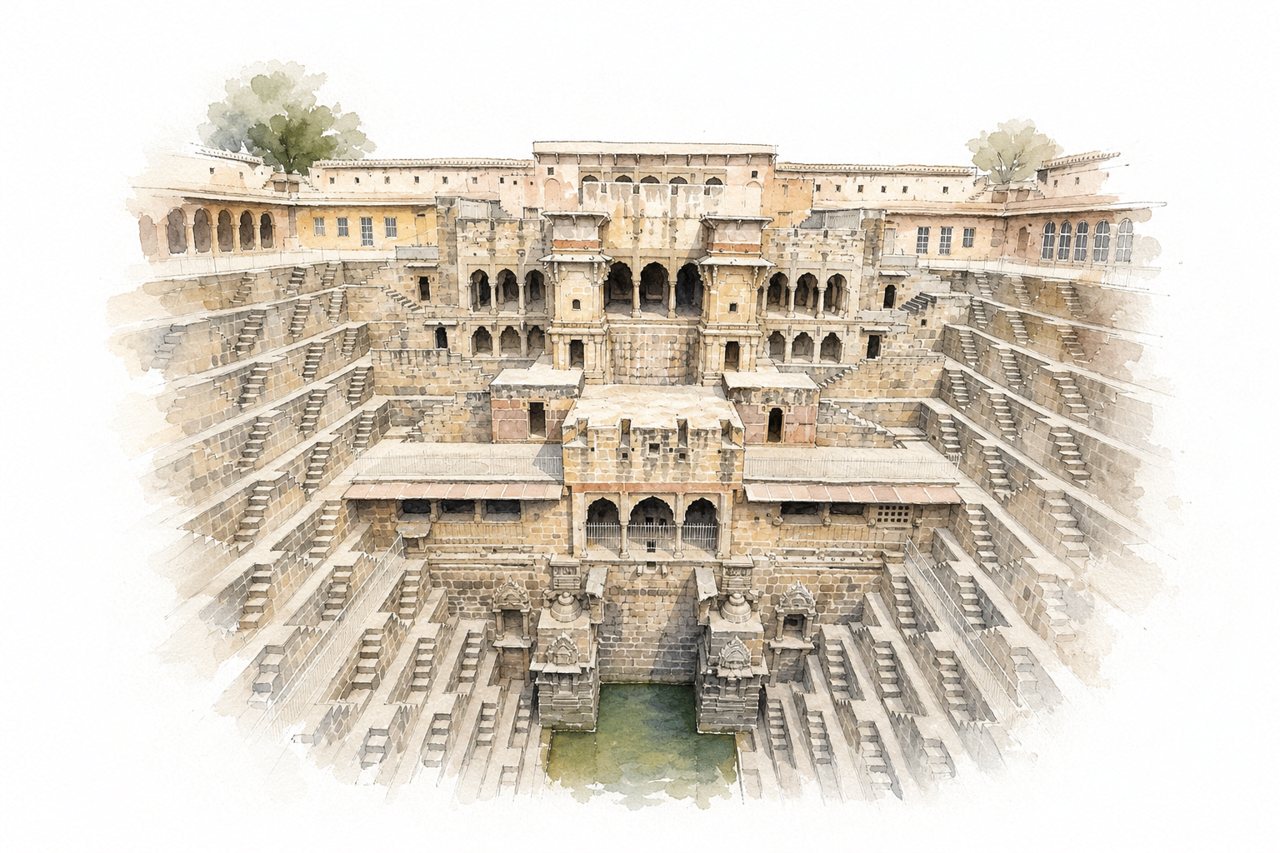
A stepwell in Abhaneri village, Dausa district, Rajasthan, about 90 km from Jaipur. Visitors look down thousands of symmetrical steps across 13 levels to the water, with the Harshat Mata Temple next to it.
Highlights
- Symmetrical stepped levels
- Inverted pyramid stairways
- Harshat Mata Temple ruins
Good to know
- Entry ticket Rs 25 for Indians, Rs 300 for foreigners
- Open sunrise to sunset, ticket counter closes earlier
- Roadside parking charges are paid in cash
-
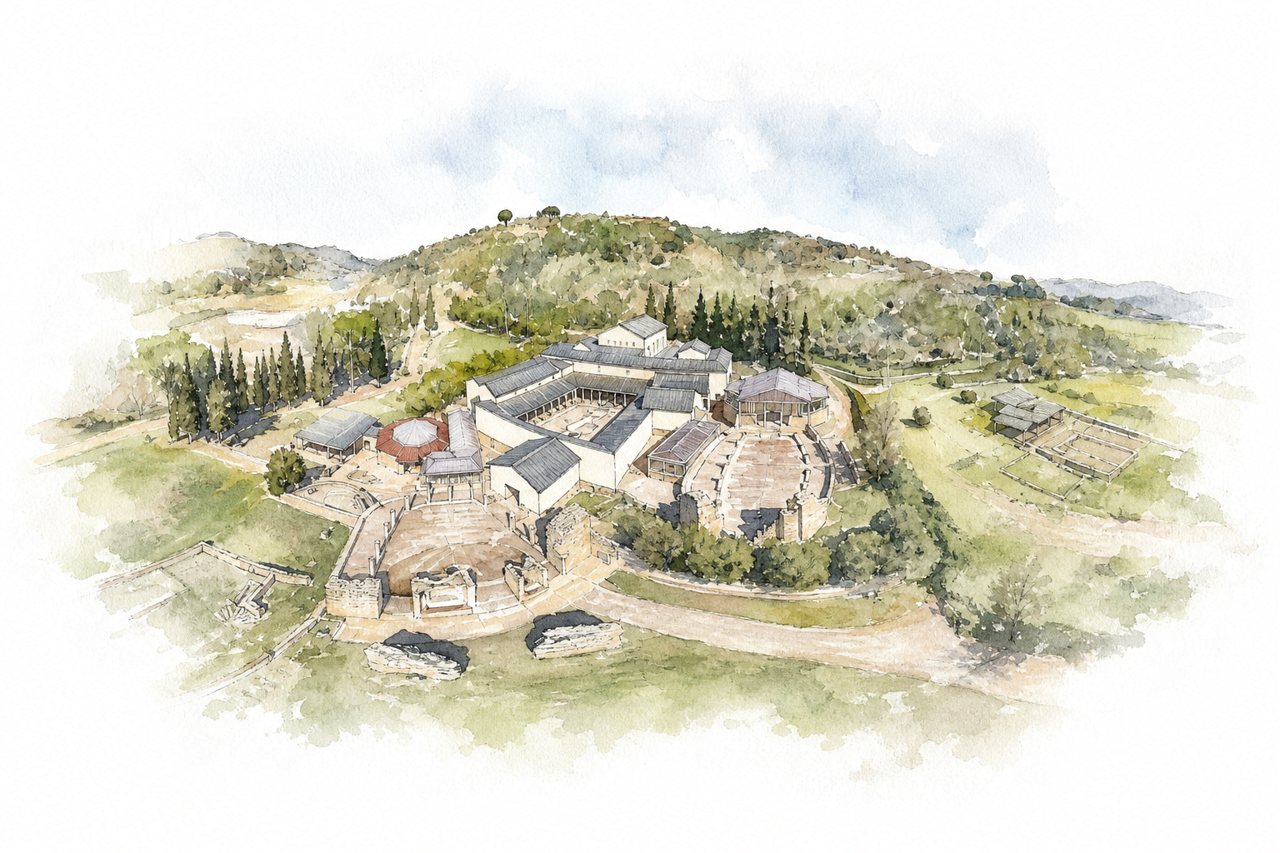
A Roman villa of the 4th century in the centre of Sicily, near Piazza Armerina. Visitors walk elevated walkways over floors of mosaics showing hunting scenes, daily life, mythology and the women in bikinis.
Highlights
- Hunting scene mosaics
- Women in bikinis mosaic
- Corridor of the Great Hunt
Good to know
- Tickets around 14 euros, booking advised
- Allow one to two hours
- Audio guide or guided tour recommended
-
A Maya archaeological site in Temozón, Yucatán, about 20 minutes north of Valladolid. Visitors walk through plazas, a ball court and the Oval Palace, and climb the Acropolis for views over the jungle.
Highlights
- The Acropolis
- Stucco monster-mouth entrance
- Jaguar Archway
Good to know
- Entry fee is high for foreigners
- Parking fee charged at the access road
- Cash needed, card payment limited
-
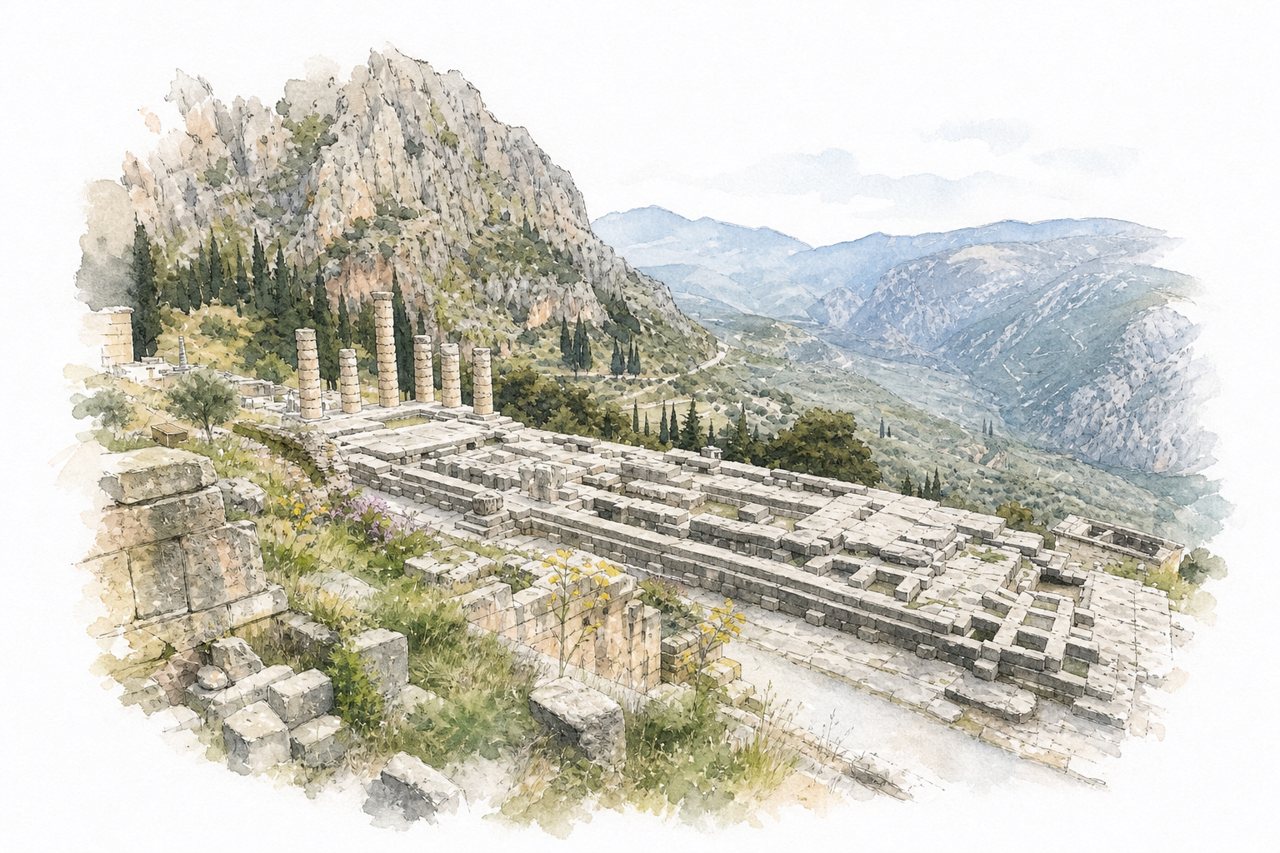
Ancient Greek sanctuary on the slopes of the Parnassus mountains, home to the Oracle of Delphi. Visitors climb past the Temple of Apollo, treasuries, theatre and stadium, with views across the valley.
Highlights
- Temple of Apollo
- Omphalos navel stone
- Ancient stadium at the top
Good to know
- Combined ticket covers site and museum, €20
- Arrive at opening to beat heat
- Bring water, hat and sturdy shoes
-
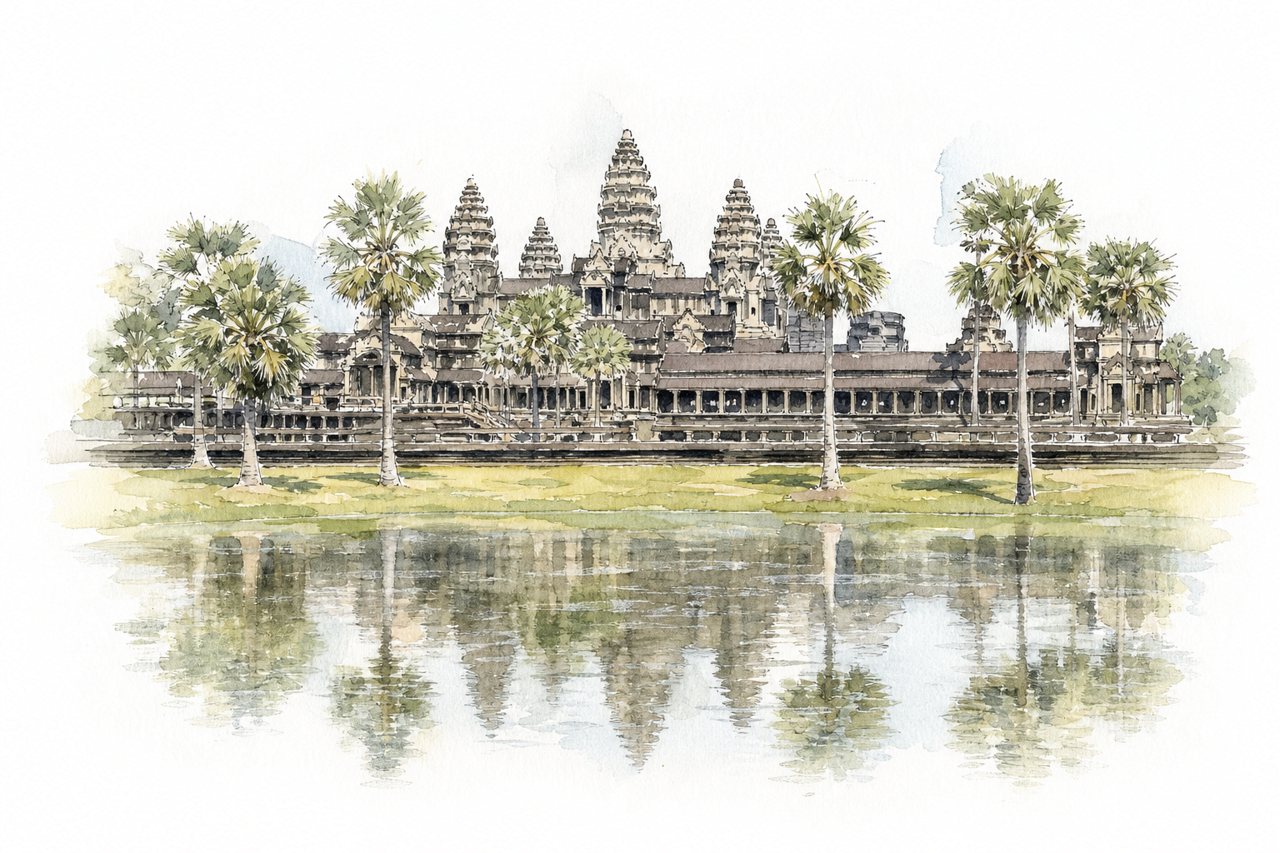
A vast Khmer temple complex near Siem Reap, Cambodia, built in the 12th century and dedicated first to Vishnu. Visitors walk across the moat and causeway to reach towers, galleries and bas-reliefs, with sunrise and sunset views across the water.
Highlights
- Five towers
- Bas-reliefs in galleries
- Moat and causeway view
Good to know
- Book tickets online or buy onsite
- Allow two or three days
- Bring water and a hat
-
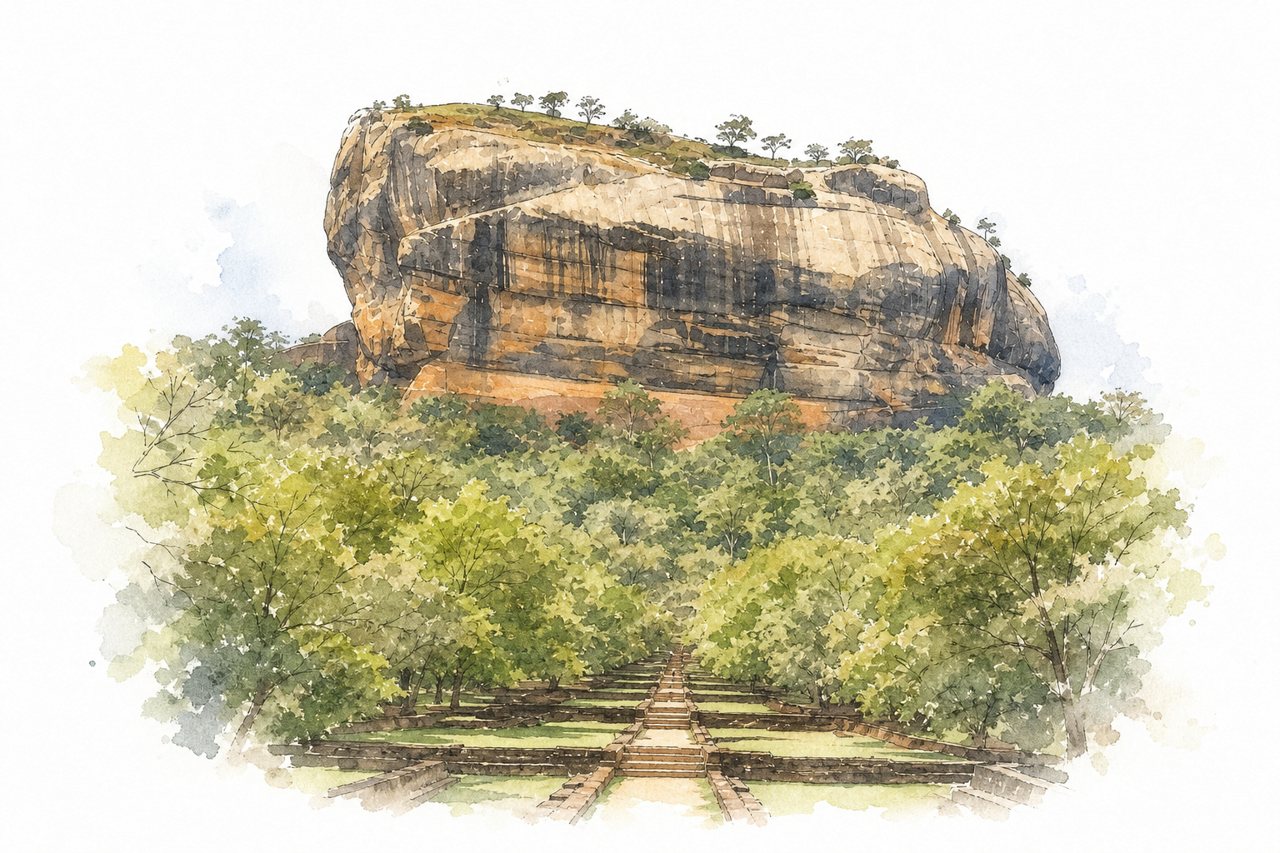
A 5th-century rock fortress and palace complex rising about 200 metres above the plains of central Sri Lanka. Visitors pass water gardens, the Lion's Paws and frescoes on the climb to ruins and a wide jungle view at the summit.
Highlights
- Lion's Paws
- Sigiriya frescoes
- Water gardens
Good to know
- Tickets sold at the museum near the entrance
- Foreign entry fee about 35 USD, lower for SAARC
- About 1200 steps, 30 to 40 minutes up
-
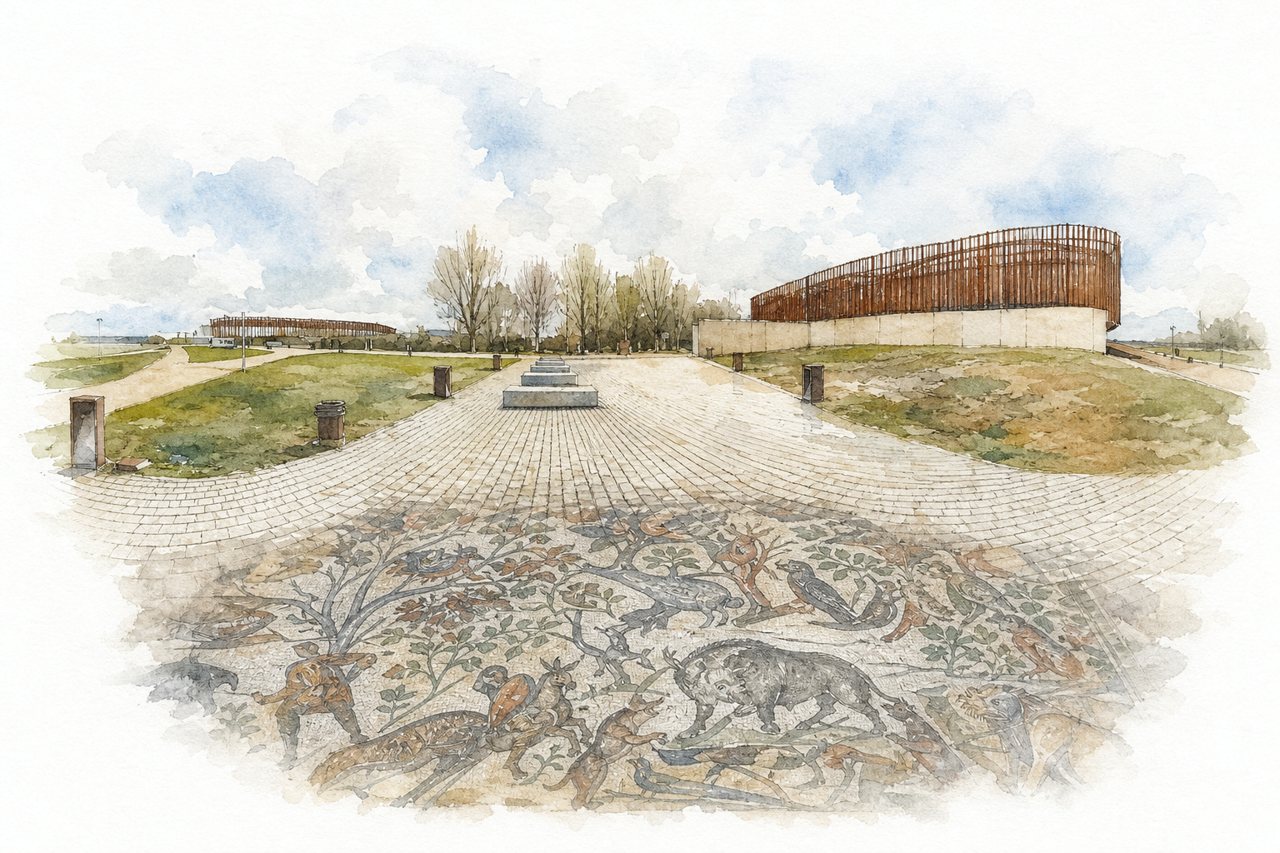
A 4th-century Roman villa in Pedrosa de la Vega, Palencia, Spain, protected by a modern building. Covered walkways let visitors pass over rooms and corridors paved with mosaics.
Highlights
- Achilles and Odysseus mosaic
- Hunting scene mosaics
- Roman baths
Good to know
- Guided tour must be booked in advance
- Entry €5 includes Saldaña museum
- Visit takes about an hour
-
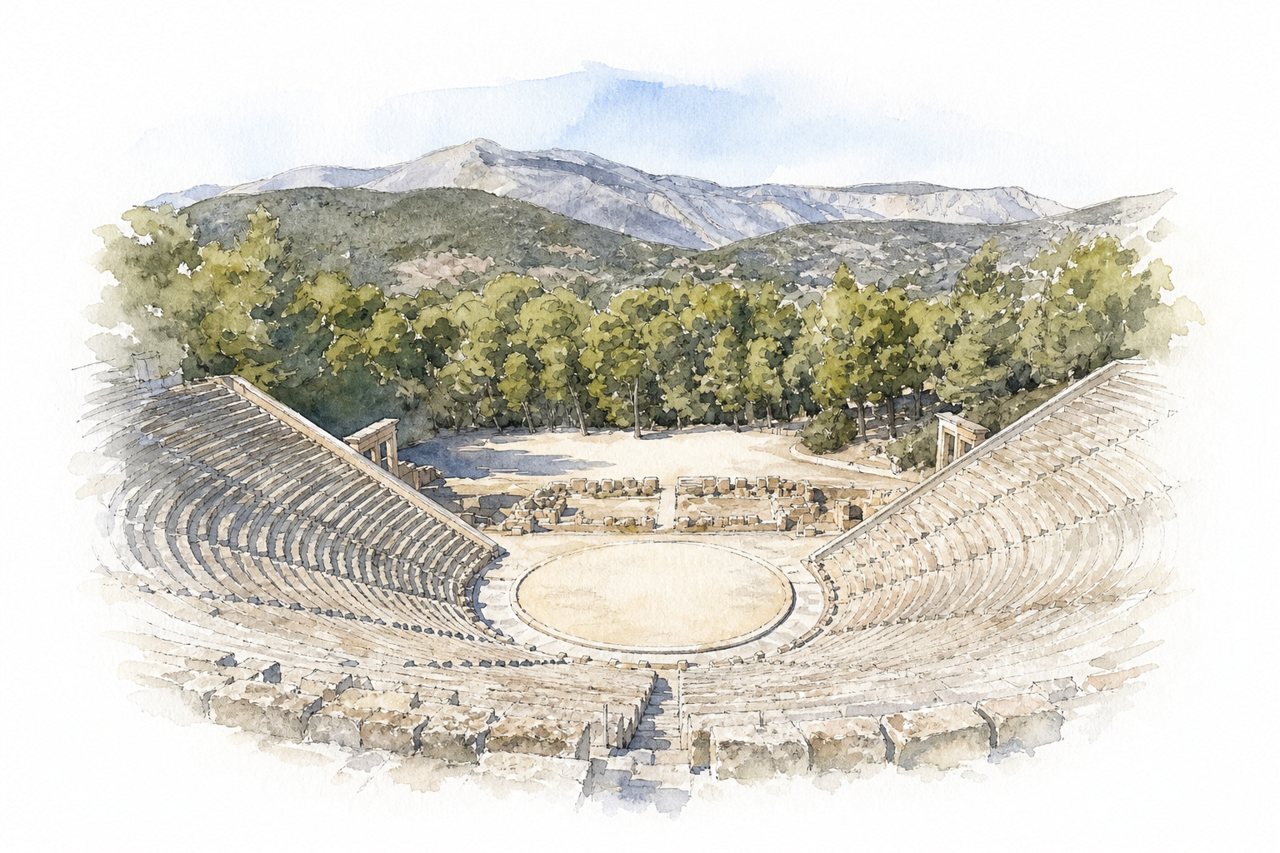
An ancient Greek theatre within the sanctuary of Asclepius on the Peloponnese, about 140 km from Athens. Visitors climb the stone rows of the theatre and walk among the ruins of the healing sanctuary and its museum.
Highlights
- Ancient theatre
- Asclepieion ruins
- Site museum
Good to know
- Entry €20 per person, under 25 free
- Steep, narrow theatre steps, slippery in places
- Free parking, very hot, bring water
-
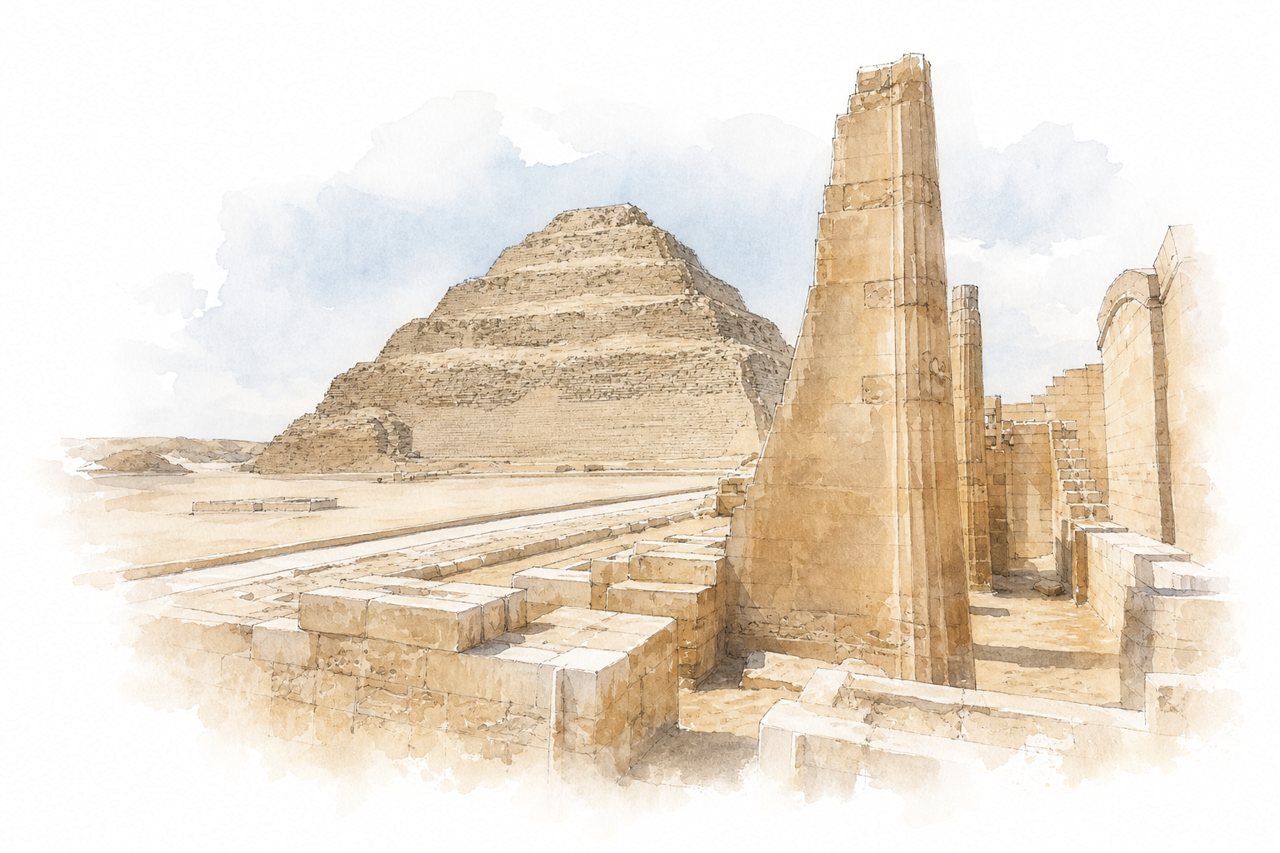
The Step Pyramid of Djoser lies in the Saqqara necropolis south of Giza, near Memphis. Visitors walk the walled funerary complex with its colonnaded entrance and Sed festival courtyard, and can enter the pyramid's interior.
Highlights
- Step Pyramid of Djoser
- Colonnaded entrance
- Sed festival courtyard
Good to know
- Extra ticket needed to enter pyramid
- Site is hot, bring water and sun protection
- Arrange a taxi driver to wait
-
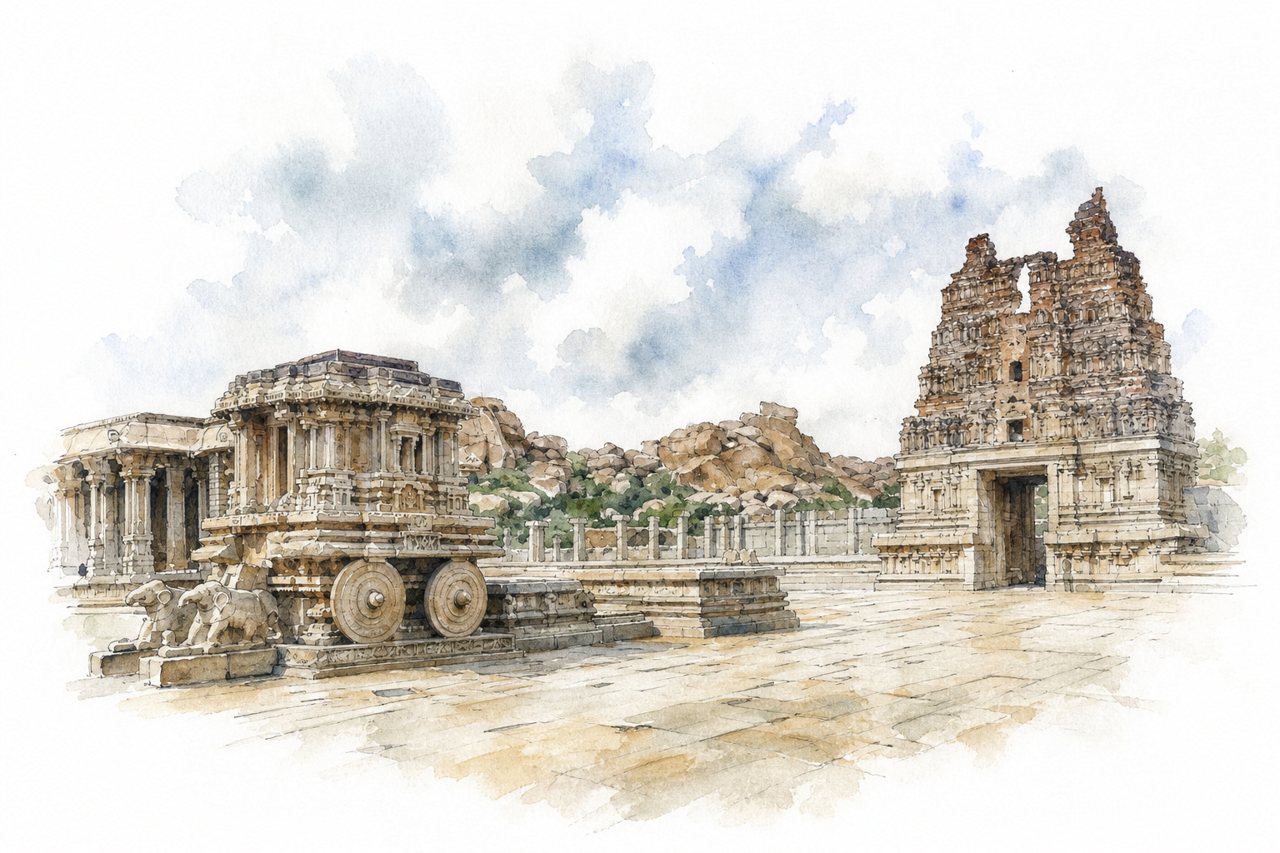
A 15th-century Vijayanagara complex in Hampi, Karnataka, dedicated to Vishnu. Visitors walk through courtyards and stone mandapas to see the Stone Chariot and the musical pillars of the Ranga Mantapa.
Highlights
- Stone Chariot
- Musical pillars in Ranga Mantapa
- Carved stone mandapas
Good to know
- Electric buggy from parking to temple
- Entry tickets bought at counter or online
- Visit early morning or late afternoon
-
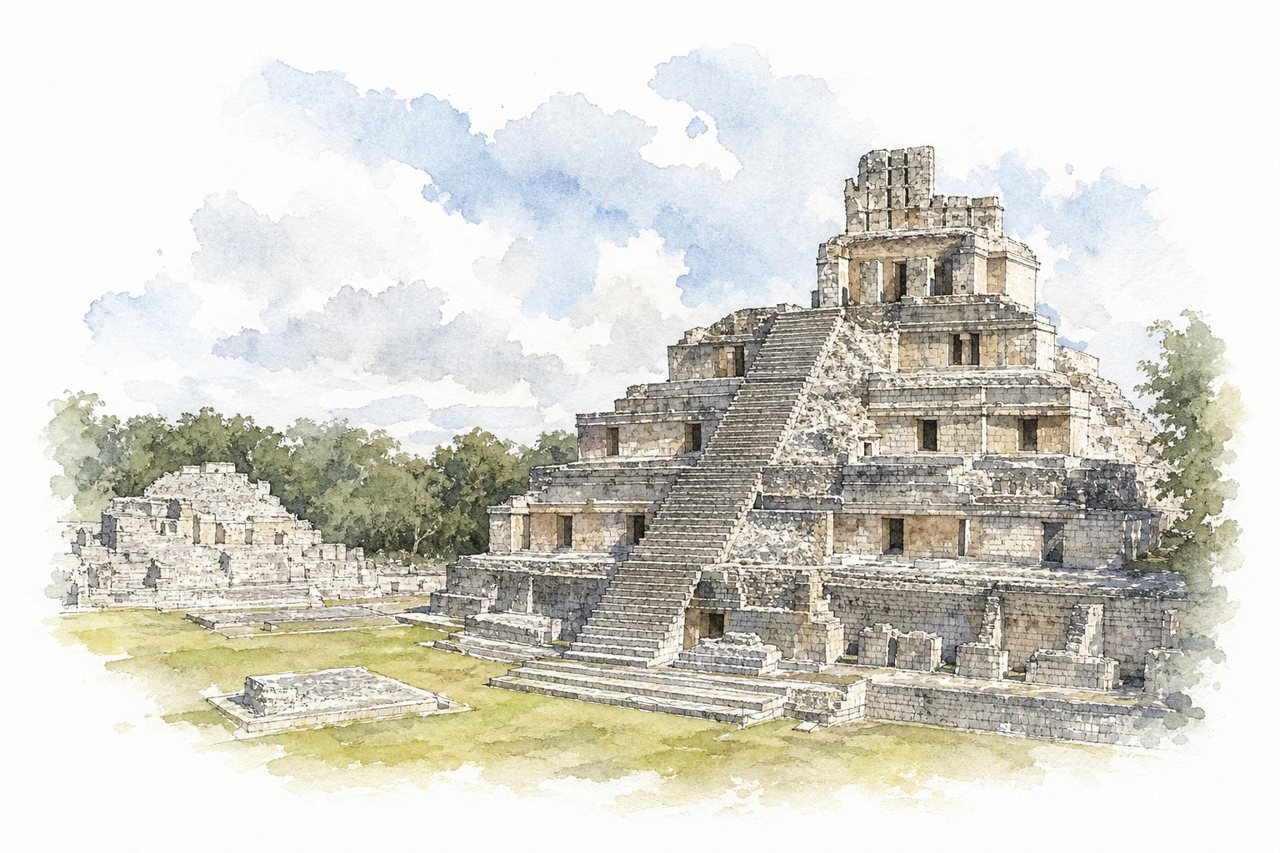
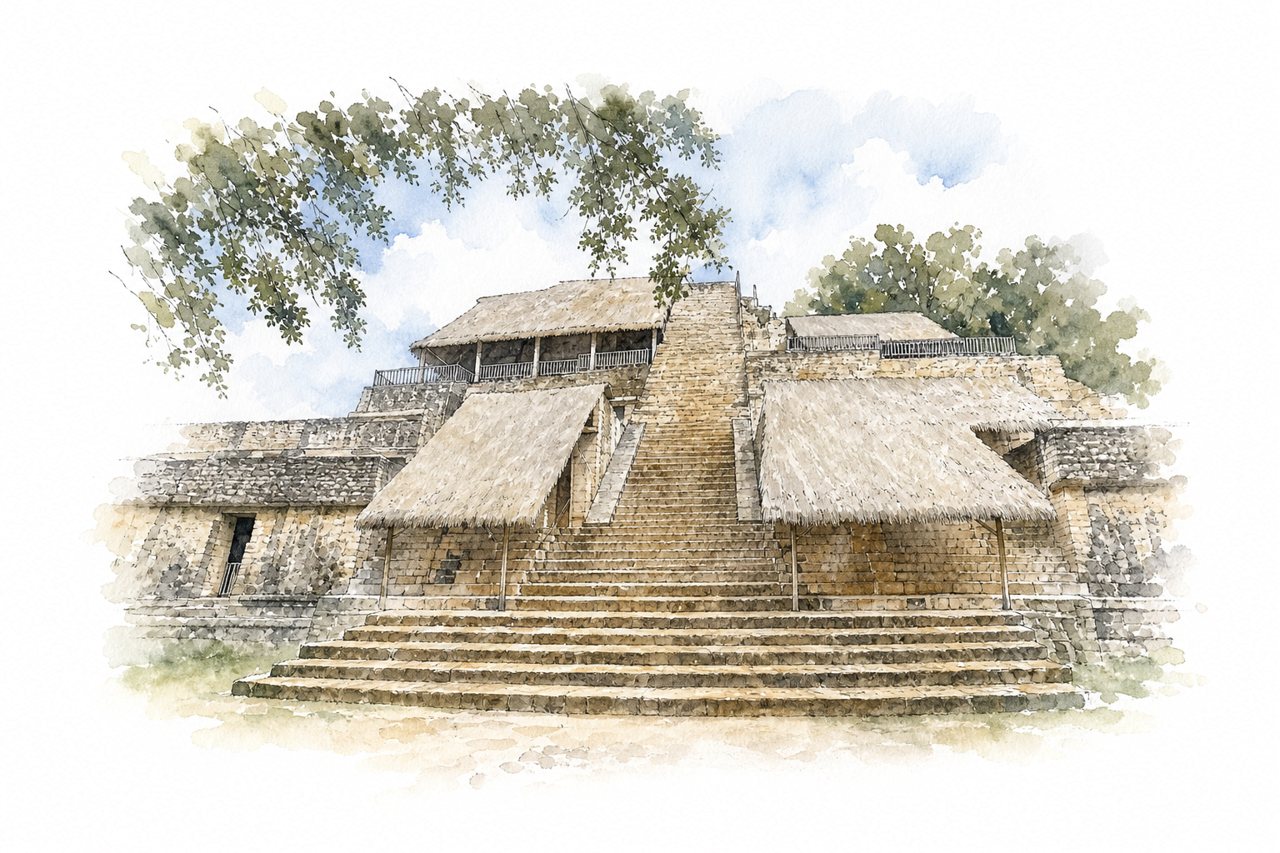
A Maya site in the Edzná Valley, about an hour's drive from Campeche city, where visitors walk between temples and climb several structures, including the main acropolis. The grounds are large and mostly open to explore on foot.
Highlights
- Main acropolis
- Five-story building
- Temple of the masks
Good to know
- Entry 100 pesos, cash only
- Go early, the sun is intense
- Colectivo from Campeche, Chihuahua and Nicaragua streets
-
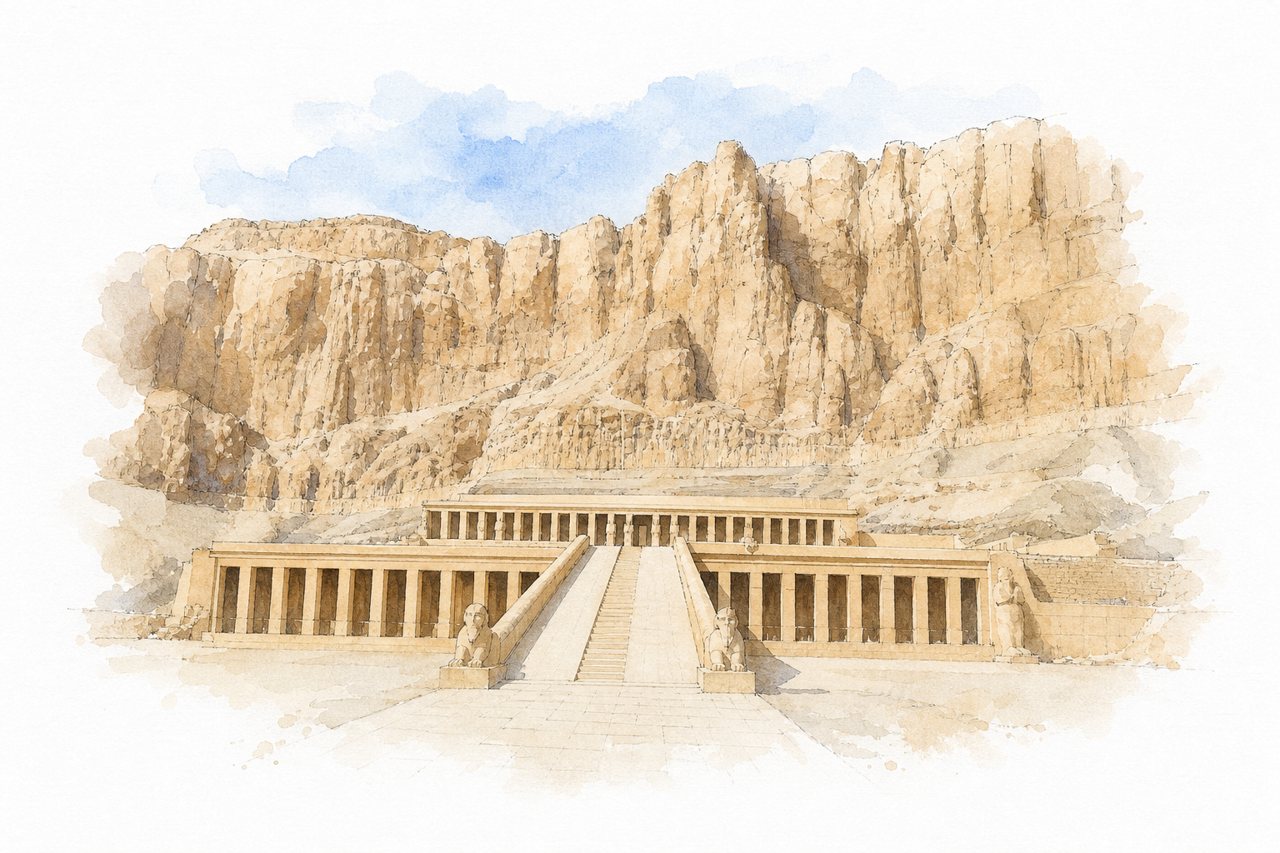
Mortuary temple of a female pharaoh, cut into limestone cliffs at Deir el-Bahari on the west bank near Luxor. Visitors climb ramps across terraces past columns, sphinxes and reliefs.
Highlights
- Anubis Chapel
- Hathor Chapel
- Punt expedition reliefs
Good to know
- Ticket office on site, card payment only
- Go early, summer temperatures reach 40 degrees
- Guide recommended, signage brief
-
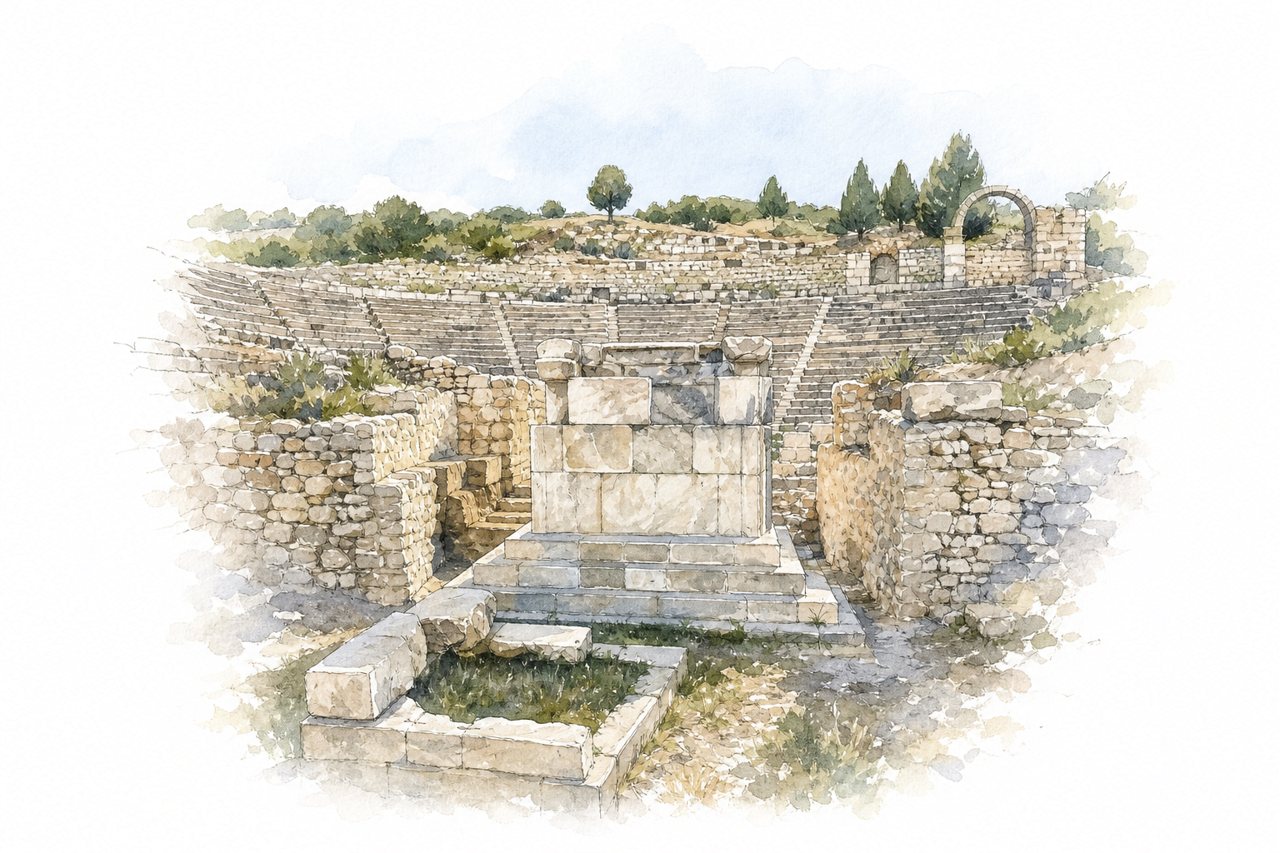
An ancient city on a mountain slope in the Gölhisar district of Burdur. Visitors walk between two parking areas past a stadium, a theatre, an odeon with a Medusa mosaic, and a circular fountain.
Highlights
- Medusa mosaic in the Odeon
- Stadium with gladiator tombs
- Circular fountain with lion spouts
Good to know
- Entry with a Museum Card
- Drive to the upper parking area first
- Visit early morning or late afternoon in summer
-
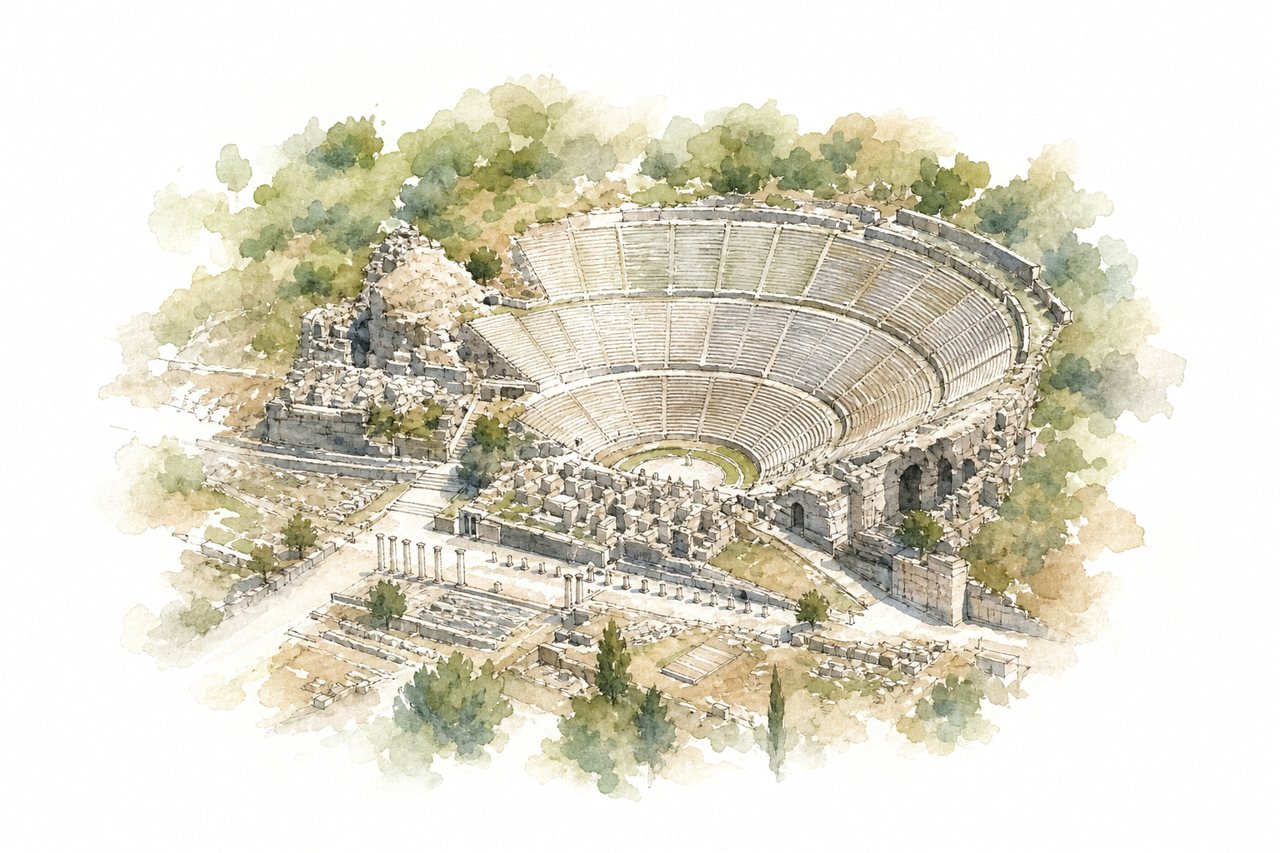
An ancient Greek and Roman city near Selçuk in western Turkey, reached by a long marble-paved main street. Visitors walk past the Celsus Library, the Great Theatre seating about 25,000, and the remains of shops, houses and columns.
Highlights
- Celsus Library
- Great Theatre
- Marble main street
Good to know
- Entrance around 40 euros, paid in lira by card
- Plan at least three to four hours
- Bring water, hat and shoes with grip; marble slippery
-
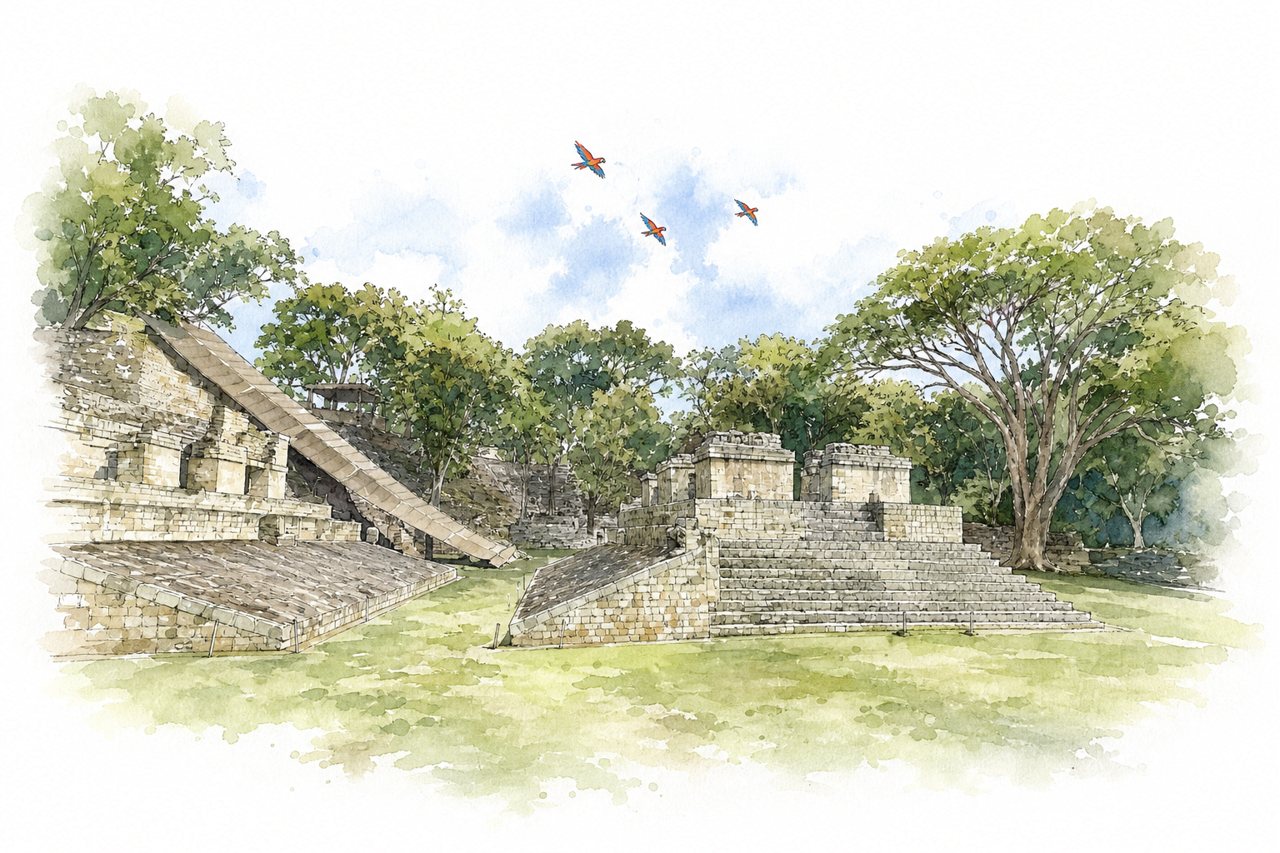
A Maya archaeological site in western Honduras, a short walk from the town of Copán Ruinas, set in forest with macaws overhead. Visitors walk through plazas, stone stelae, the Hieroglyphic Stairway and a ball court, with tunnels beneath the pyramids.
Highlights
- Hieroglyphic Stairway
- Carved stelae
- Tunnels beneath the pyramids
Good to know
- Entry fee is higher for foreigners
- Tunnels and museum cost extra
- Guides available at extra cost
-
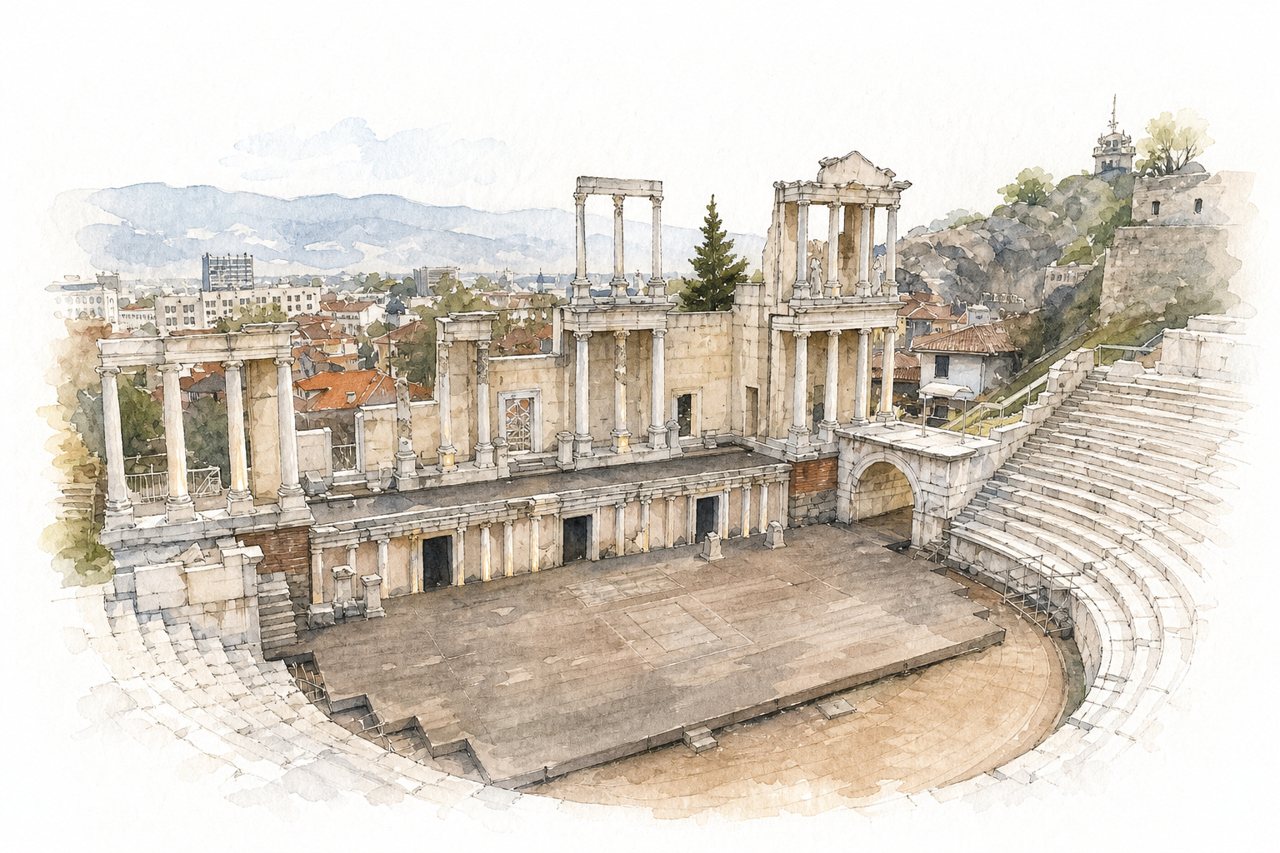
Roman theatre built at the end of the 1st century, set between two hills in the Old Town of Plovdiv, Bulgaria. Visitors climb to the marble seating that slopes towards the orchestra, with the two-tiered stage wall and Corinthian columns at the far end.
Highlights
- Marble semicircular seating
- Two-tiered stage wall
- Views over the city
Good to know
- Combined tickets available, entry fee charged
- Steep cobbled road and worn steps
- Park at Tsentar Plovdiv, about 10 minute walk
-
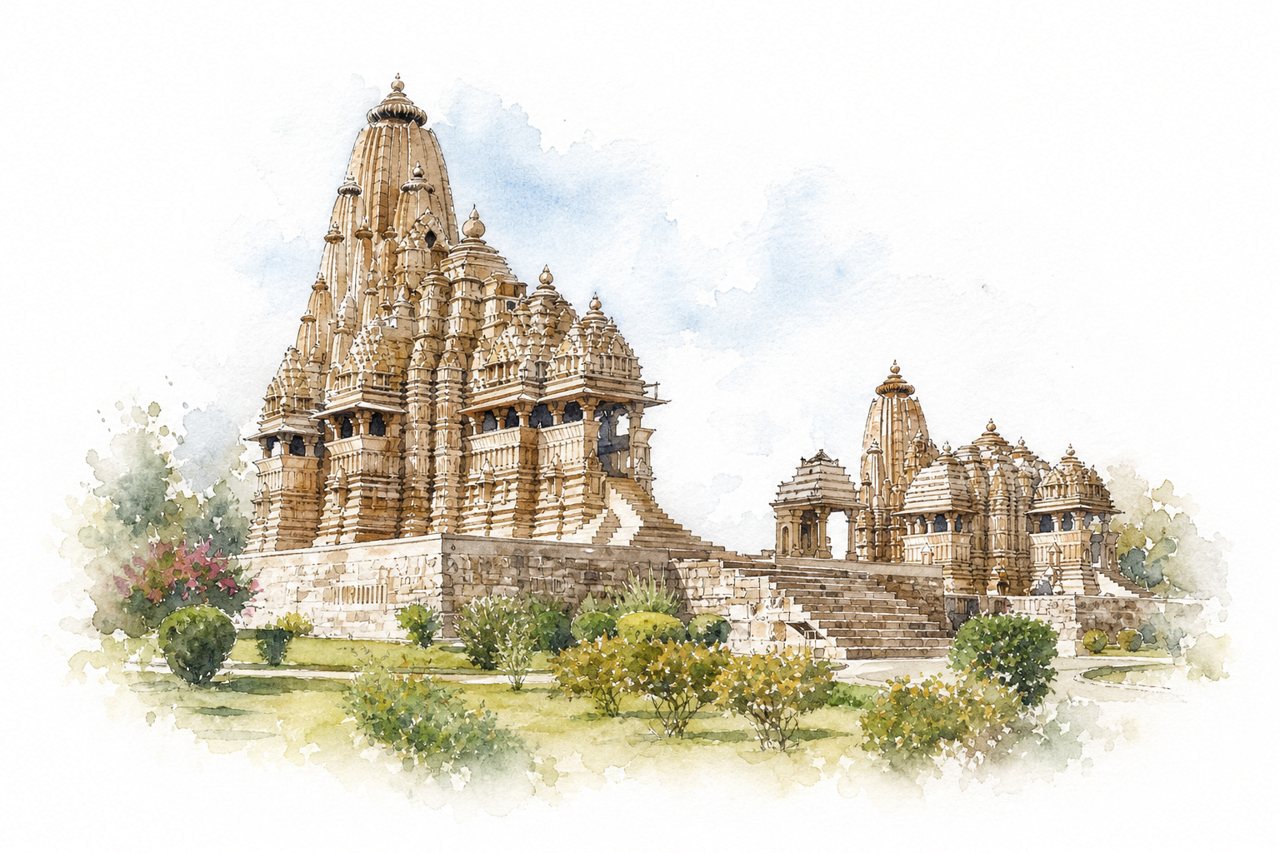
The Western Group of Temples lies in Khajuraho, Madhya Pradesh, built by the Chandela dynasty with Nagara-style shikharas. Visitors walk on foot between sandstone temples set among lawns and view carvings of gods, apsaras, music, dance and daily life.
Highlights
- Kandariya Mahadev Temple
- Lakshmana Temple
- Matangeshwara Temple with lingam
Good to know
- Tickets must be bought online, QR code at gate
- Light and sound show held every evening
- Plan two to three hours, walking a lot
-
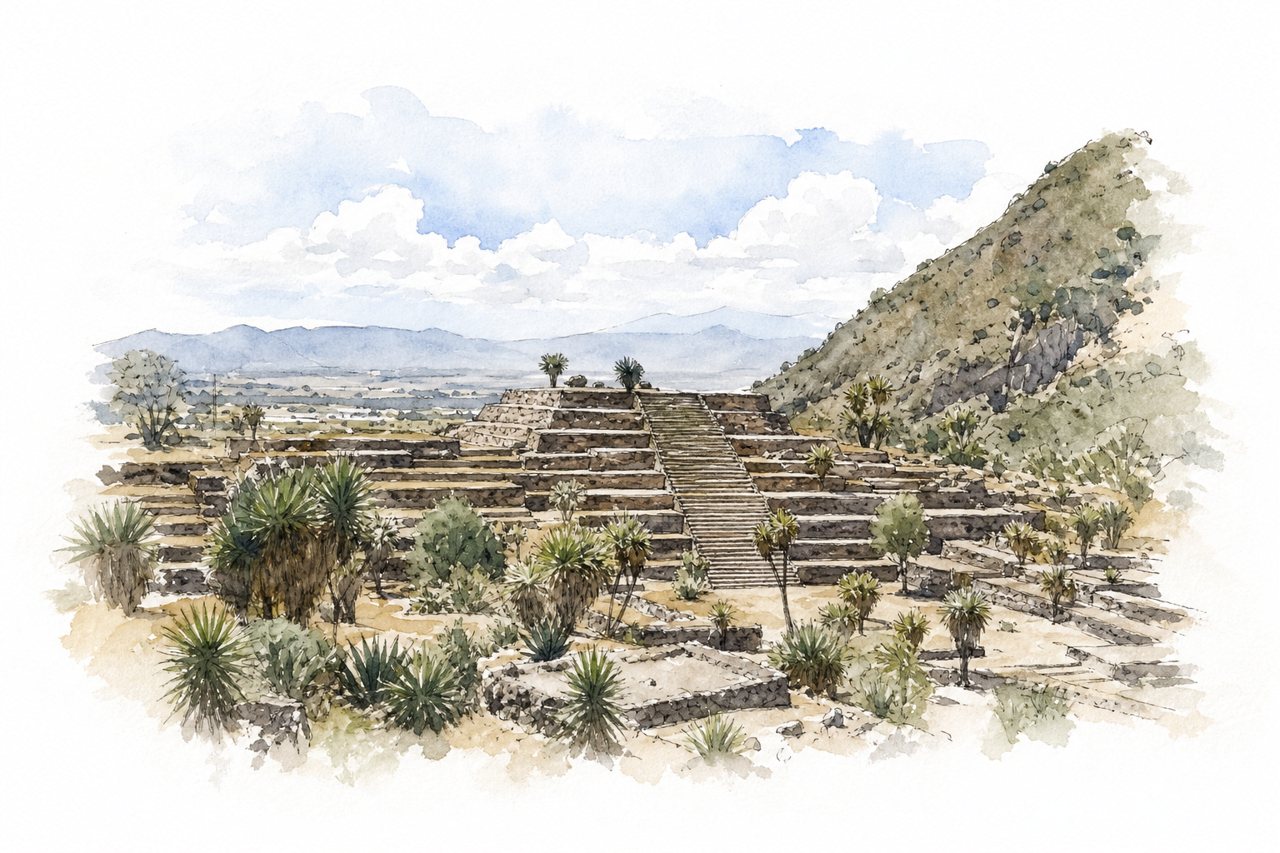
A large pre-Hispanic city ruin near Tepeyahualco in Puebla, set in a dry semi-desert landscape with pines and volcanoes in view. Visitors walk a roughly 3 km stone trail past ball courts, plazas and pyramids, many of which can be climbed.
Highlights
- Pyramids that can be climbed
- Ball courts
- Stone streets and alleyways
Good to know
- Entry about 100 pesos, free on Sundays for Mexicans
- Allow two to three hours or more
- Bring water, sun protection and sturdy shoes
-
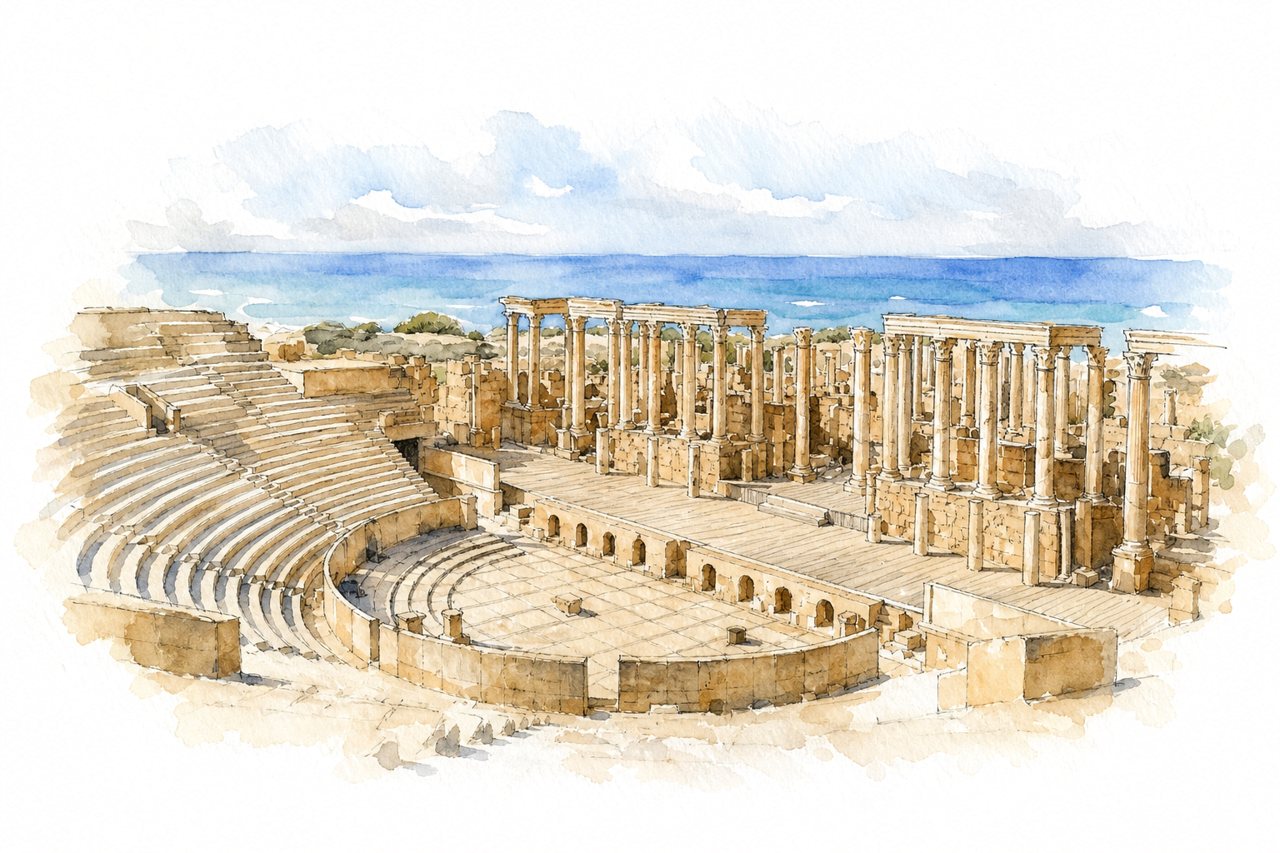
A large Roman city ruin on the Libyan Mediterranean coast near Al-Khums, at the mouth of Wadi Lebda. Visitors walk among the arch of Septimius Severus, the theatre, baths, marketplace and columned streets.
Highlights
- Arch of Septimius Severus
- Roman theatre overlooking the sea
- Hadrianic Baths
Good to know
- Entrance fee about 15 dinars
- Guide in English and Arabic costs 200 dinars
- Sunshade provided, little shade elsewhere
-
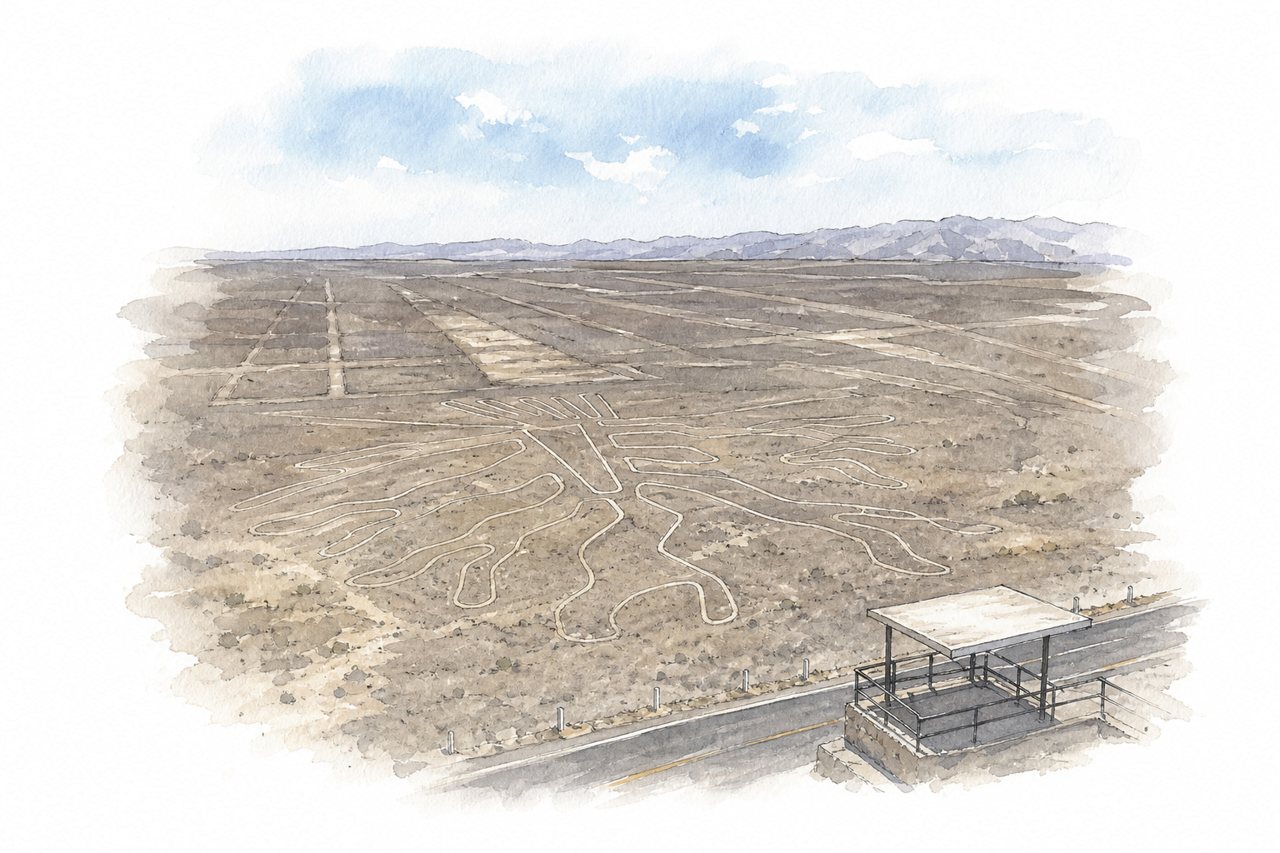
Geoglyphs etched into the desert floor near the town of Nazca in southern Peru. Visitors either fly low over the figures in a small plane or look down from a roadside viewing tower on the Pan-American Highway.
Highlights
- Monkey figure
- Condor figure
- Hummingbird figure
Good to know
- Flights take about 30 to 45 minutes
- Eat very lightly before flying to avoid nausea
- Book flights in advance; wind can cause delays
-
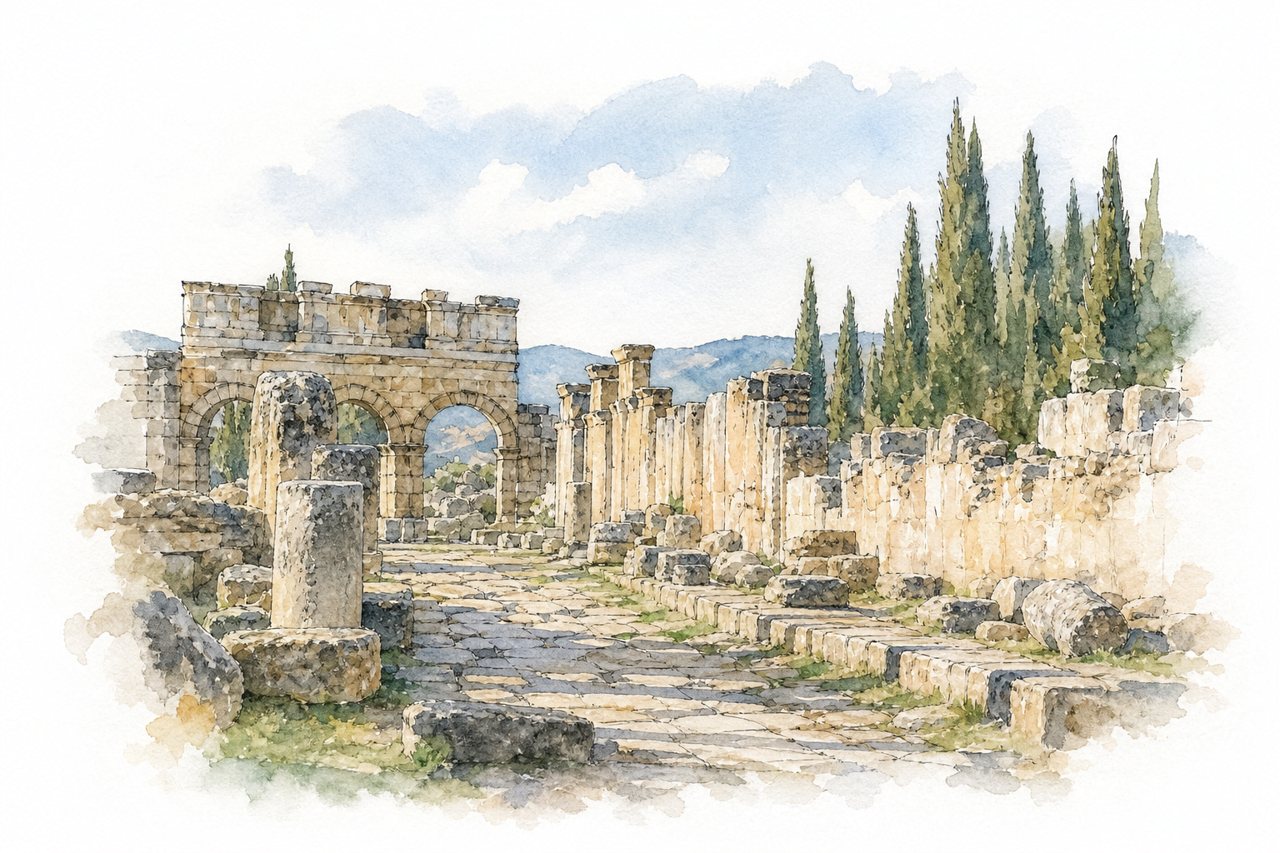
An ancient city beside the Pamukkale travertine terraces in western Turkey, founded in the 2nd century BC. Visitors walk past the necropolis and ancient streets, reach the Roman theatre, and see the Cleopatra Pool among ruined columns.
Highlights
- Roman Theatre
- Necropolis with sarcophagi
- Cleopatra Pool
Good to know
- Tickets sold at booths, audio guide headphones added at checkout
- Allow at least three to four hours
- Heat and little shade, visit morning or late afternoon
-
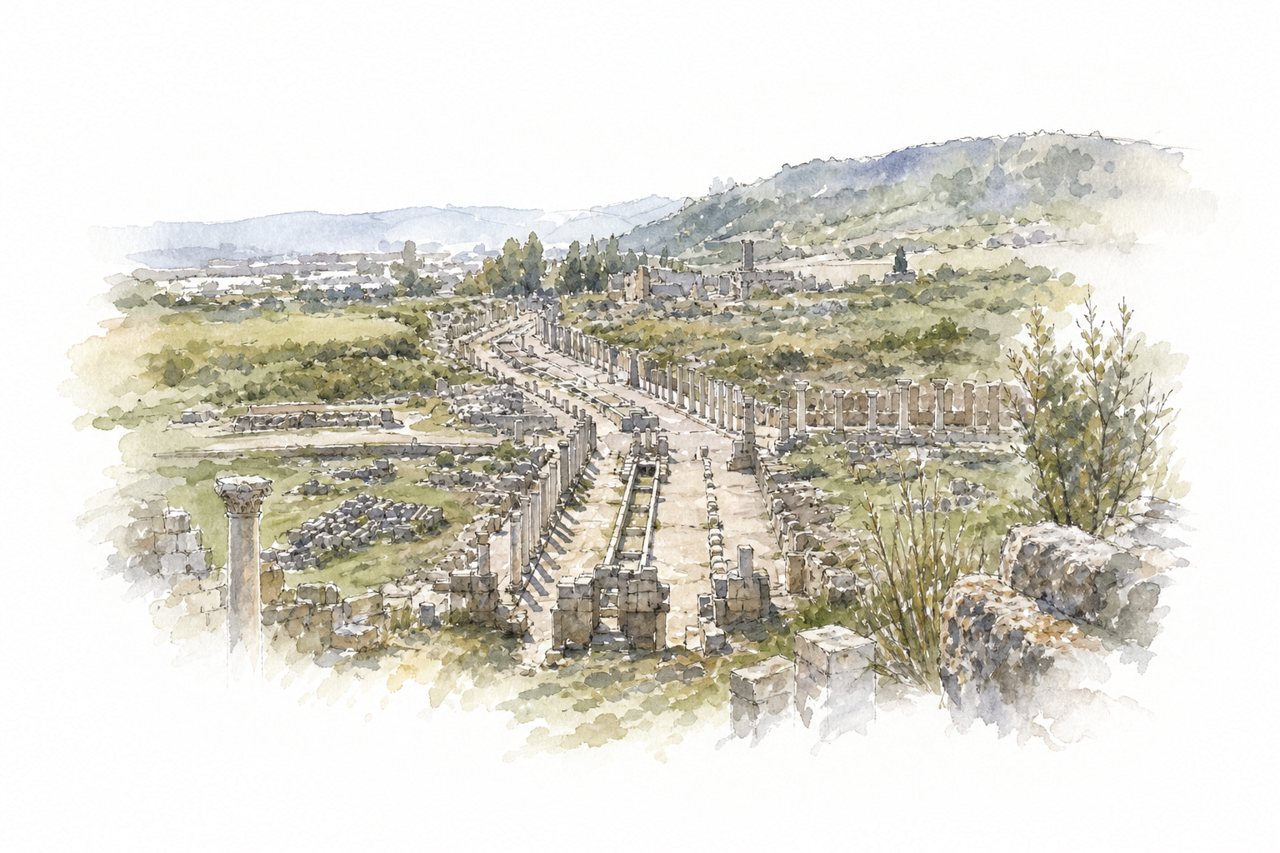
An ancient city about 18 km east of Antalya in the Aksu district, once the capital of Pamphylia. Visitors walk a long colonnaded street with a water channel down its middle, past city gates, baths, fountains and the stadium.
Highlights
- Colonnaded street with water channel
- Hellenistic towers and city gates
- Stadium
Good to know
- Entry by ticket or Museum Card
- Parking fee 30 TL
- Allow three to four hours
-
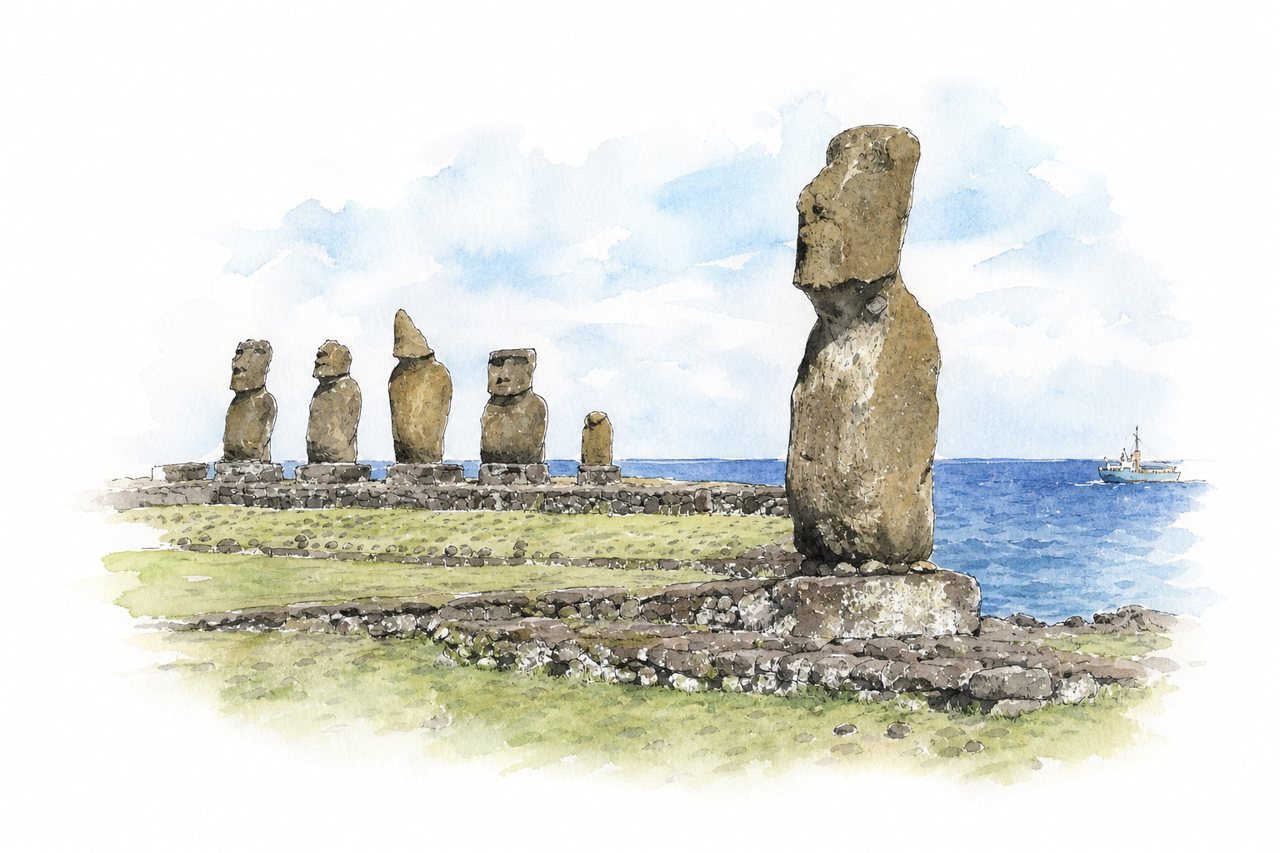
Rapa Nui National Park covers nearly half of Easter Island in the Pacific. Visitors walk among moai statues at quarries, platforms by the beach and ceremonial sites.
Highlights
- Rano Raraku quarry
- Ahu Tongariki platform
- Moai statues at sunrise
Good to know
- Park ticket costs about US$80 per person, valid 10 days
- A certified guide or local is required at most sites
- Guides cost extra, often US$60 to US$100 per day
-
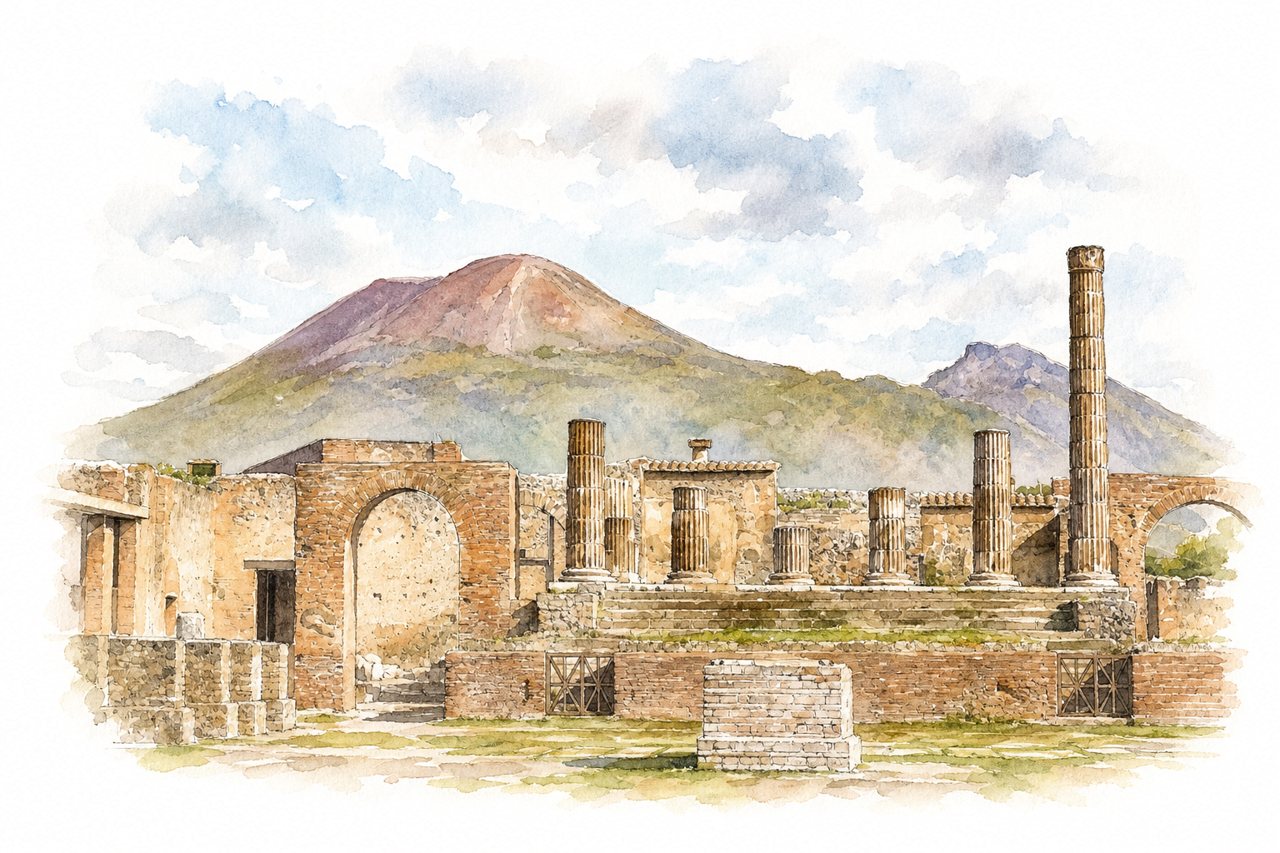
A Roman city buried by Vesuvius in 79 AD, lying near Naples in southern Italy. Visitors walk its preserved streets, houses, bakeries and amphitheatre, seeing frescoes, mosaics and plaster casts.
Highlights
- Villa of the Mysteries
- House of Menander
- Preserved Roman streets
Good to know
- Buy tickets online in advance
- Allow four hours or more
- Bring water, sunscreen and comfortable shoes
-
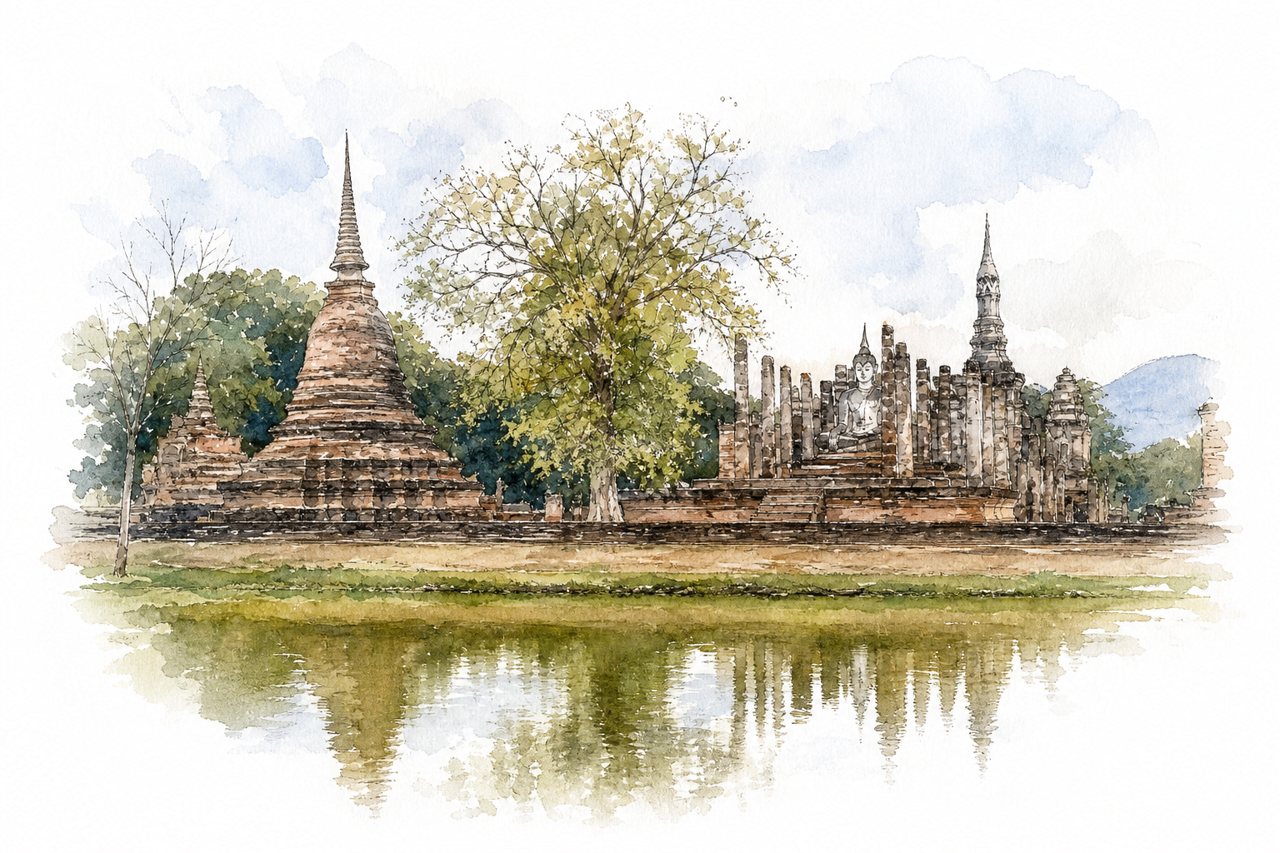
Ruins of the first capital of the Sukhothai Kingdom in northern Thailand, spread across lawns, ponds and trees. Visitors walk or cycle between temple ruins, chedis and large Buddha statues.
Highlights
- Wat Mahathat
- Wat Si Sawai
- Wat Sa Si
Good to know
- Foreigners pay 200 baht, Thais 20 baht
- Bicycle rental about 30 baht per day
- Opens 6:30 AM, mornings less crowded
-
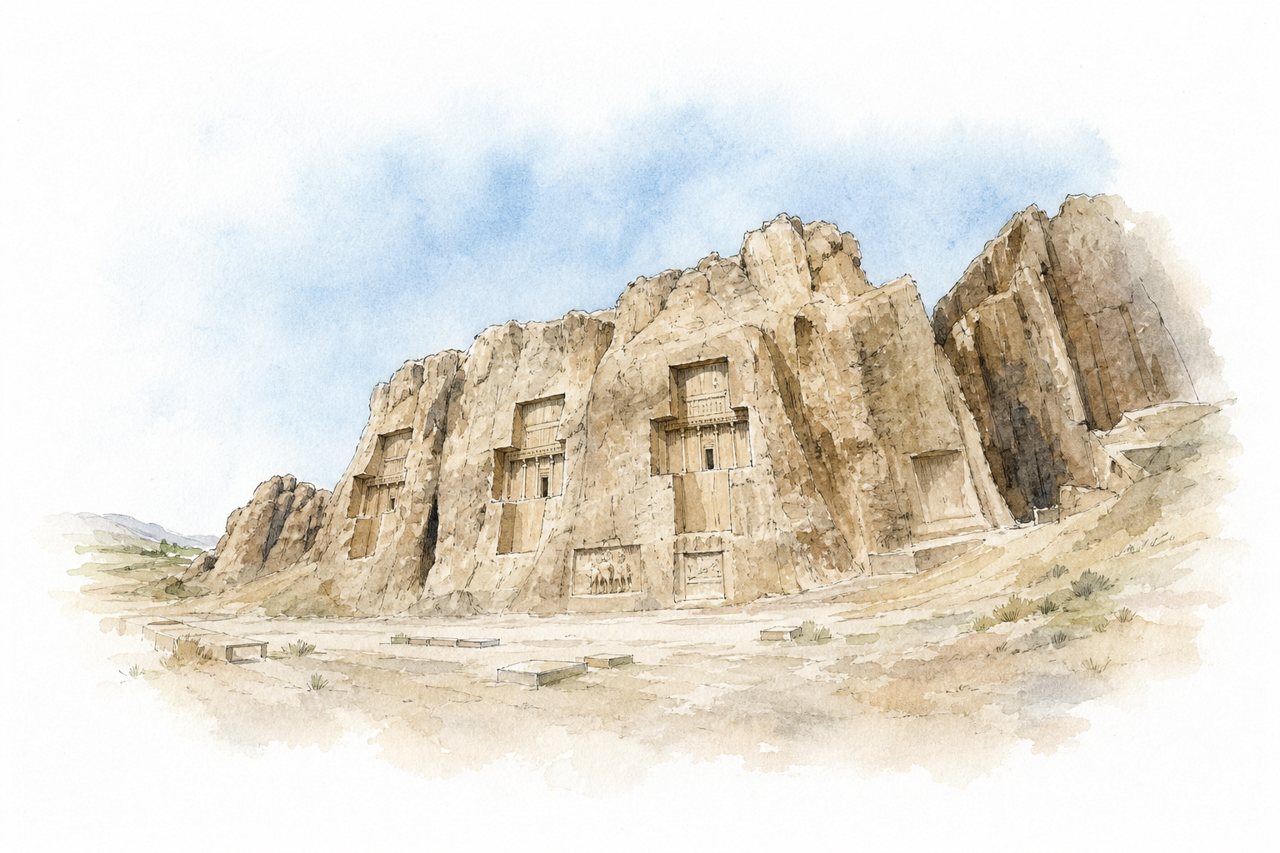
A rock-cut necropolis in Fars Province, about 6 to 12 kilometres from Persepolis. Visitors see four cross-shaped royal tombs carved into a cliff, and Sasanian reliefs lower on the rock face.
Highlights
- Tomb of Darius the Great
- Sasanian rock reliefs
- Kaaba of Zoroaster
Good to know
- Hot with little shade, bring water and a hat
- Cooler in early morning and late afternoon
- Hiring a local guide helps, signs are incomplete
-
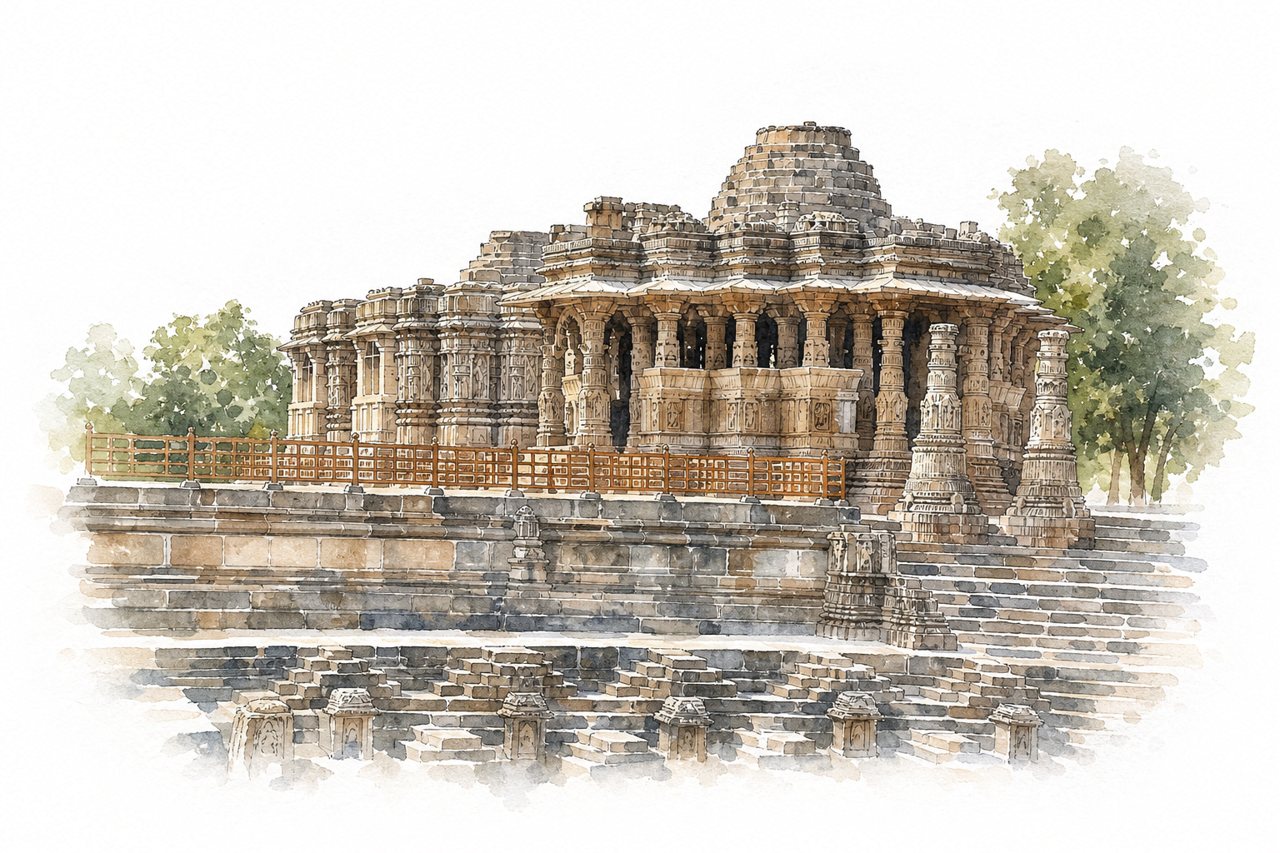
The Sun Temple at Modhera, in Mehsana district of Gujarat, is an 11th-century temple complex built under King Bhima I of the Chaulukya dynasty. Visitors walk from the Surya Kund stepwell past the assembly hall to the sanctuary.
Highlights
- Surya Kund stepwell
- Sabha Mandap assembly hall
- Carved temple pillars and friezes
Good to know
- Book tickets online via QR code
- Entry fee Rs 20 online, Rs 25 offline
- Light and sound show in evening
-
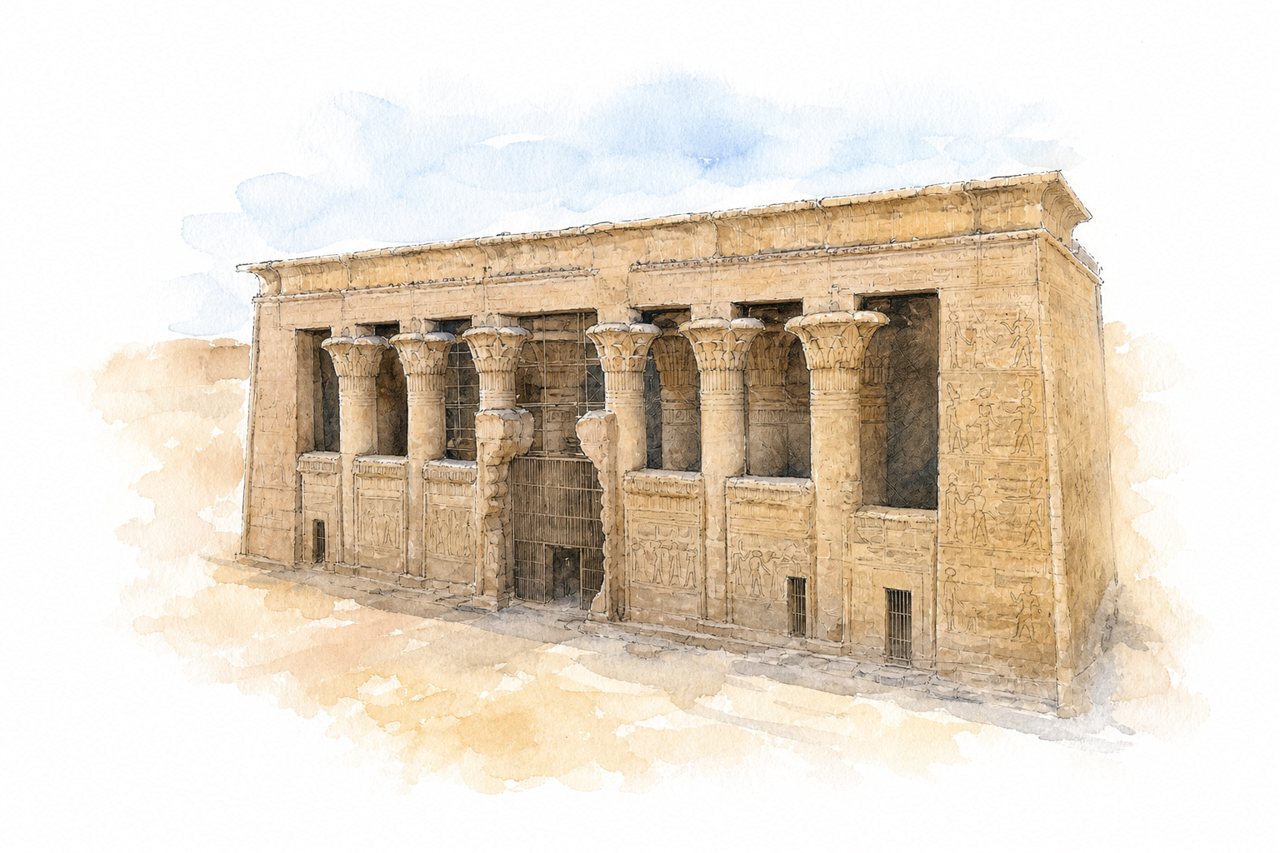
A Greco-Roman temple in Esna on the west bank of the Nile, about 55 km south of Luxor. Visitors go down steps into the columned hall, where 24 sandstone columns and painted ceilings remain.
Highlights
- Hypostyle hall with 24 columns
- Painted ceiling with zodiac scenes
- Reliefs of Roman emperors
Good to know
- Ticket booth near the Nile, card payment accepted
- Temple sits about 9 metres below street level
- Parts under restoration, some areas closed
-
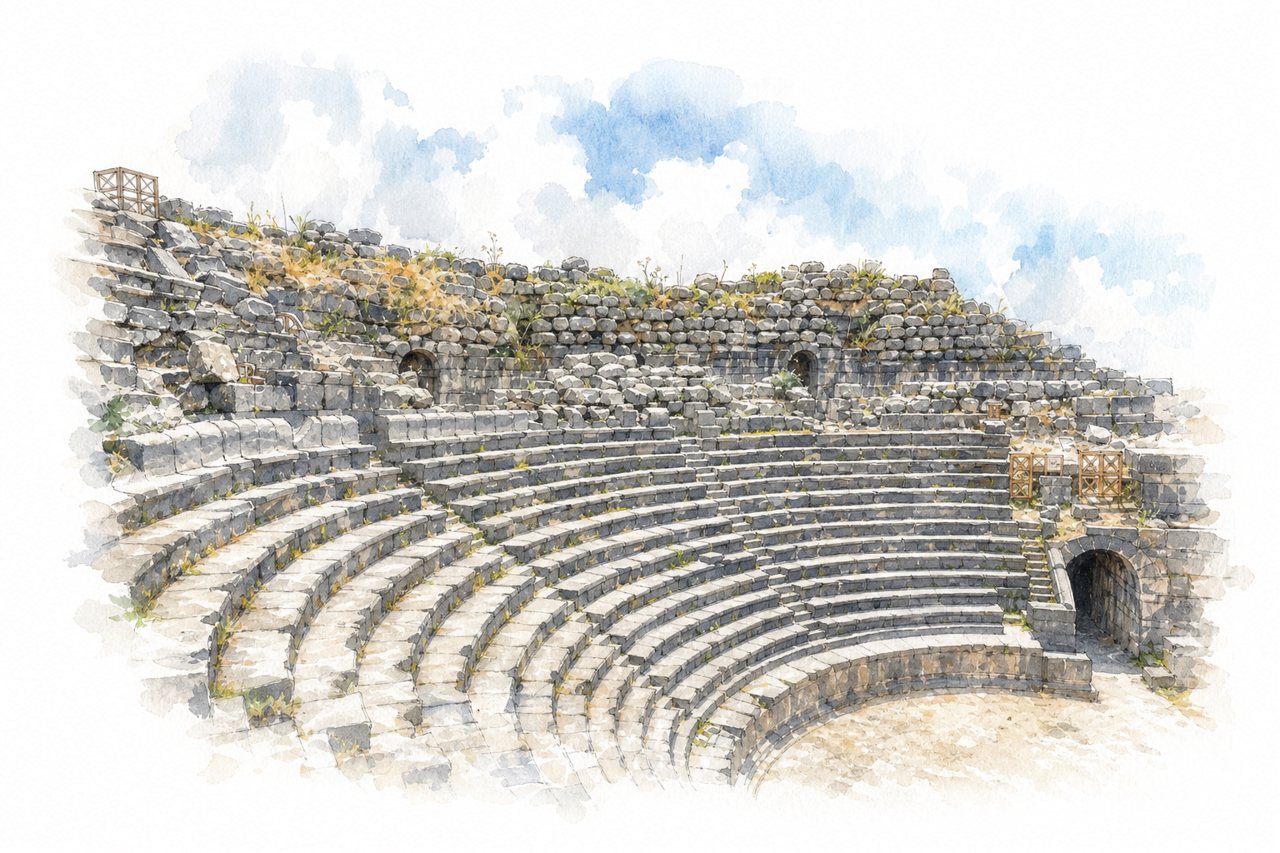
The site of ancient Gadara in northern Jordan, overlooking the Sea of Galilee. Visitors walk among basalt columns, ruined streets, a black basalt amphitheatre and house walls.
Highlights
- Basalt columns at entrance
- Black basalt amphitheatre
- Ruined colonnaded streets
Good to know
- Guides at entrance push paid tours
- Entrance fee is low for Jordanians
- Bring water, shade is limited
-
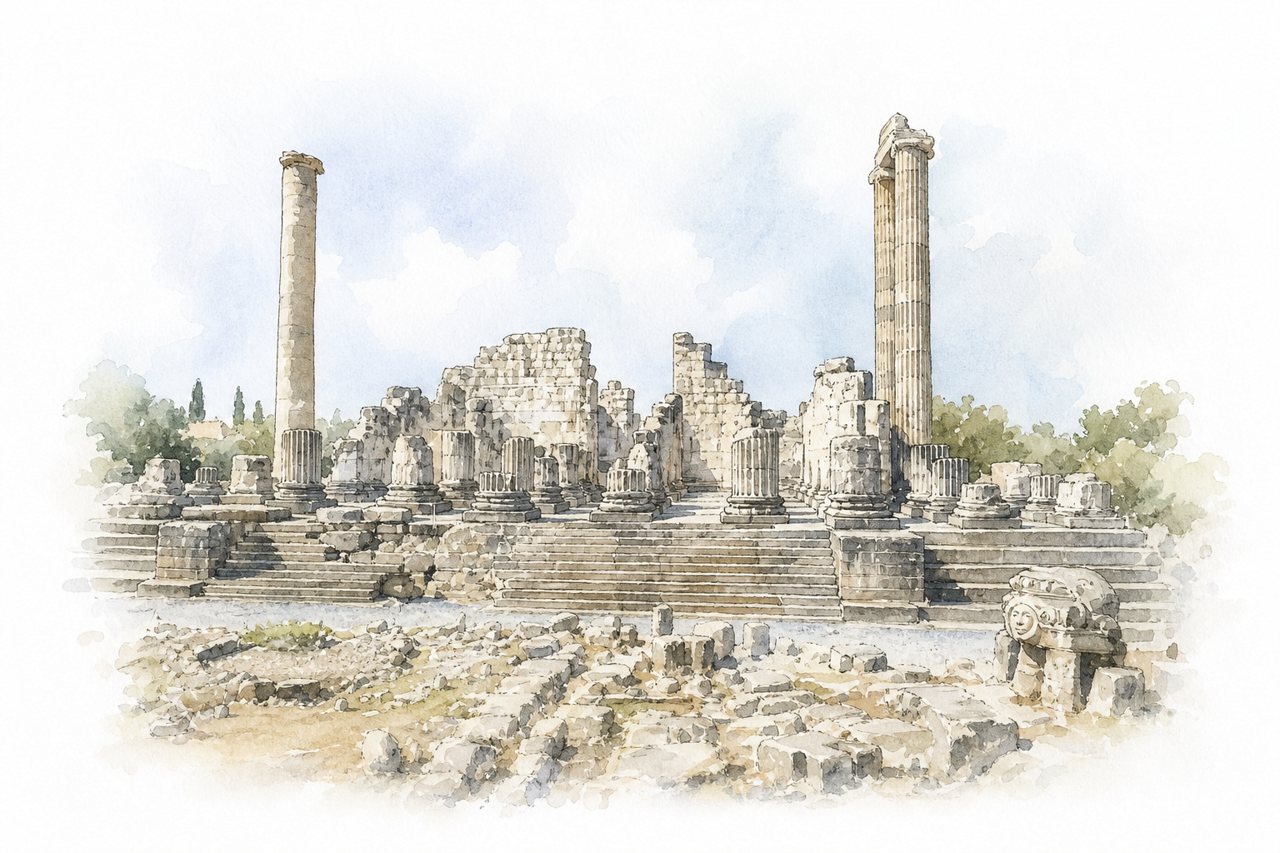
Ancient Greek temple of Apollo in Didim, Turkey, once an oracle center and never completed. Visitors walk among tall columns and carved stone blocks, past a Medusa head at the entrance.
Highlights
- Medusa head at entrance
- Monumental columns
- Inner courtyard
Good to know
- Museum Pass accepted, otherwise buy a ticket at entrance
- Visit early or late afternoon, midday heat is strong
- Night visits cost extra and the inner courtyard is closed
-
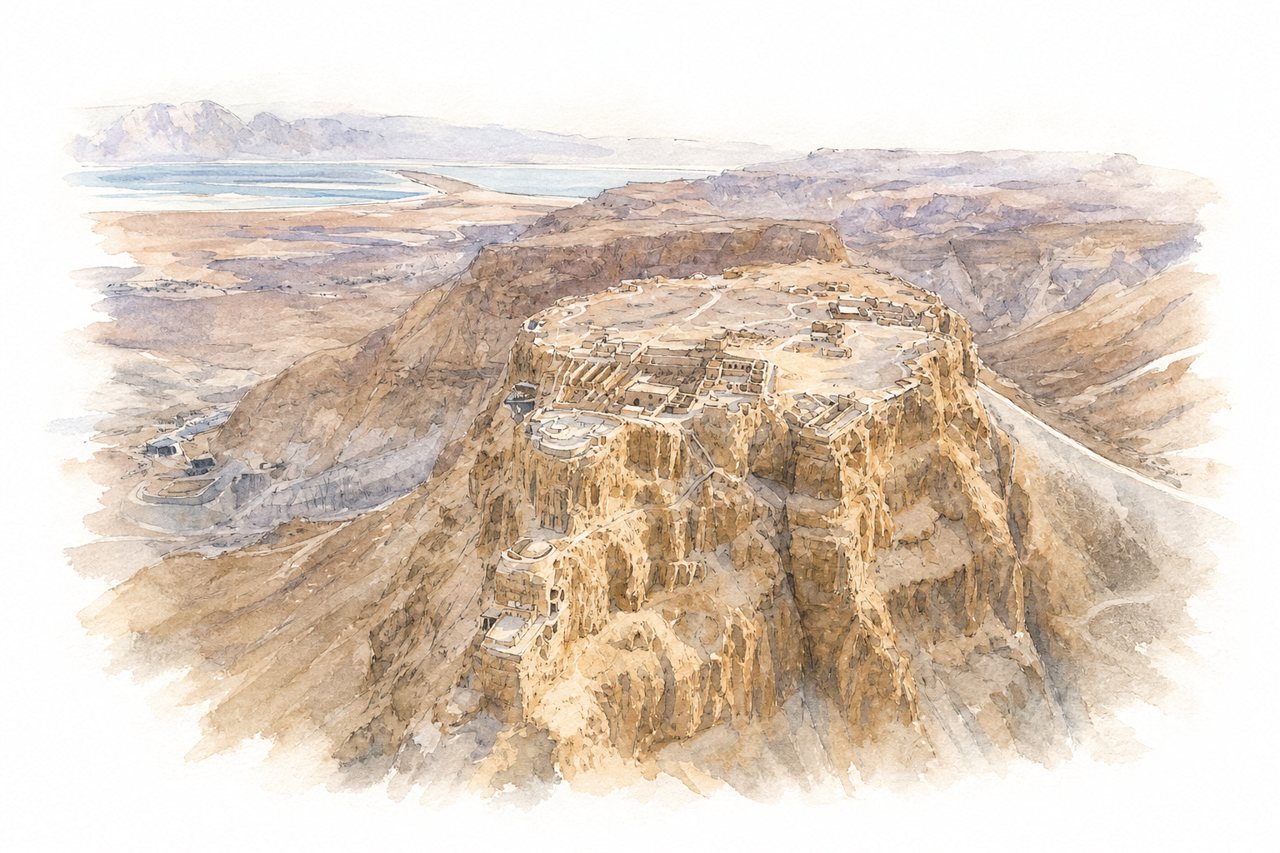
A rock fortress on a plateau above the Dead Sea in the Judean Desert, built by Herod the Great. Visitors reach the summit by cable car or by the Snake Path and Roman siege ramp, then see palace remains, mosaics and frescoes, and cisterns.
Highlights
- Herod's palace remains
- Roman siege ramp
- Dead Sea viewpoint
Good to know
- Cable car about 91 shekels roundtrip
- Very hot in summer, go early
- Snake Path open only at certain times, check website
-
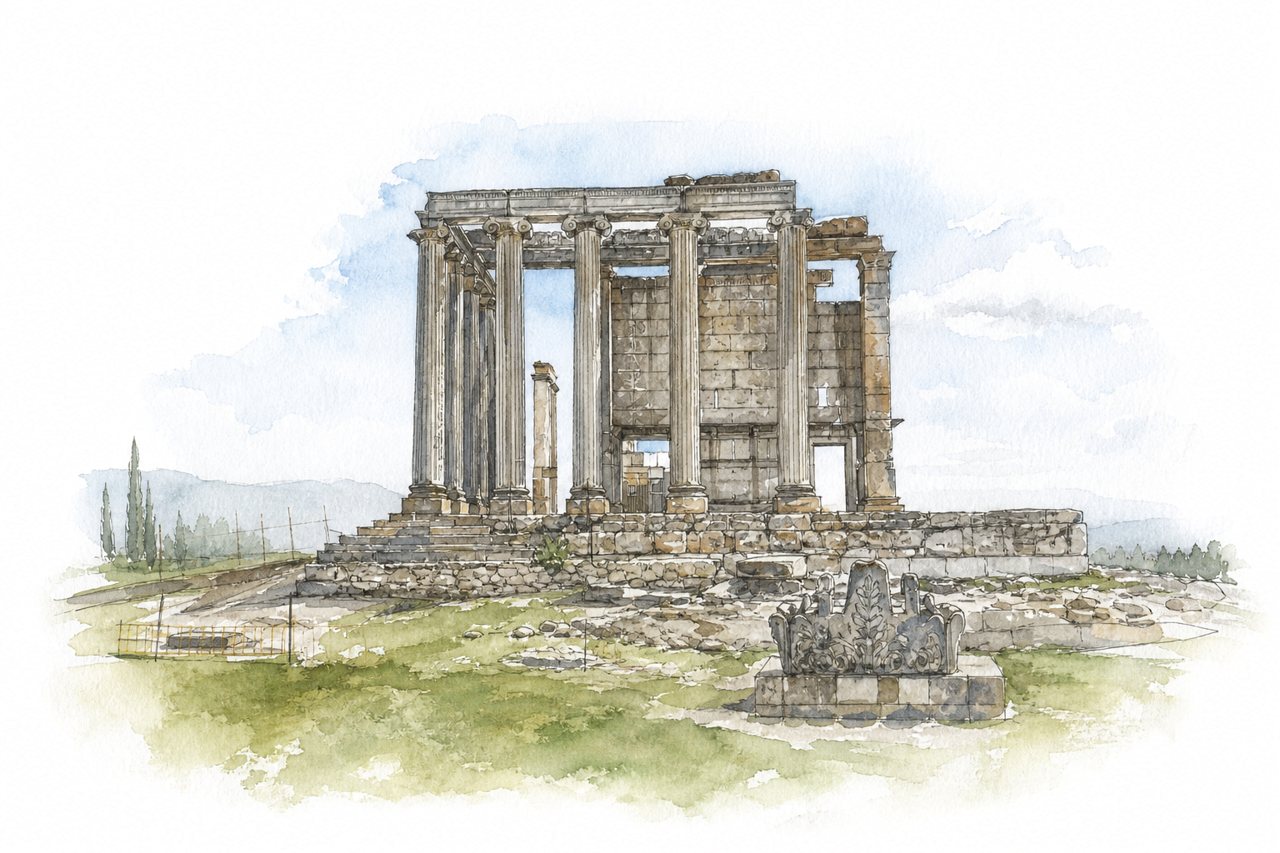
Roman-period ancient city in Çavdarhisar district, Kütahya province, Turkey, about an hour from Kütahya city. Visitors walk past a Temple of Zeus, a theatre and stadium, baths and colonnaded streets while excavations continue.
Highlights
- Temple of Zeus
- Theatre and stadium complex
- Roman bridges
Good to know
- Museum card accepted at the entrance
- Ticket office closes at 18:45
- Parking available close to the temple
-
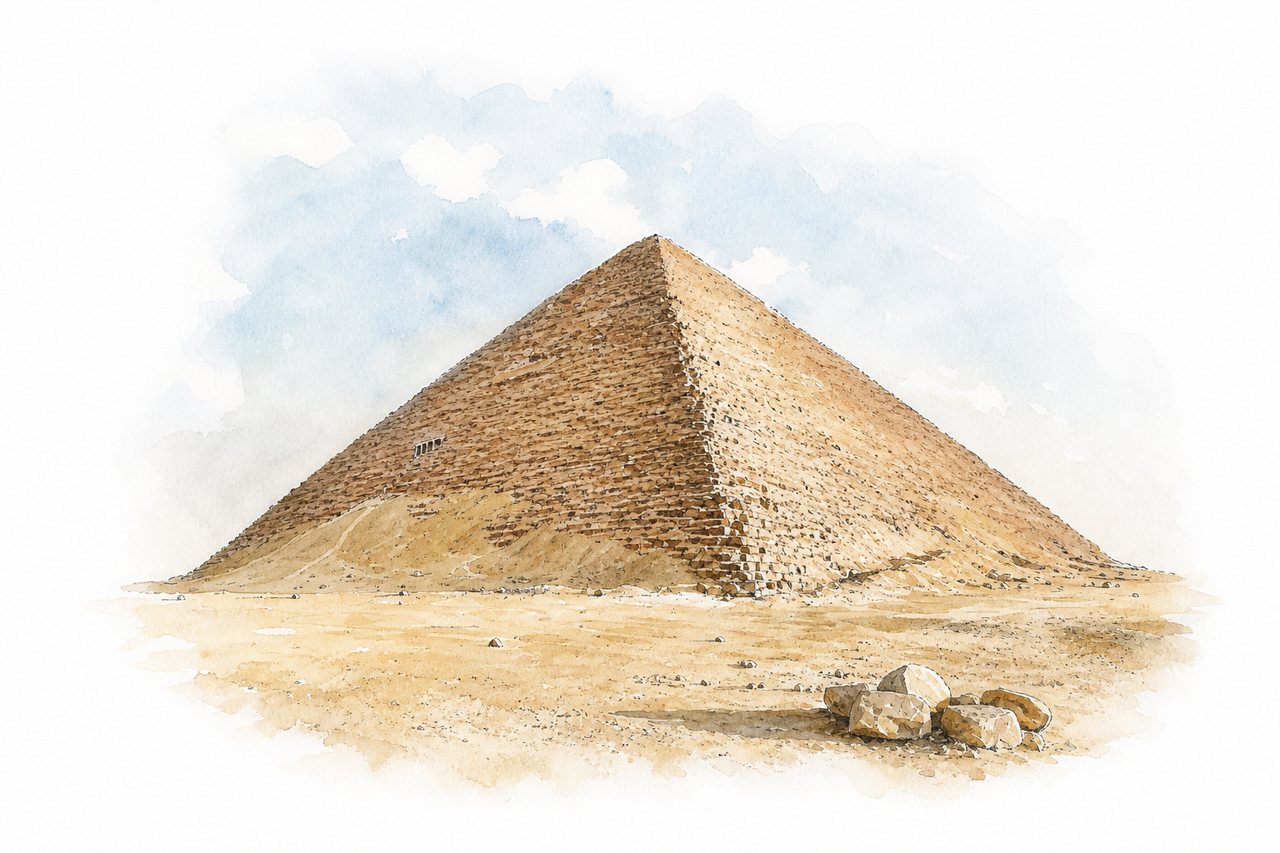
Desert necropolis about 40 km southwest of Cairo, built under Sneferu of the Fourth Dynasty. Visitors walk around the Red Pyramid, climb to its entrance and descend narrow passages to the inner chambers.
Highlights
- Red Pyramid
- Bent Pyramid
- Inner burial chambers
Good to know
- Entry 200 Egyptian pounds for foreigners
- Keep ticket for entry to both pyramids
- Hire a driver, no public transport there
-
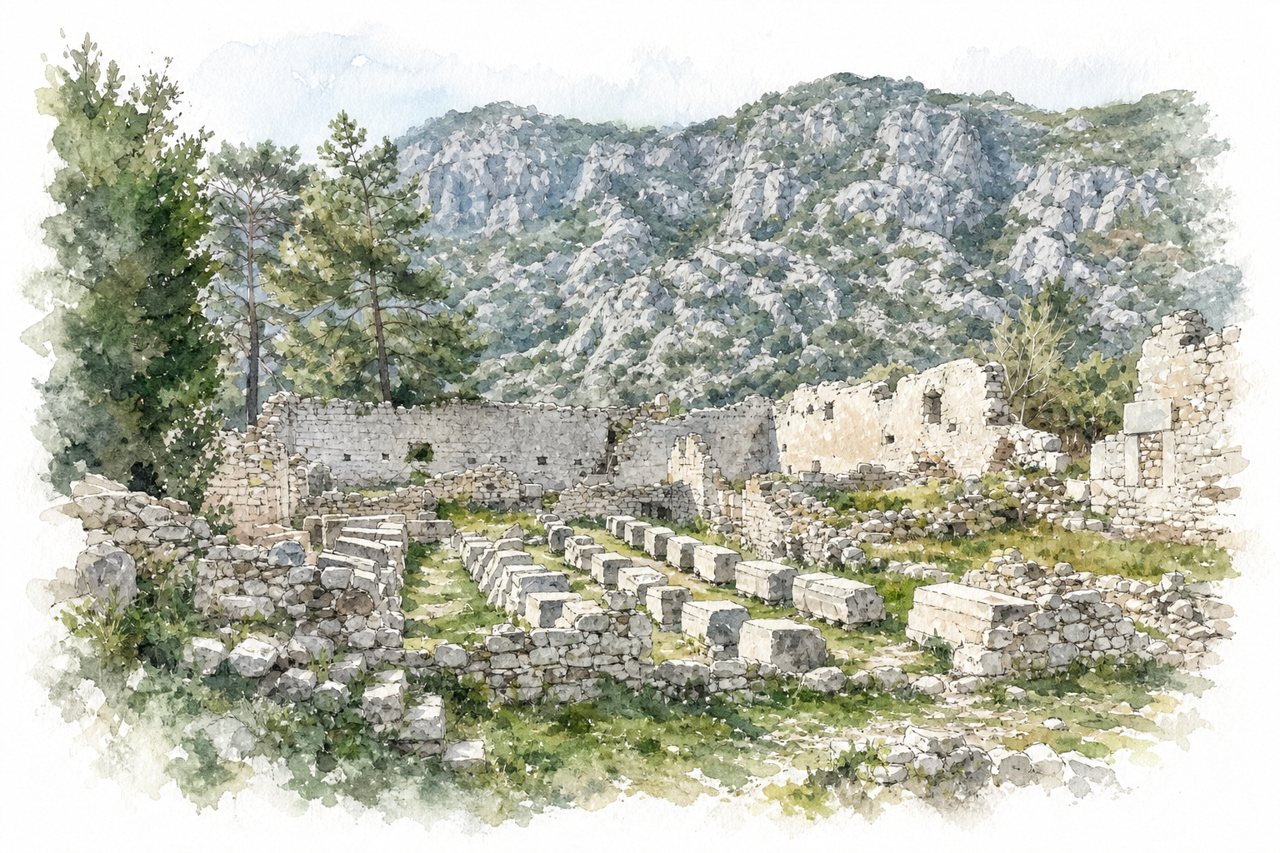
A Lycian, Roman and Byzantine port city in a forested valley on the Mediterranean coast near Çıralı. Visitors walk the streets beside a stream, past sarcophagi, a theatre, basilicas and villas, down to a pebble beach.
Highlights
- Ancient theatre
- Sarcophagi under ivy
- Basilica and bishop's palace
Good to know
- Museum Card accepted; app QR code skips queue
- Parking costs 200 TL per car
- Allow two to three hours
-
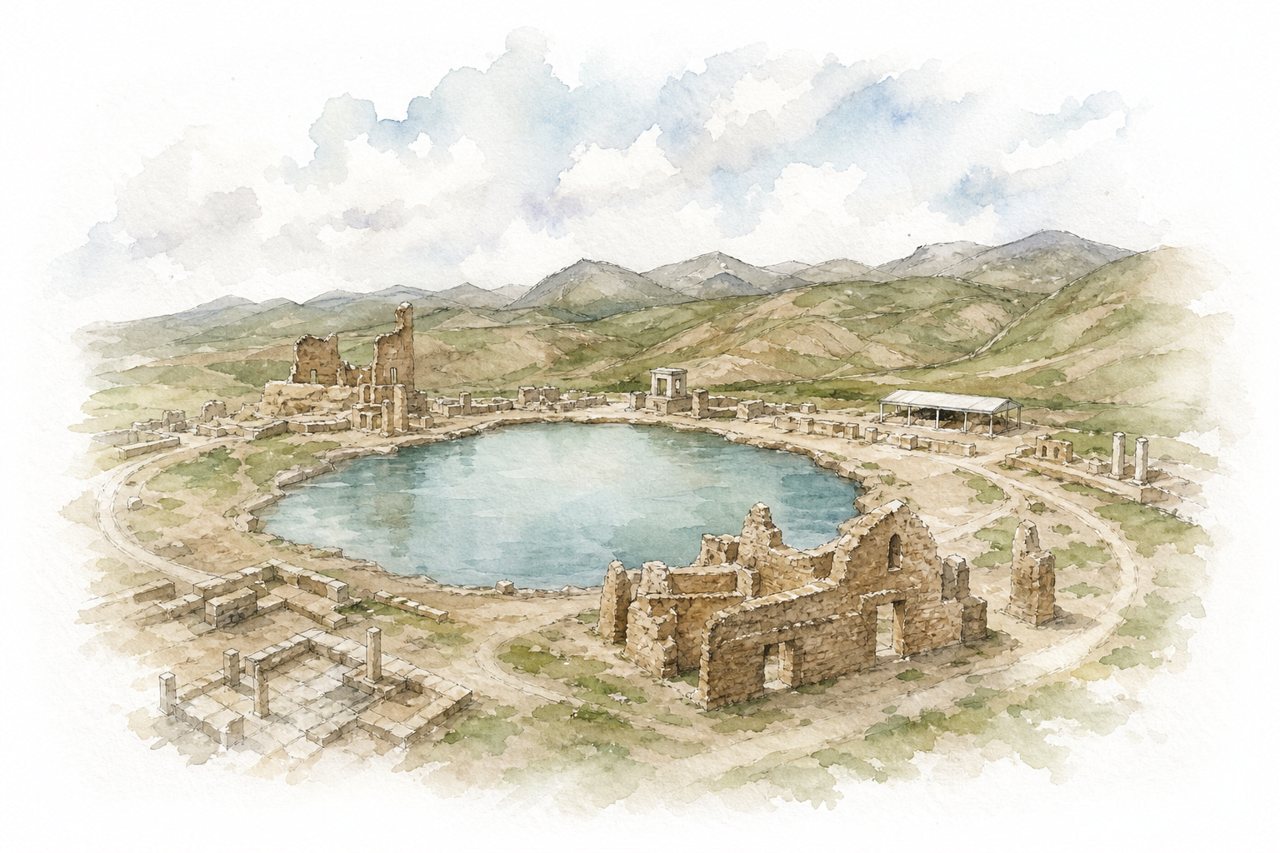
A UNESCO-listed archaeological complex in West Azerbaijan Province, near Takab, built around a mineral lake. Visitors walk among Sasanian-era ruins, a fire temple and a stone porch, with the lake in the middle of the site.
Highlights
- Azar Goshnasp fire temple
- Khosrow porch
- Anahita temple
Good to know
- Entry ticket to the main complex, parking is free
- Plan two to three hours
- Roads from Takab and Zanjan are rough, few signposts
-
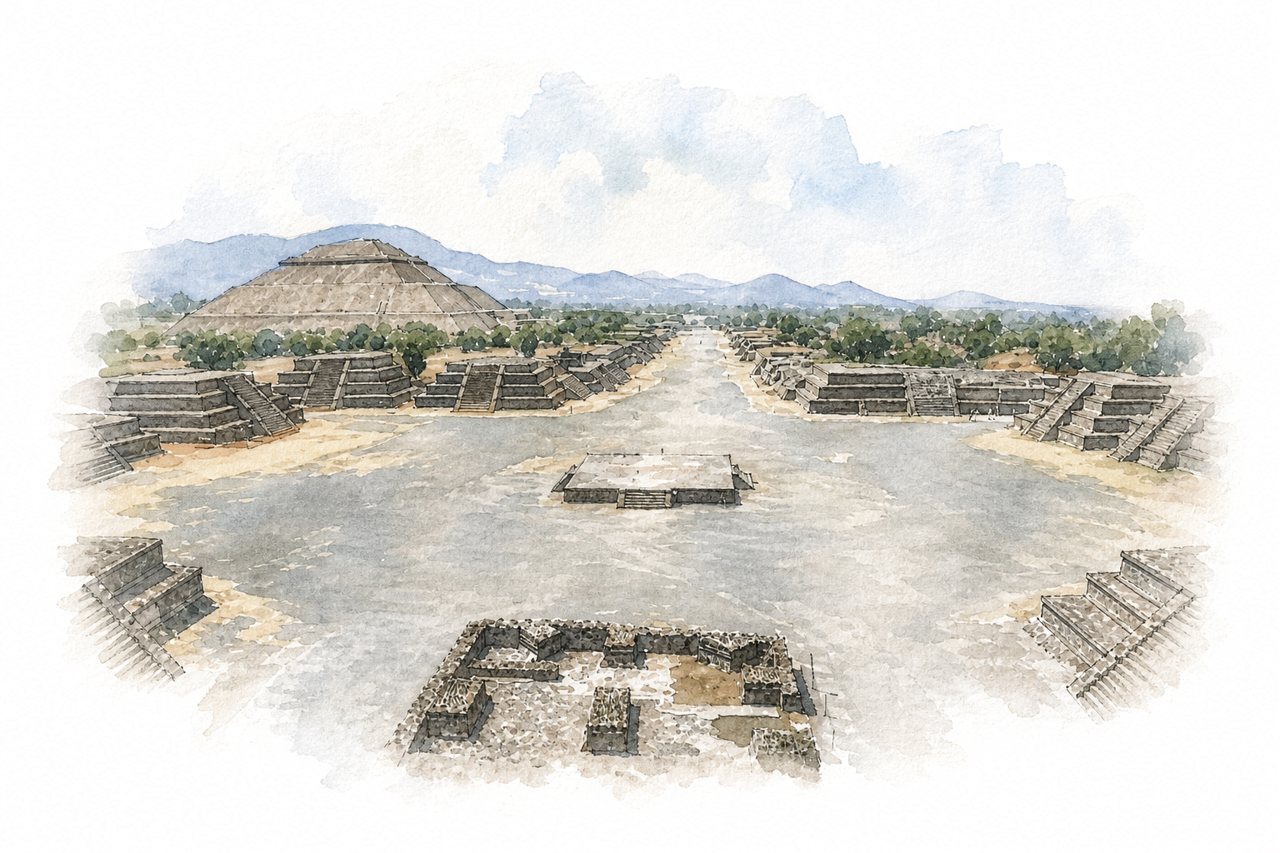
A large pre-Hispanic ceremonial city in San Juan Teotihuacán, about an hour from Mexico City. Visitors walk the Avenue of the Dead past the Pyramids of the Sun and the Moon and the Temple of Quetzalcoatl.
Highlights
- Pyramid of the Sun
- Pyramid of the Moon
- Avenue of the Dead
Good to know
- Admission free on Sundays for Mexicans with ID
- Bring water, hat and sunscreen; little shade
- Allow at least three hours; site is large
-
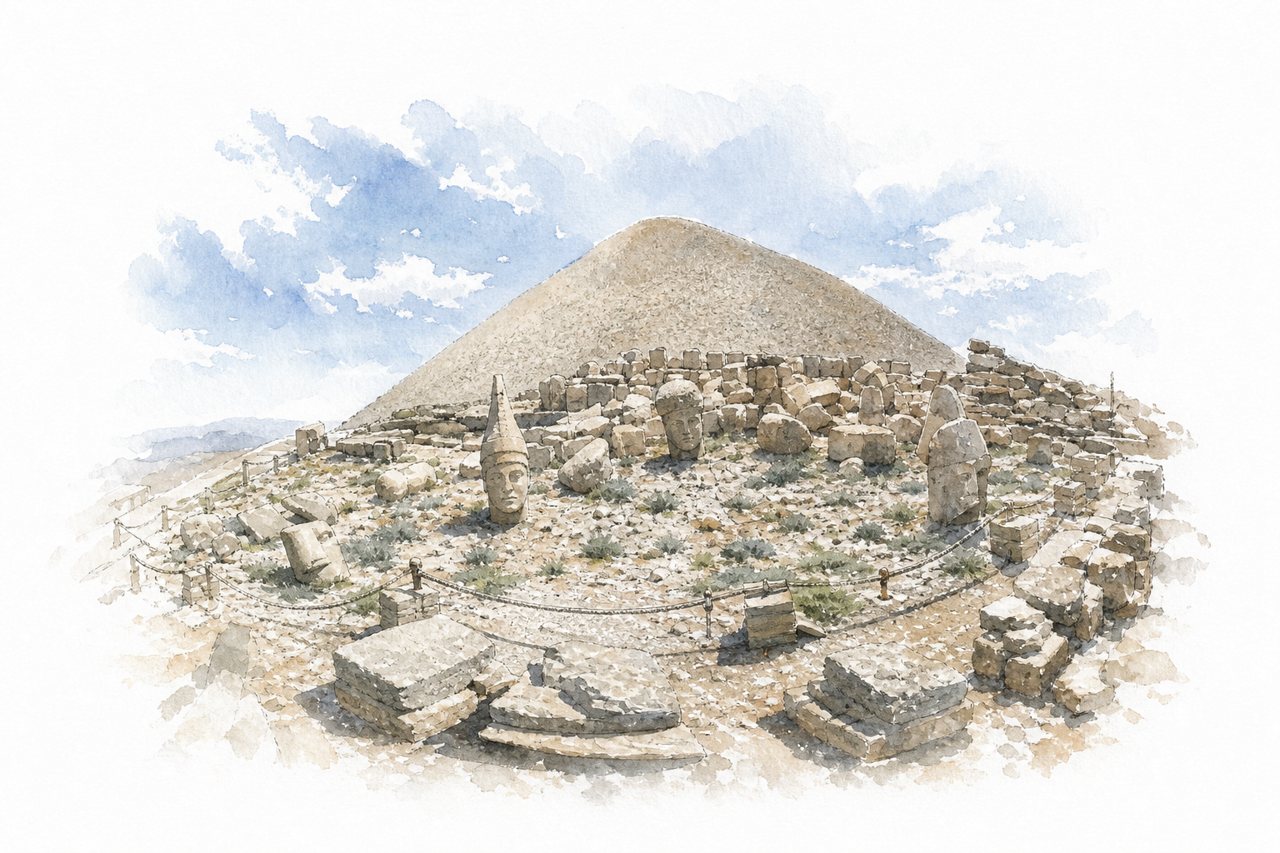
High mountain sanctuary in Adıyaman province, Turkey, on the Taurus range, built for King Antiochus I of Commagene. Visitors climb stairs from a car park to the summit, passing a tumulus and colossal stone heads and statues on the eastern and western terraces.
Highlights
- Colossal heads on terraces
- Tumulus burial mound summit
- Western terrace statues
Good to know
- Museum pass or ticket at visitor centre
- Several hundred steps from the parking area
- Sunrise or sunset visits, bring warm layers
-
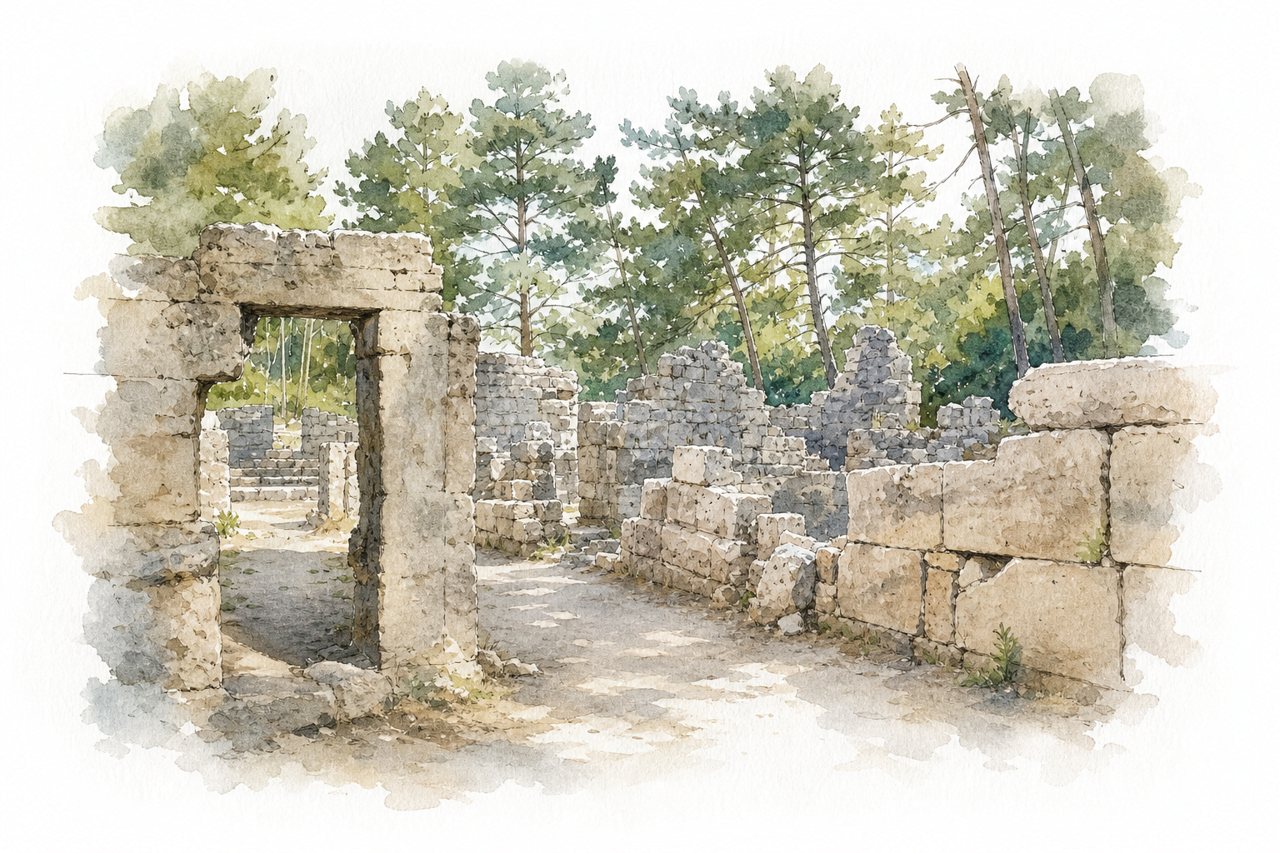
A Lycian and Roman port city on a pine-covered peninsula on the Mediterranean coast near Kemer. Visitors walk the ancient streets and harbours, passing bathhouses, aqueducts and the agora ruins, with swimming coves inside the site.
Highlights
- North and Central Harbors
- Roman bathhouses
- Aqueducts at the base of the site
Good to know
- Entry with a Museum Card or pass
- Long car queues at the entrance, especially in summer
- Arrive early, bring water and water shoes
-
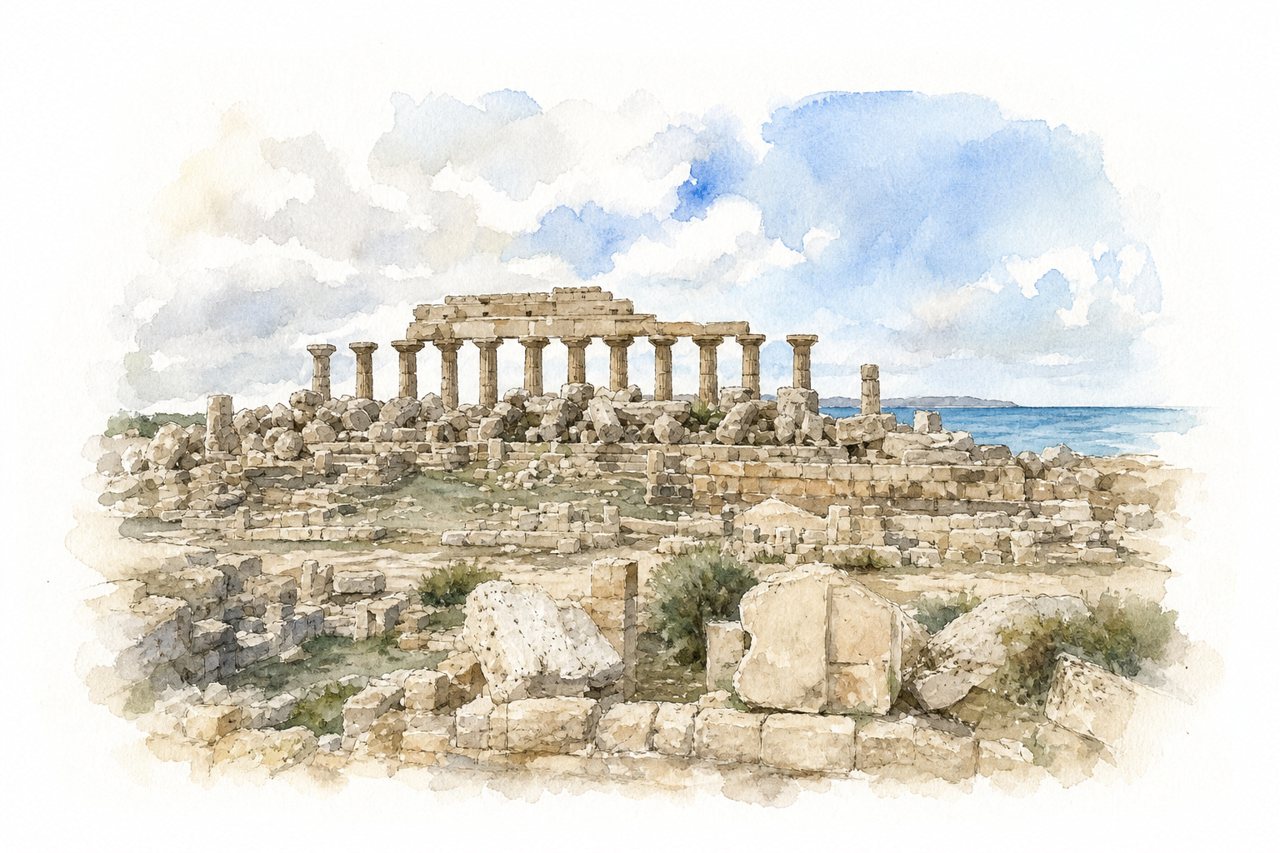
A large ancient Greek city ruin on the Mediterranean coast in western Sicily. Visitors walk among temple ruins and remains of dwellings with the sea behind them, with the acropolis about 3 km from the entrance.
Highlights
- Temple E
- Temple of Hera
- Acropolis
Good to know
- Shuttle and golf cart tickets cost extra
- Walking distances are long, bring water and a hat
- Visit early morning or late afternoon in summer
-
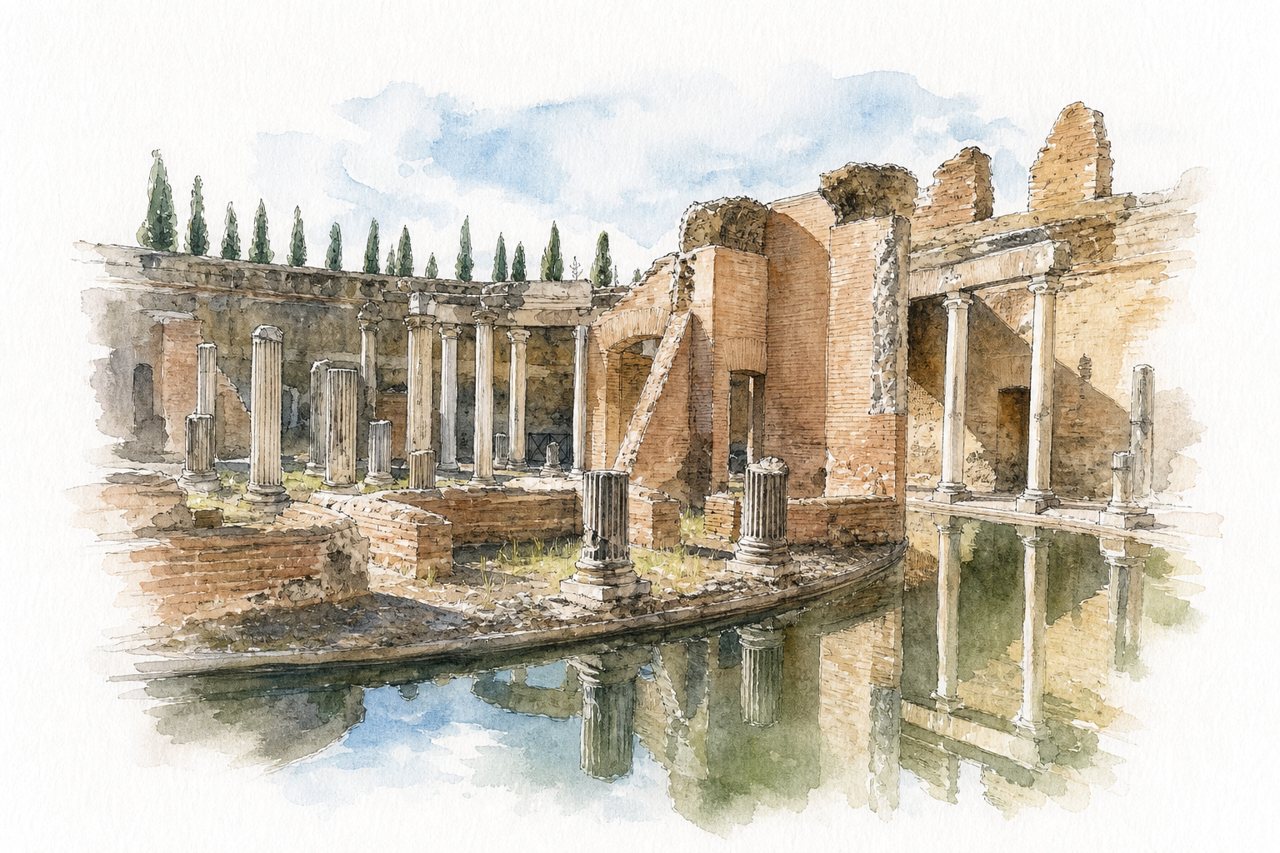
An imperial Roman residence in Tivoli, outside Rome, built by Emperor Hadrian in the second century AD. Visitors walk a large, wooded site of palaces, baths, gardens and pools.
Highlights
- Canopus pool with statues
- Maritime Theatre
- Large bath complexes
Good to know
- Allow at least three hours to explore
- Wear comfortable shoes and bring water
- Buy Cotral bus tickets at bars or newsagents
-
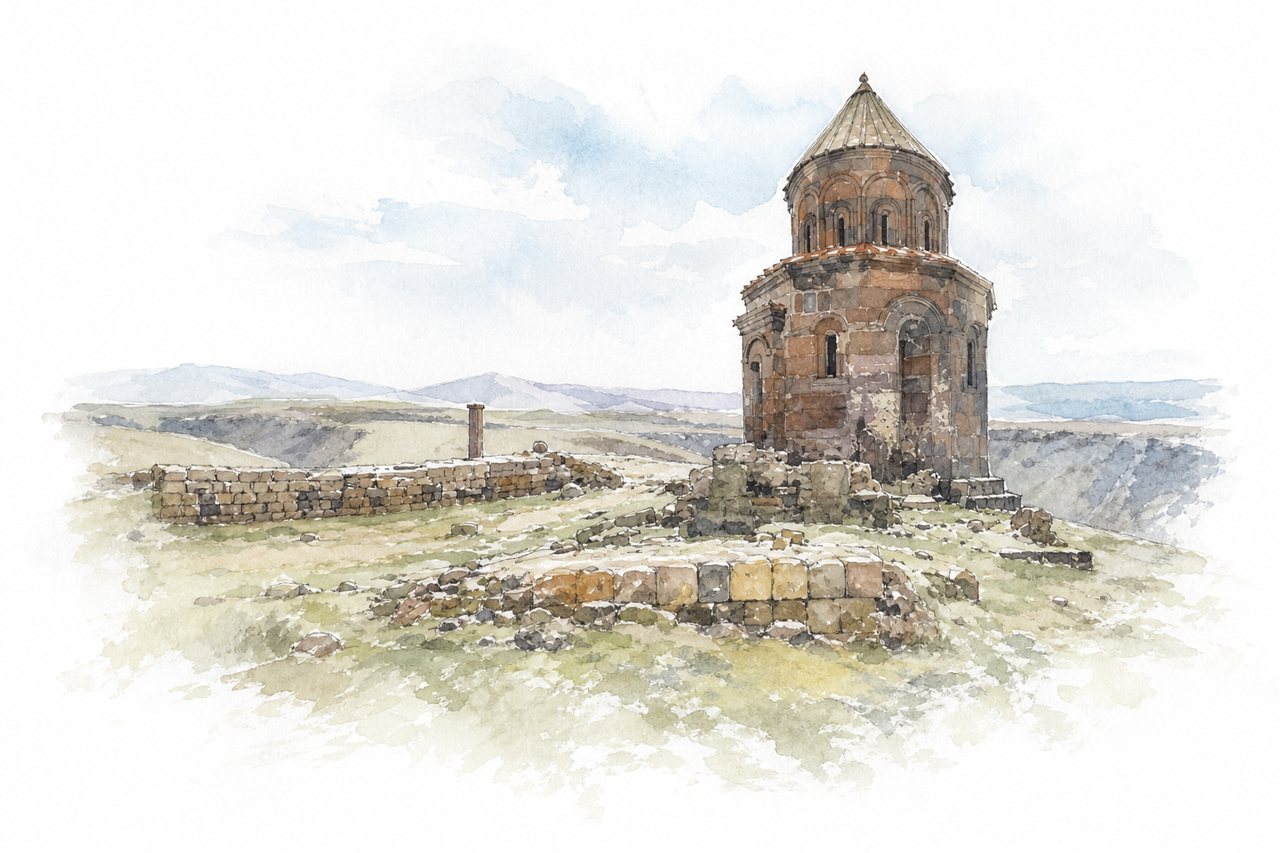
Medieval city ruins on a plateau above the Arpaçay River, on the Turkey-Armenia border near Kars. Visitors walk past walls, churches, a cathedral, mosques and palace remains spread across grassy, unpaved ground.
Highlights
- Ani Cathedral
- Menüçehr Mosque
- Tigran Honents Church
Good to know
- Museum Pass or Museum Card accepted
- Golf carts or shuttles about 300 TL per person
- Allow 2-3 hours; bring water and a hat
-
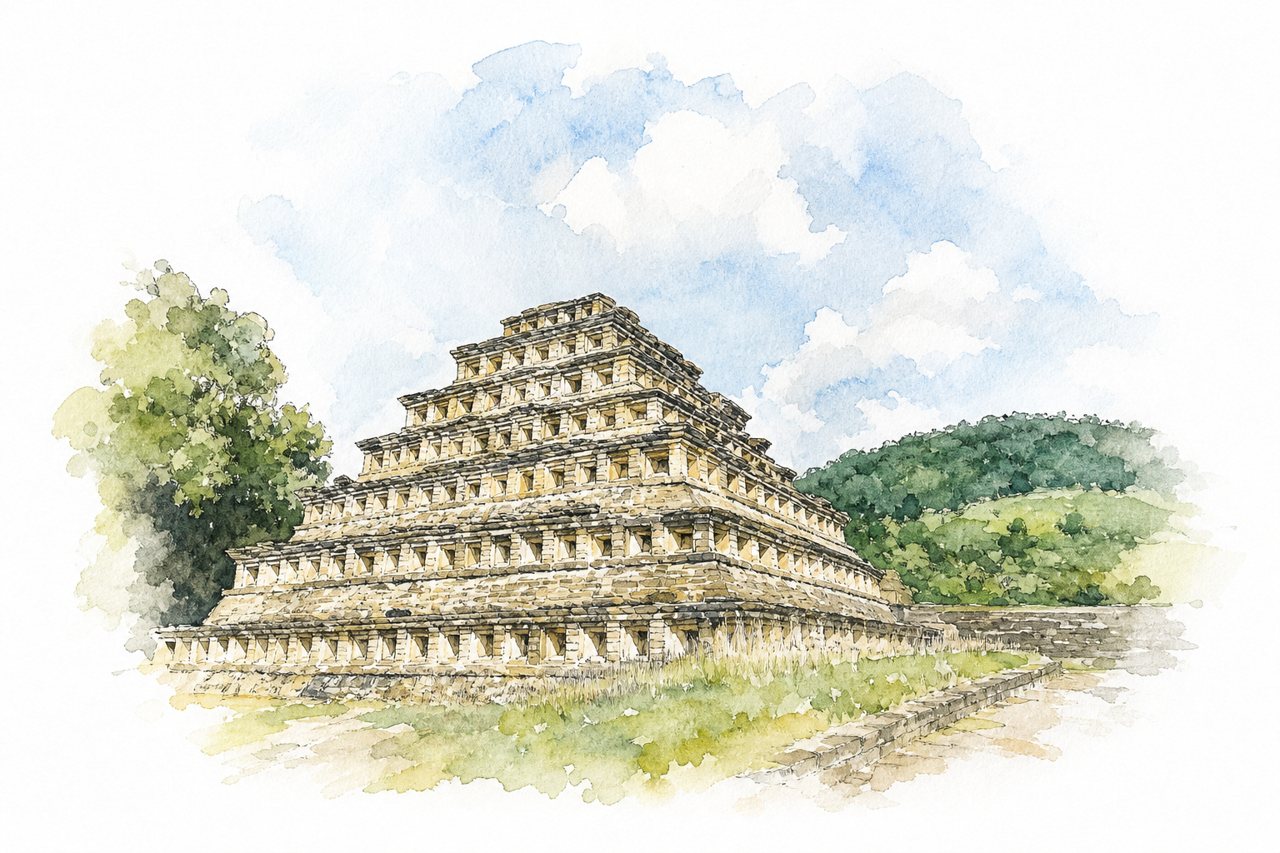
Archaeological site of the Totonac culture near Papantla in Veracruz, Mexico, set in jungle greenery. Visitors walk through plazas and causeways between pyramids and see carved stair steps.
Highlights
- Pyramid complex
- Plazas and causeways
- Carved stair steps
Good to know
- Entry free on Sundays
- Bring hat, water and umbrella
- Guides at entrance, about 90 minutes
-
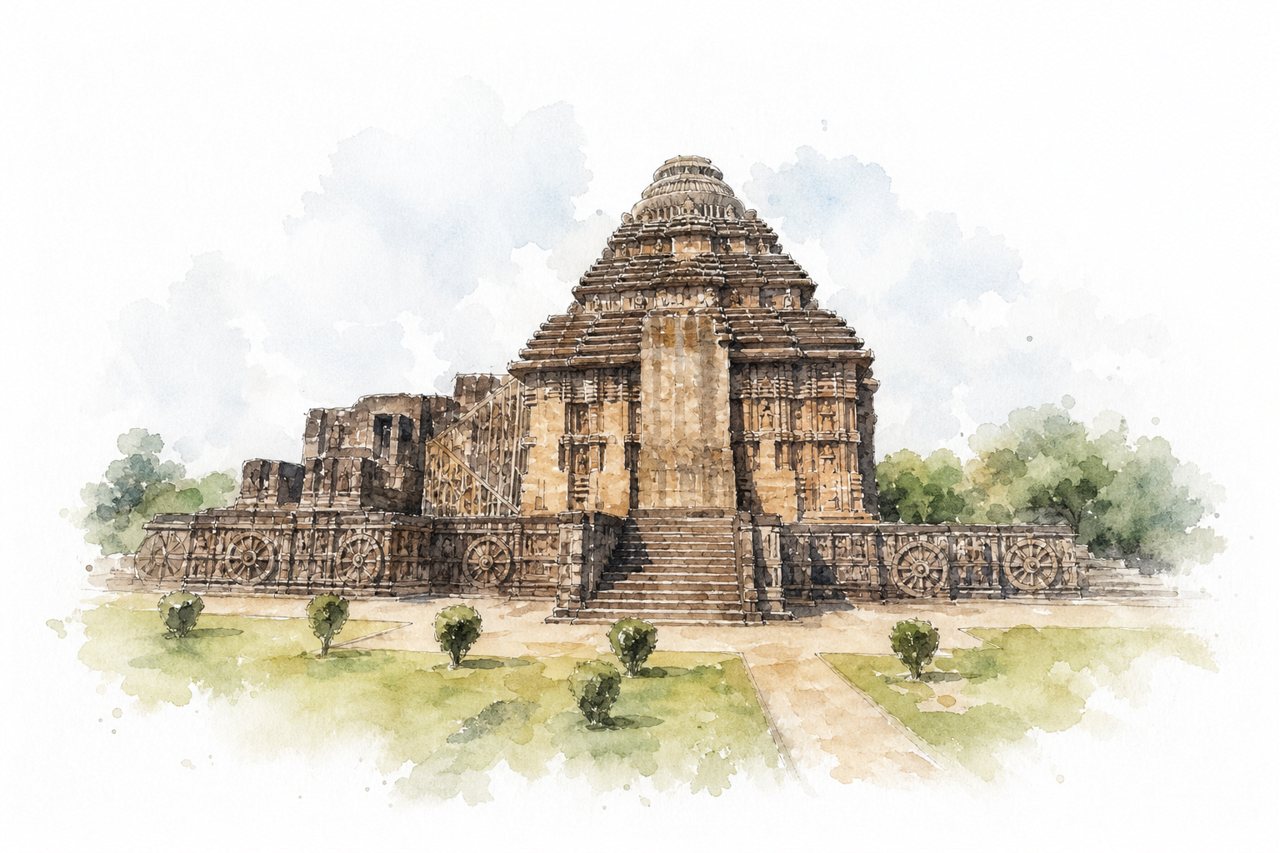
A 13th-century temple on the coast of Odisha, India, built in the shape of a stone chariot. Visitors walk around the complex to see the carved wheels, stone horses and wall reliefs of deities and daily life.
Highlights
- Stone chariot wheels
- Seven stone horses
- Carved exterior walls
Good to know
- Book tickets online to skip queues
- Guides cost about 500 rupees
- Visit early morning, it gets hot
-
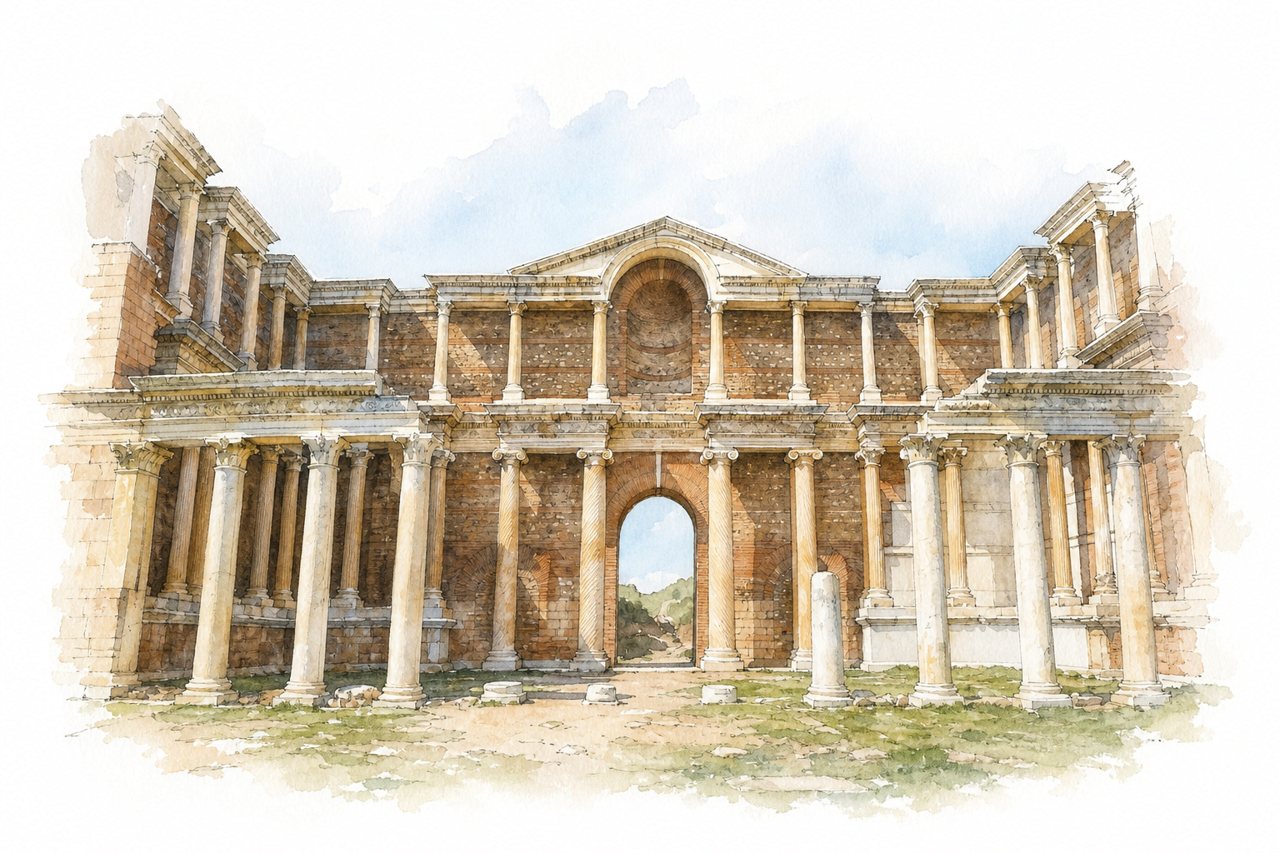
An Iron Age Lydian capital near Sart in Salihli district, Manisa, with later Roman and Byzantine remains. Visitors walk past the gymnasium and bathhouse, the synagogue with its mosaic floors, and the Temple of Artemis nearby.
Highlights
- Gymnasium and bathhouse complex
- Synagogue with floor mosaics
- Temple of Artemis
Good to know
- Museum Card accepted at the entrance
- Almost no shade, visit in the morning
- SART minibus from Salihli centre every 30 minutes
-
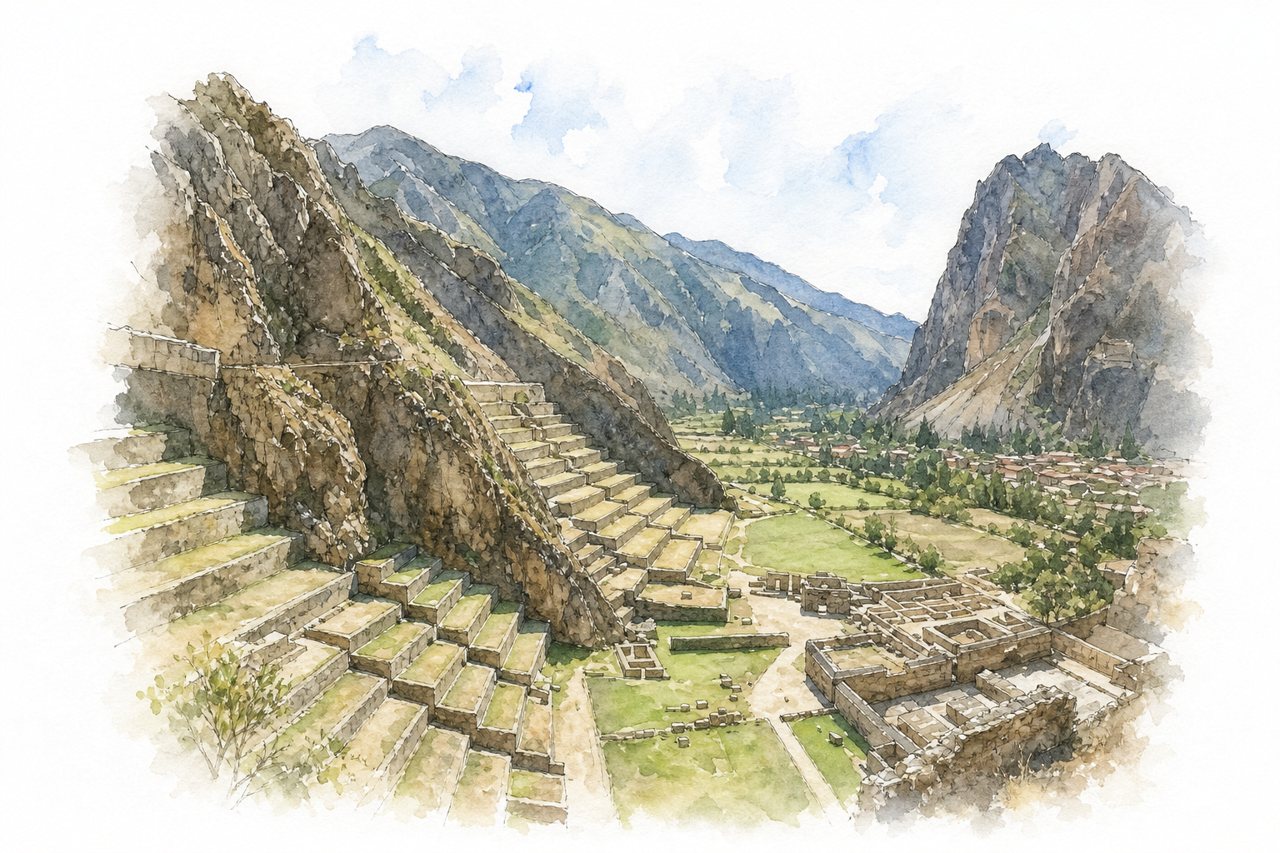
An Inca archaeological site and living town in the Sacred Valley near Cusco, Peru. Visitors climb stone terraces and steps past the fortress, gates and walls toward the Temple of the Sun.
Highlights
- Temple of the Sun
- Agricultural terraces
- Water fountains
Good to know
- Tourist ticket needed, Cusco pass covers entry
- Arrive early, crowds from tour buses
- Around 250 steps, altitude makes climb tiring
-
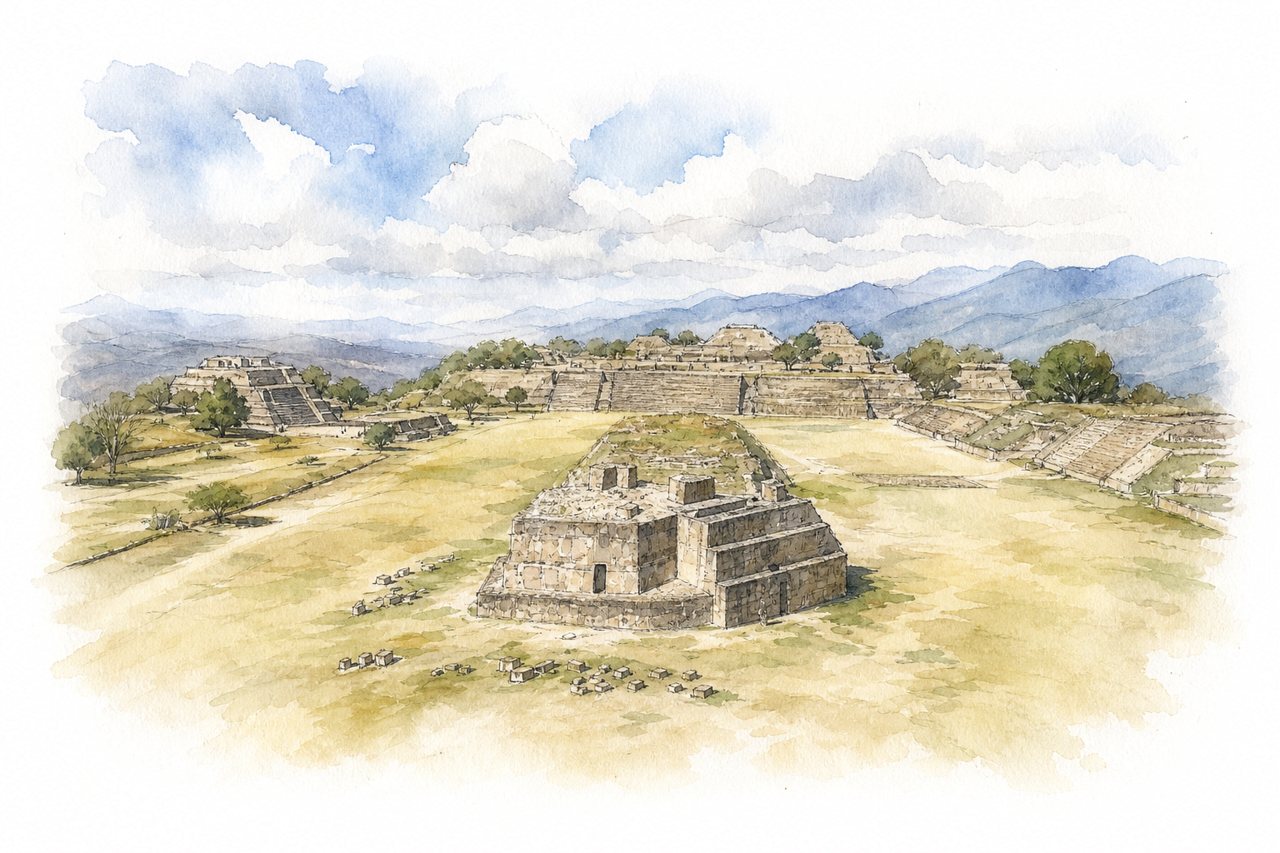
A mountaintop Zapotec city in the Sierra Madre above Oaxaca City, with wide views over the valley. Visitors cross the Gran Plaza, climb stepped pyramids and platforms, and see temples set around the central square.
Highlights
- Gran Plaza
- South Platform
- North Temple
Good to know
- Entry 210 pesos for foreigners, 105 for Mexicans
- Free Sundays for Mexican citizens with ID
- Guides at the entrance, about 200 pesos per person
-
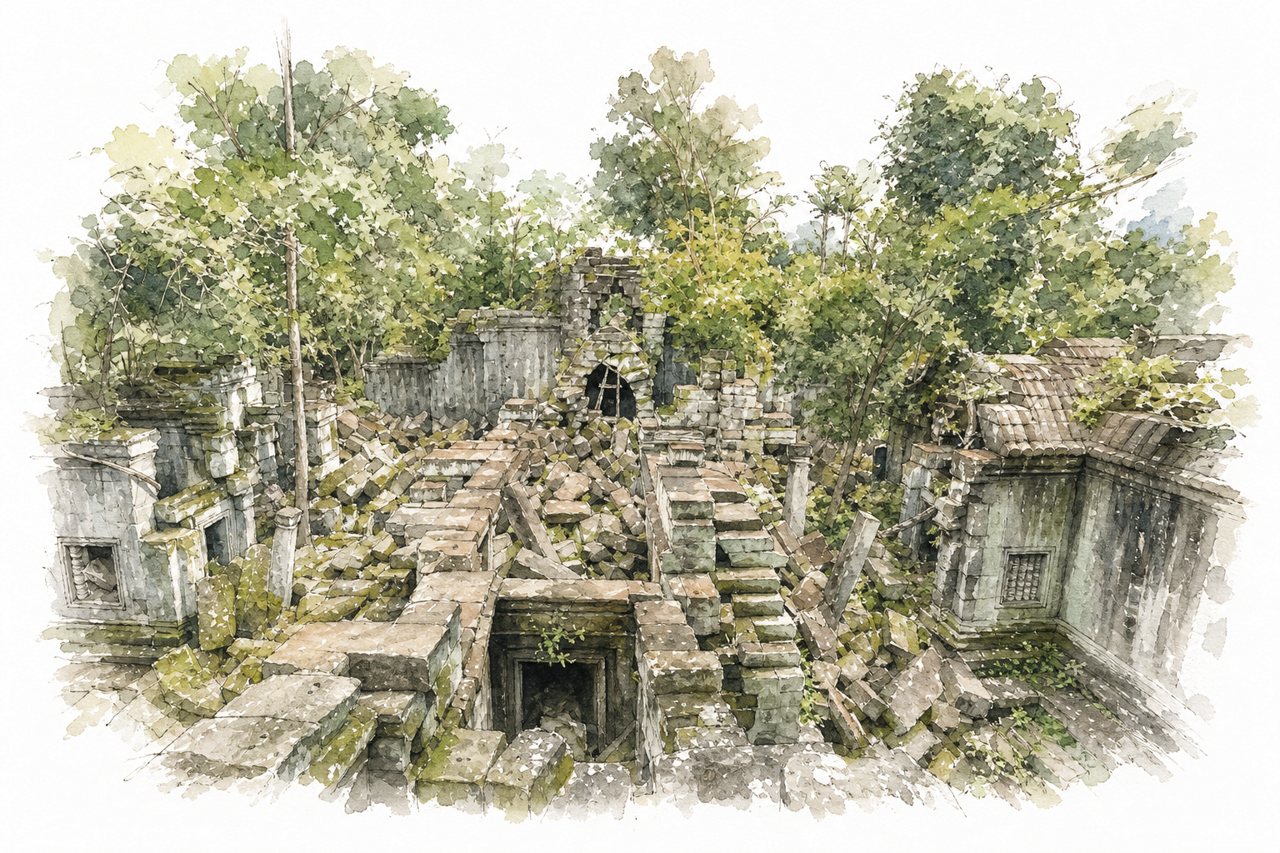
An unrestored Khmer temple in Svay Leu district, Siem Reap province, about an hour's drive from the city. Wooden walkways run past collapsed sandstone galleries, walls and a central shrine overgrown with trees, roots and moss.
Highlights
- Wooden walkways over ruins
- Collapsed central shrine
- Galleries and carved lintels
Good to know
- Included in Angkor Pass, otherwise $10 ticket
- Allow one and a half to two hours
- Go early morning for fewer visitors
-
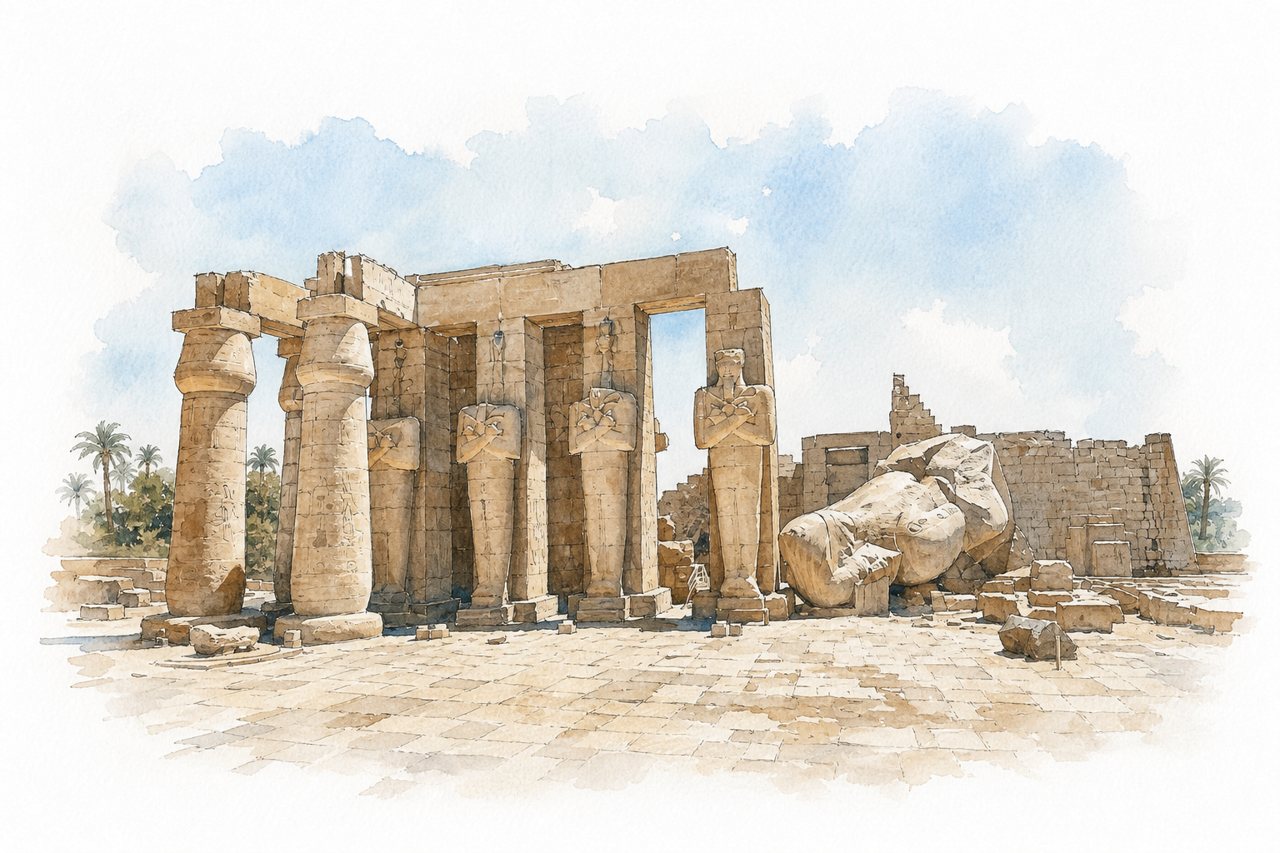
The Temple of Seti I stands at Abydos near El Balyana in Sohag, Upper Egypt, and is a 19th Dynasty mortuary temple. Visitors climb ramps past a colonnade of square columns and walk through halls carved with hieroglyphs and reliefs.
Highlights
- Abydos King List
- Colonnade of square columns
- Hypostyle court reliefs
Good to know
- Buy tickets at the ticket office, not online
- Visit takes twenty minutes to an hour
- Few visitors; guides may ask for tips
-
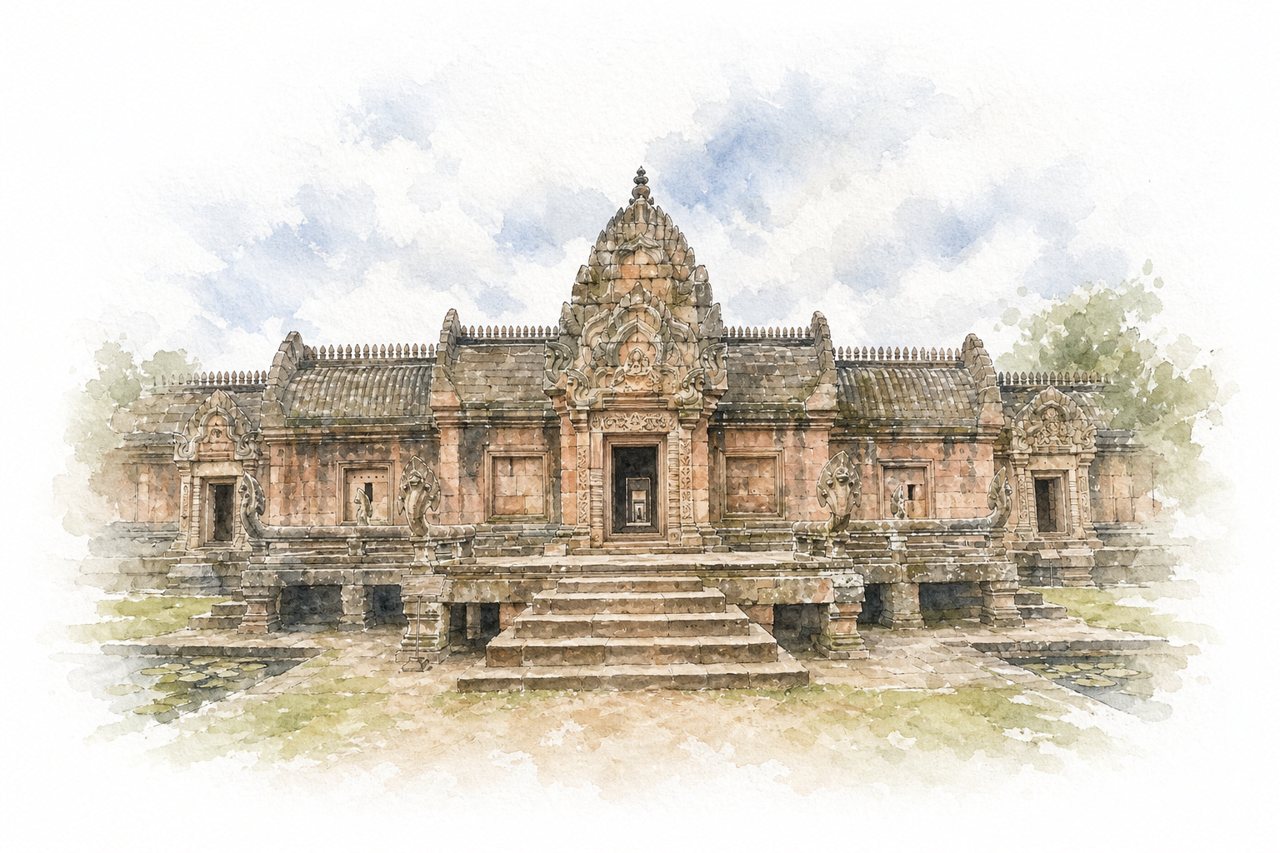
A Khmer Hindu temple complex stands on an extinct volcano in Buriram Province, Thailand. Visitors climb a processional stairway and stone gallery to reach the sanctuary and reflecting ponds.
Highlights
- Vishnu reclining lintel
- Processional stairway to sanctuary
- Reflecting ponds with naga walls
Good to know
- Foreigners pay 200 baht, Thais 20 baht
- Vehicle entry 50 baht per car
- Steep steps; wear sneakers, not flip-flops
-
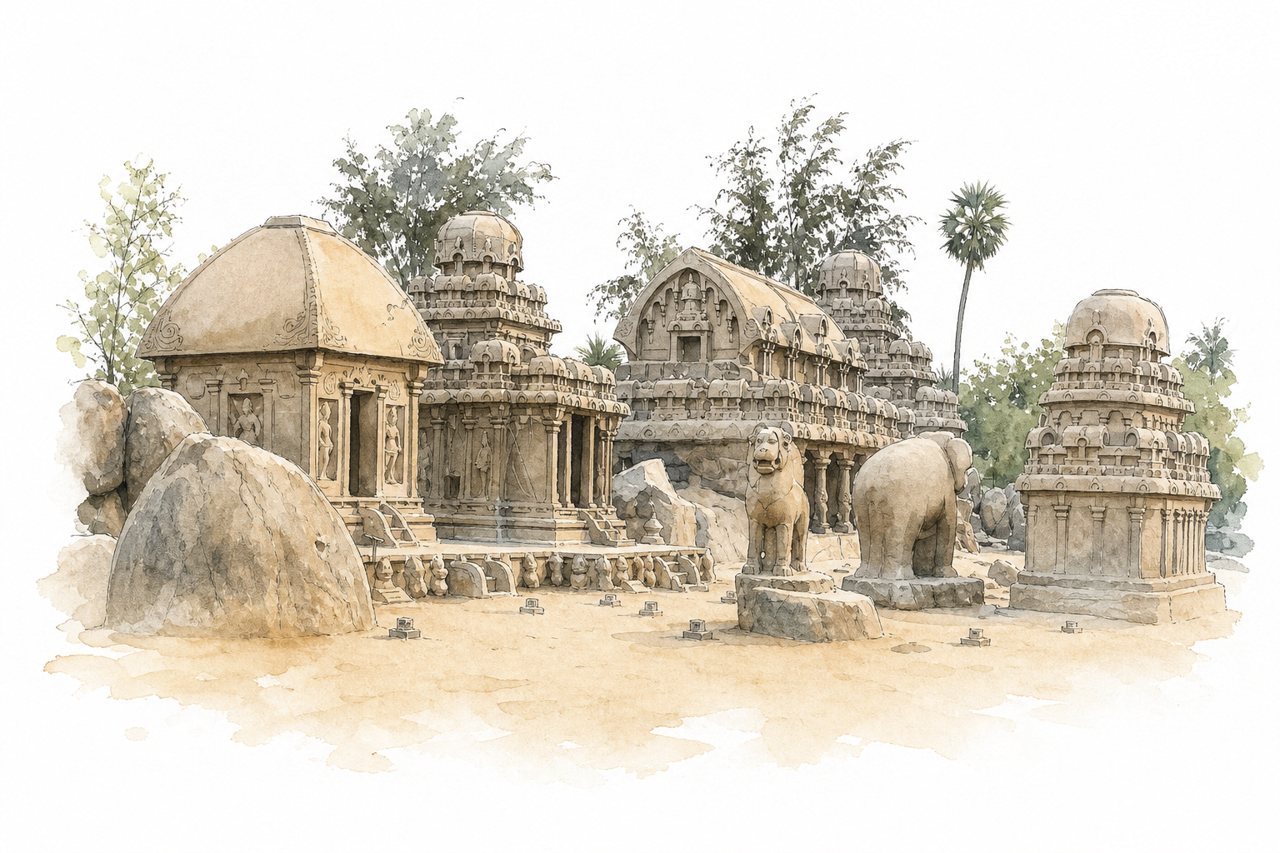
A group of rock-cut monuments in Mahabalipuram, a Pallava-period site on the Tamil Nadu coast near Chennai. Visitors walk among five monolithic structures and a life-sized stone elephant, carved from single granite blocks.
Highlights
- Five monolithic rathas
- Draupadi Ratha
- Stone elephant
Good to know
- Combined ticket covers nearby monuments
- Entry is ₹40 for Indian adults
- Little shade, so visit early or late
-
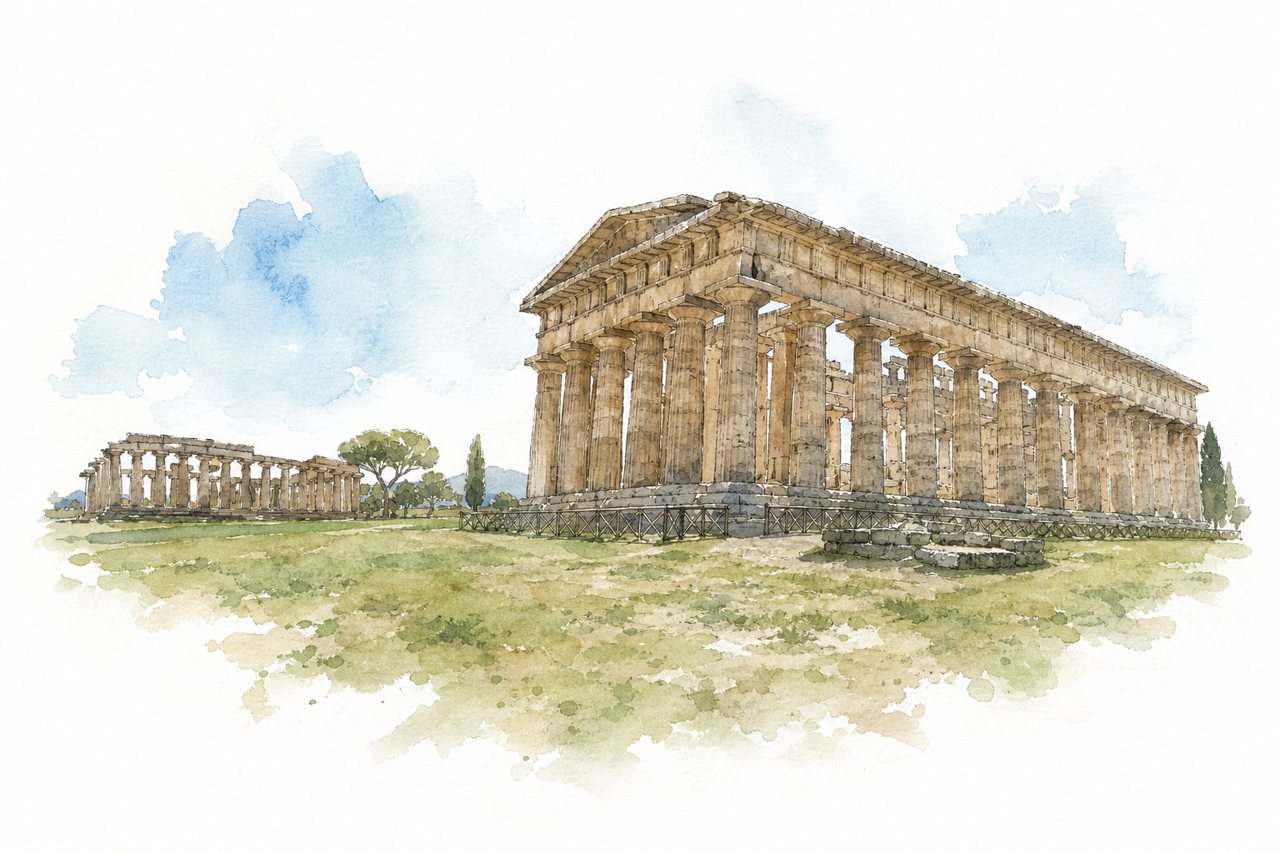
A Greek city site in the Cilento region of southern Italy, with ruins set among green fields. Visitors walk the open-air park past the temples, forum, amphitheatre and town walls.
Highlights
- Three Doric temples
- Temple of Hera
- Tomb of the Diver
Good to know
- Entrance ticket costs €15 per person
- Allow two to four hours, plus rest
- Little shade, so bring water and a hat
-
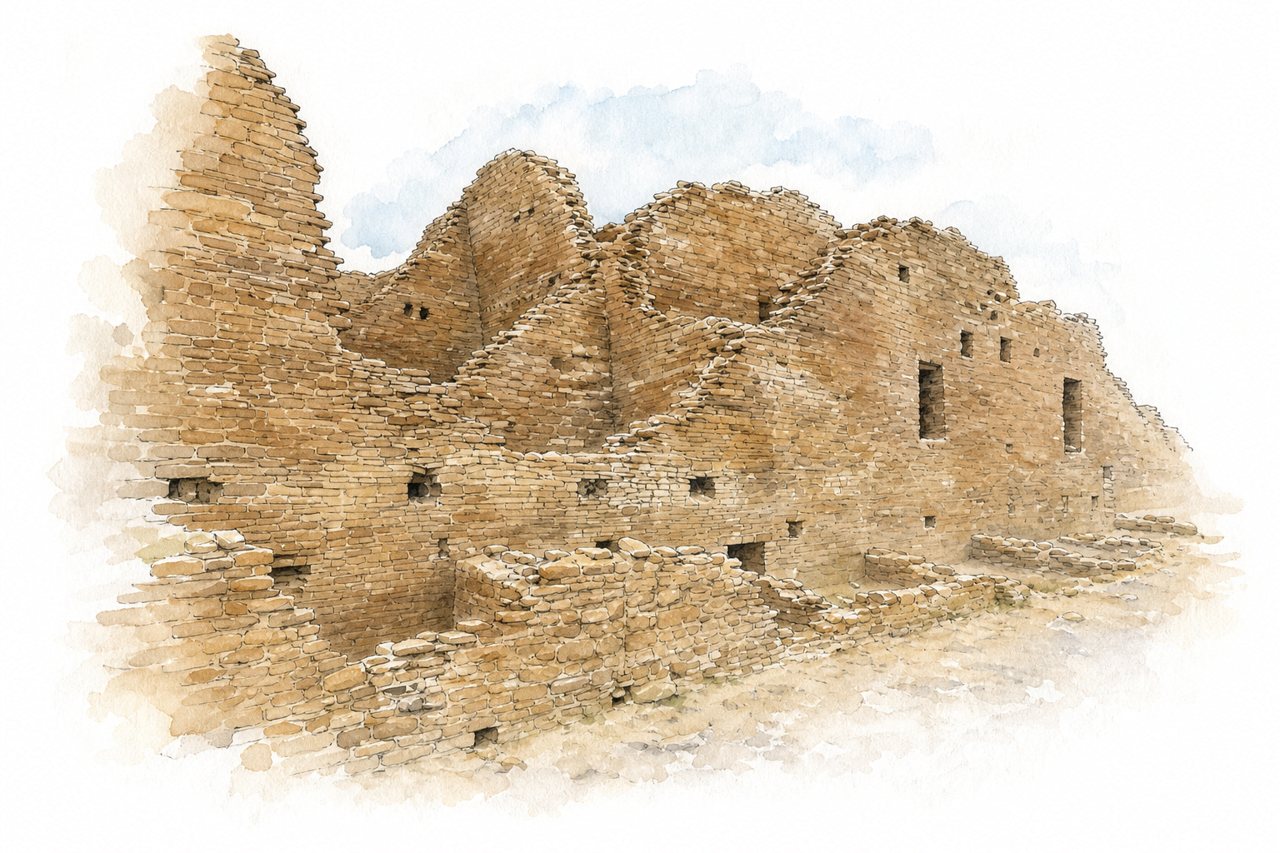
An ancestral Puebloan site in a remote desert canyon in New Mexico. Visitors walk among preserved great houses such as Pueblo Bonito and Chetro Ketl, plus kivas and petroglyphs on a 9 mile loop.
Highlights
- Pueblo Bonito
- Chetro Ketl great house
- Pueblo Alto overlook
Good to know
- Unpaved access road, about 21 miles, rough when wet
- Buy site guides at visitor center
- Bring water, sunscreen and full fuel tank
-
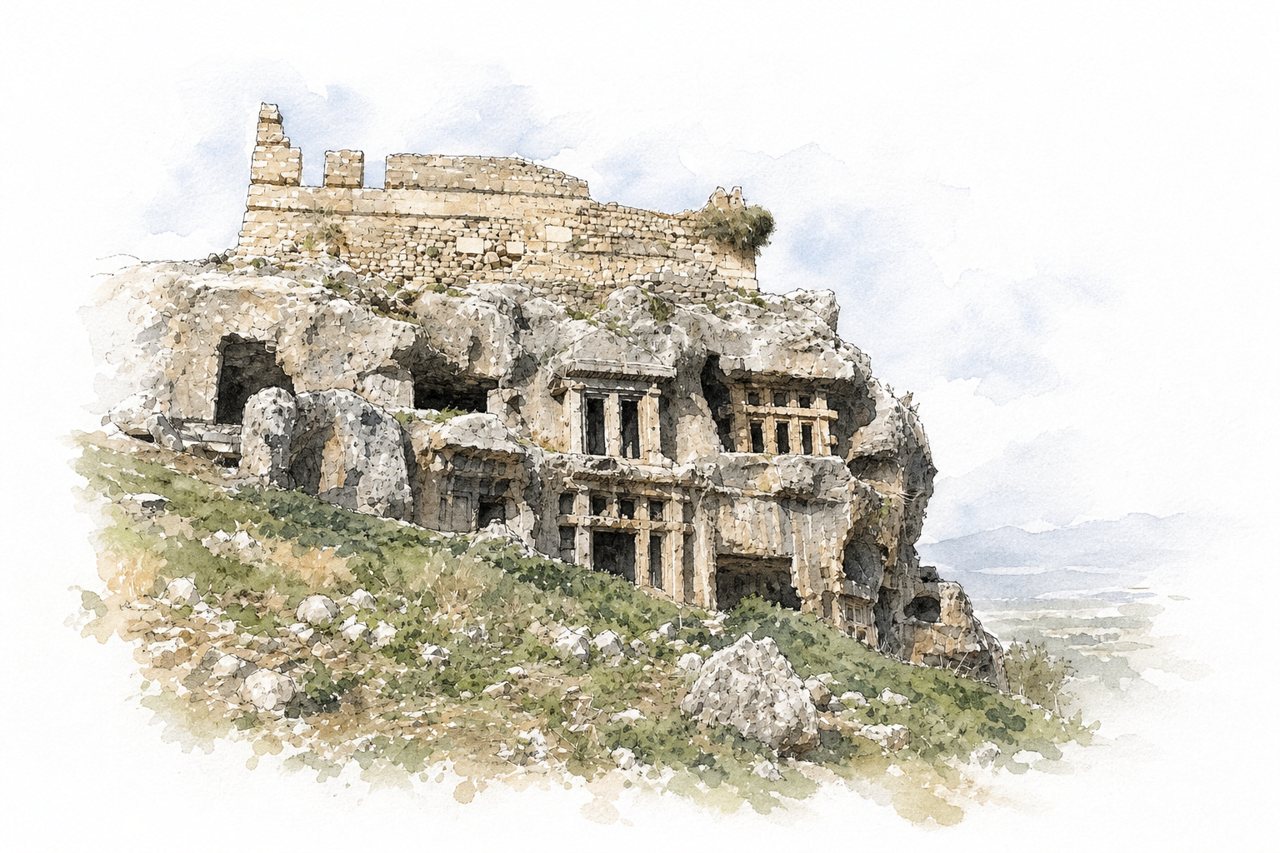
A Lycian hilltop city in Yaka, Seydikemer, overlooking the Eşen Plain. Visitors climb past carved rock tombs to the acropolis and walk among Roman theater, stadium and bath ruins.
Highlights
- Lycian rock tombs
- Acropolis and fortress
- Roman theater and stadium
Good to know
- Museum Card accepted at the entrance
- Avoid midday, little shade and intense heat
- Wear sturdy shoes, trails are uneven
-
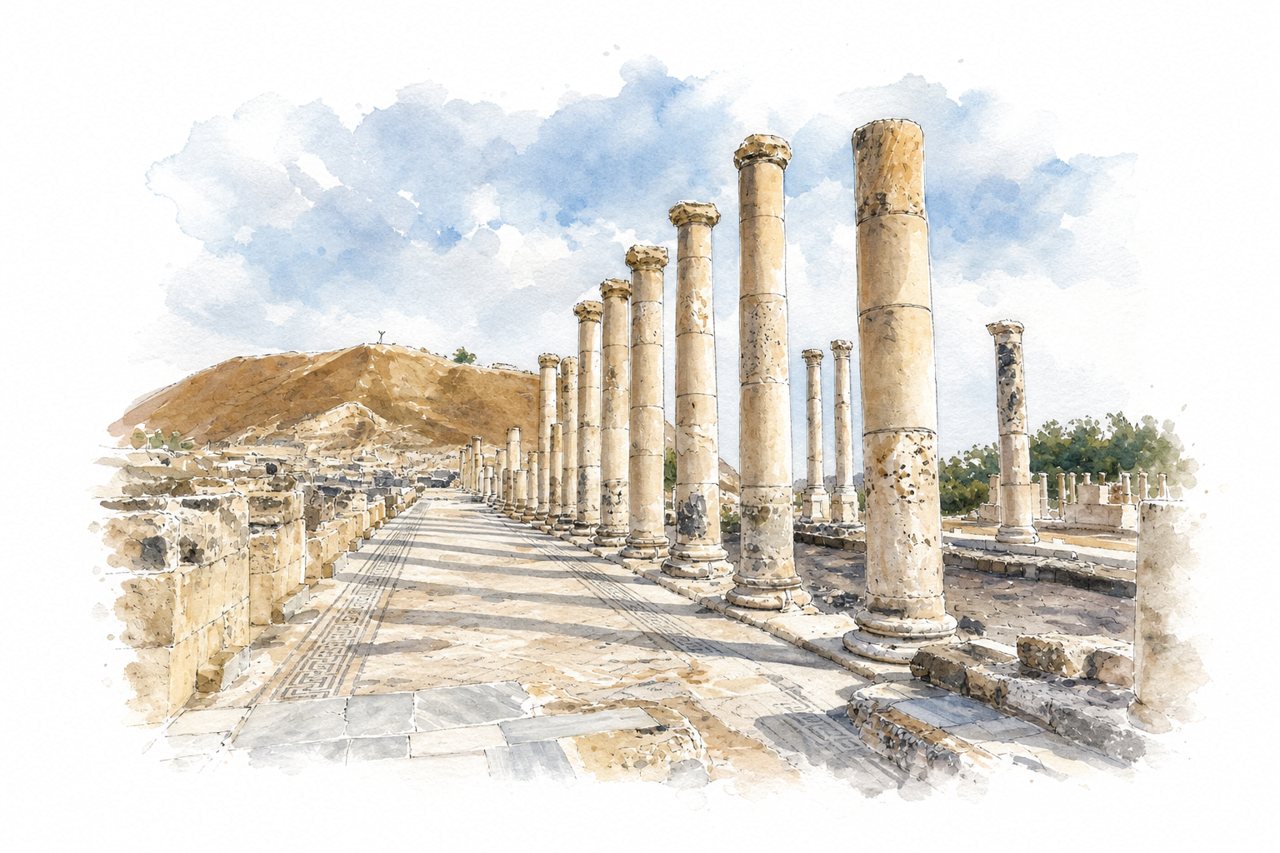
Ancient Roman city of Scythopolis in northern Israel's Jordan Valley, with a Canaanite tel above it. Visitors walk colonnaded streets, a large theatre, bathhouses and mosaic floors, and can climb the hill for views.
Highlights
- Roman theatre
- Colonnaded cardo street
- Tel hilltop viewpoint
Good to know
- Very hot in summer, bring water and a hat
- Tickets bought on site, about 31 shekels per adult
- Plan two to three hours to walk the site
-
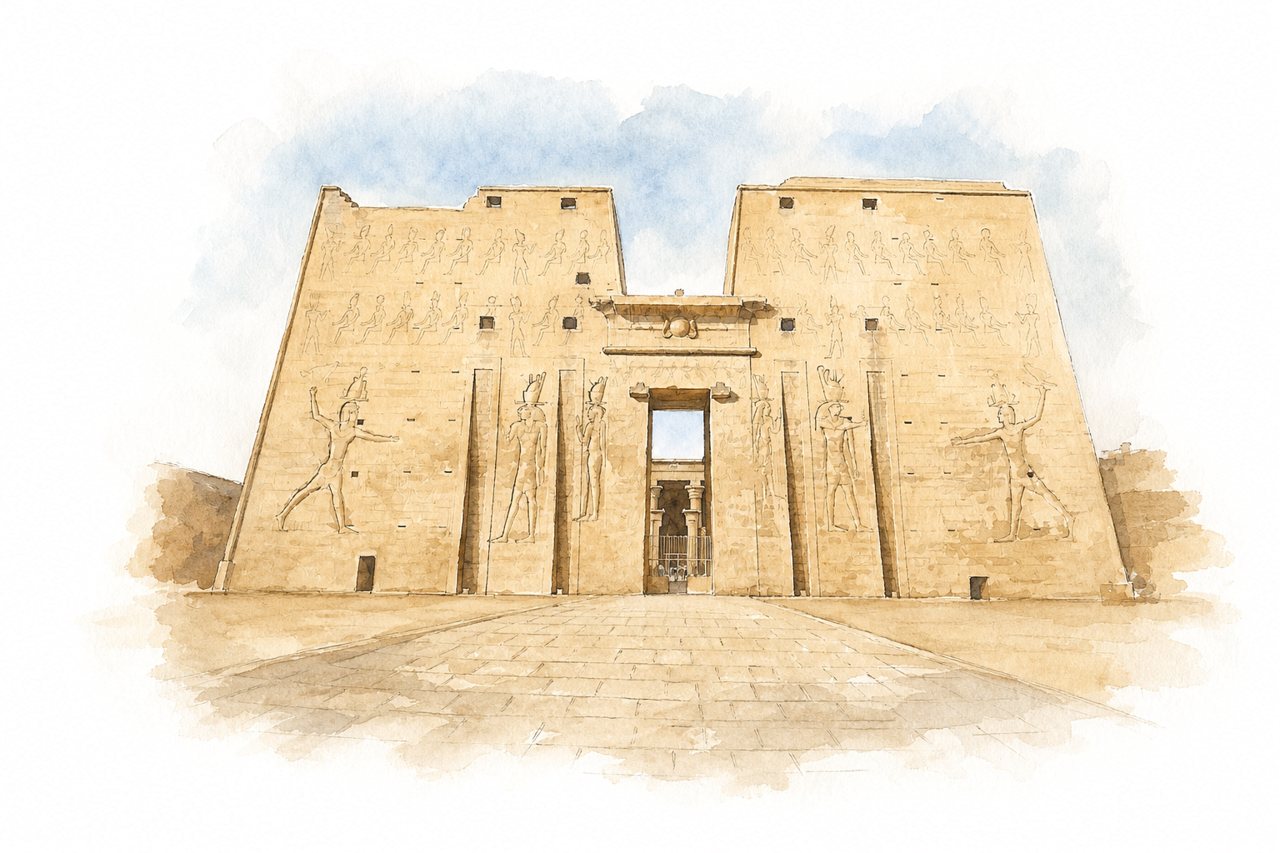
A Ptolemaic temple dedicated to Horus on the west bank of the Nile in Edfu, Upper Egypt. Visitors pass through the massive entrance pylon into courtyards and roofed halls covered in carved reliefs and hieroglyphs.
Highlights
- Entrance pylon
- Hypostyle hall
- Falcon statues of Horus
Good to know
- Opens at 5:00, queues form early
- Horse carriages from the cruise ship or tour stop outside
- Restrooms and a cafe on site
-
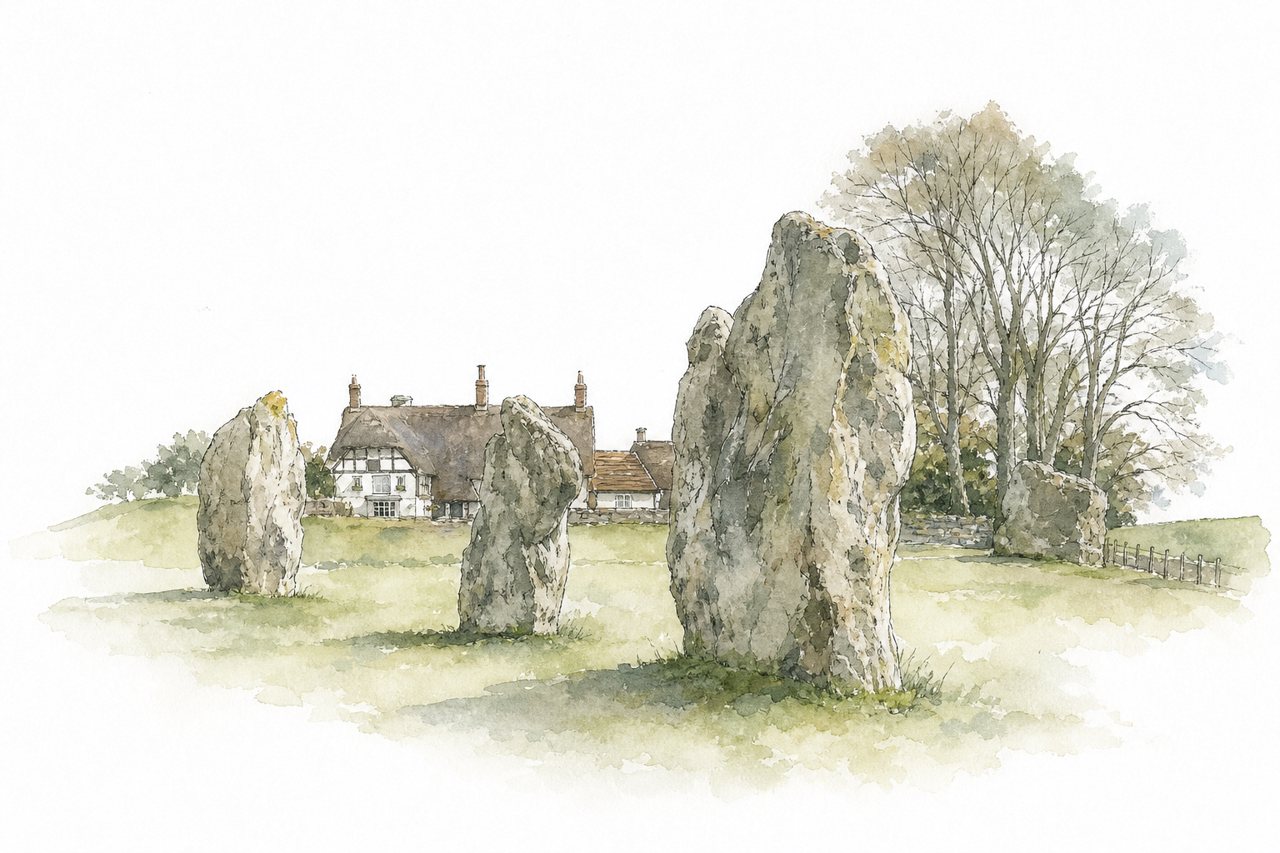
A Neolithic stone circle and henge in Wiltshire, England, with a village built inside its banks and ditch. Visitors walk among the large standing stones, earthworks, and the surrounding countryside, with sheep grazing around the monument.
Highlights
- Great stone circle
- Avebury Manor and gardens
- Keiller museum
Good to know
- Free entry to the stones
- Parking charge for non-members, about £8 per day
- Cafe and toilets at reception
-
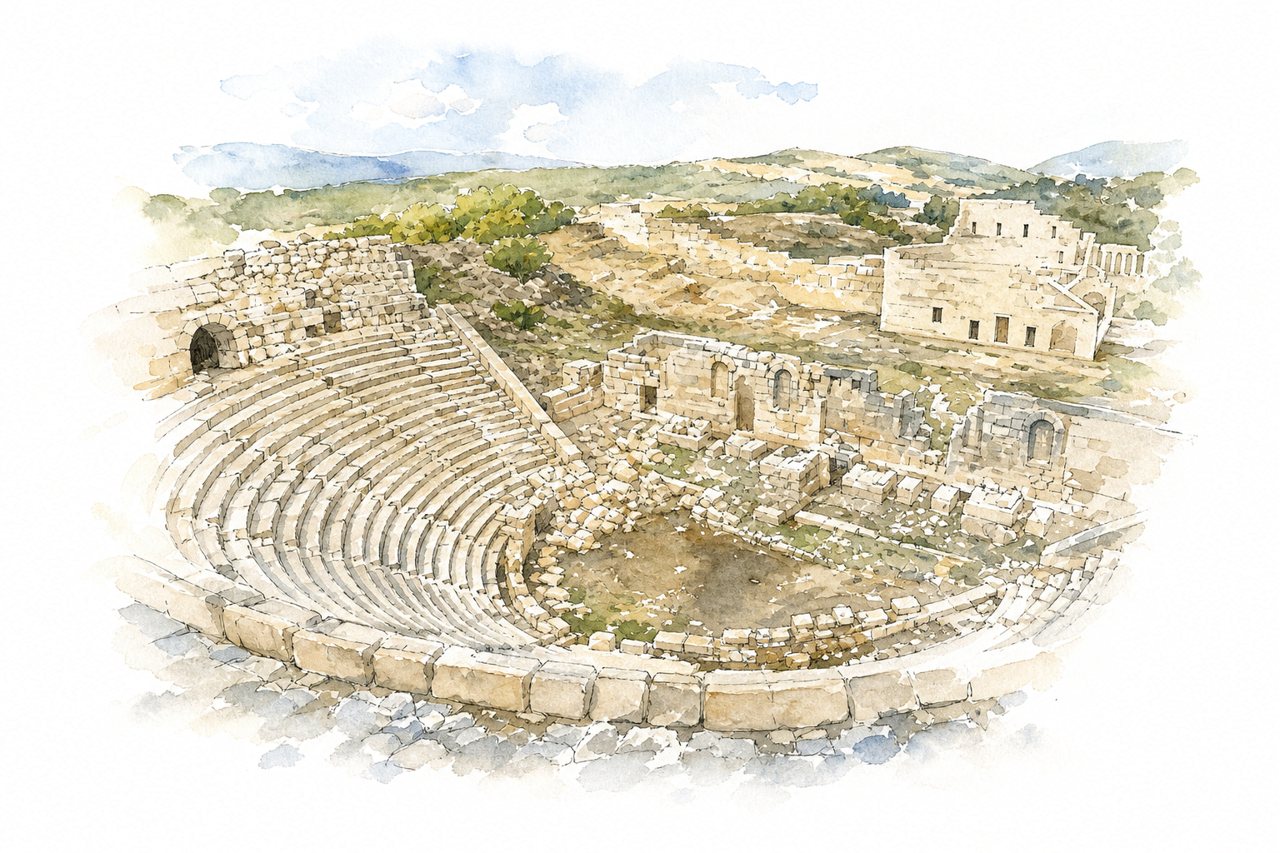
An excavated ancient city on the Lycian coast of Kaş district in Antalya, near a long sandy beach. Visitors walk through a large site of ruins including a theatre, the Lycian League assembly building, colonnaded streets and the harbour street.
Highlights
- Lycian League assembly building
- Ancient theatre
- Harbour street
Good to know
- Museum card or ticket required for entry
- Walking is long; bring water and a hat
- Night museum visits possible after 7 PM for extra fee
-
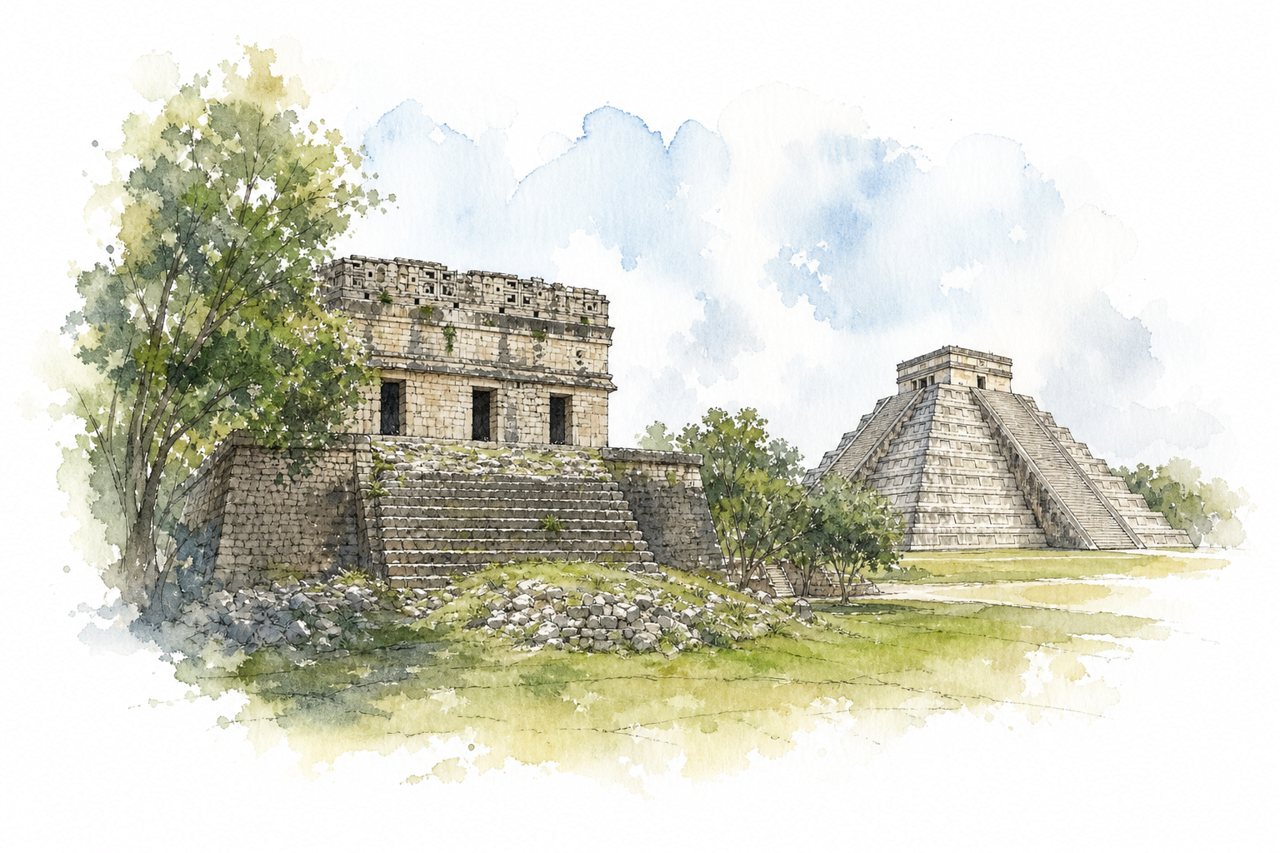
A Mayan city on the Yucatán Peninsula in Mexico, with ruins set among trees. Visitors walk along paths past the stepped Temple of Kukulcán pyramid, the ball court and other ruins.
Highlights
- Temple of Kukulcán pyramid
- Great ball court
- Temple of a Thousand Columns
Good to know
- Arrive early to avoid crowds and heat
- Bring water, hat or umbrella, sunscreen
- Hiring a guide explains the history
-
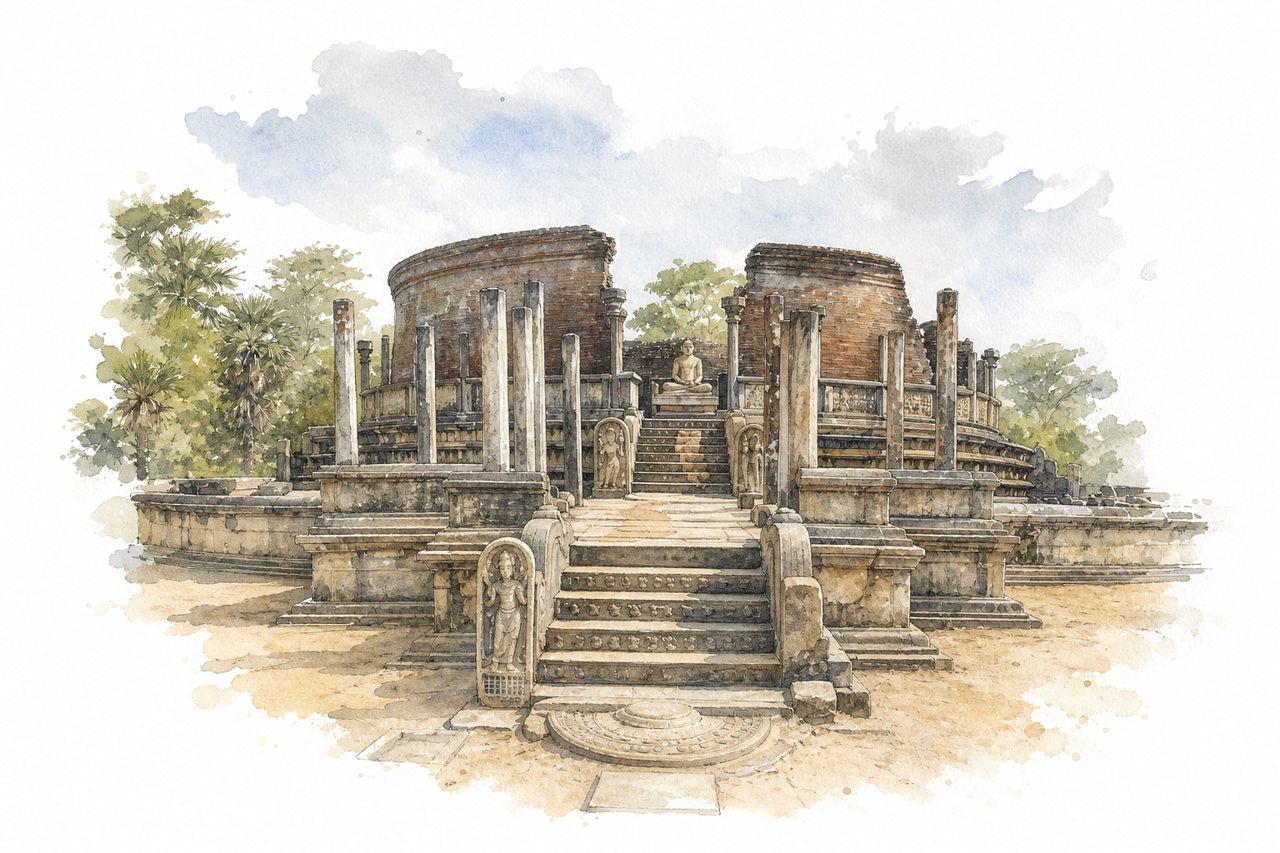
A 12th-century rock temple in the ancient city of Polonnaruwa, North Central Province, Sri Lanka. Visitors walk among four Buddha statues carved from a single granite rock face.
Highlights
- Reclining Buddha statue
- Standing Buddha statue
- Seated Buddha statues
Good to know
- Foreigners buy tickets at the museum
- Entry fee about $30 per person
- Remove shoes; covered knees and shoulders required
-
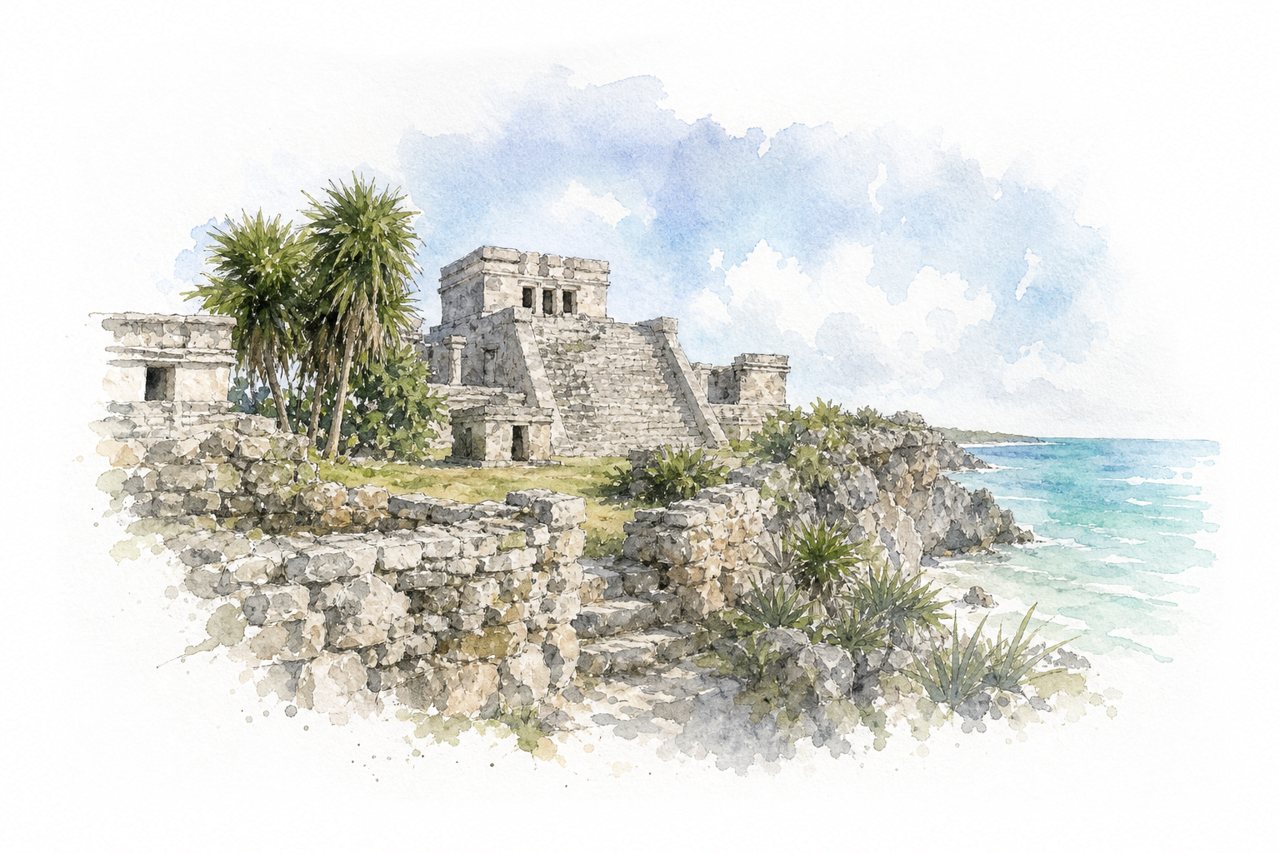
A Maya walled city on a limestone cliff above the Caribbean Sea on the Yucatán coast. Visitors walk a short path among temples and watch the sea below.
Highlights
- El Castillo temple
- Cliff-top temples
- Temple of the Frescoes
Good to know
- Foreigners pay 265 MXN per person
- Plastic bottles and vapes not allowed
- Arrive early, little shade, very hot
-
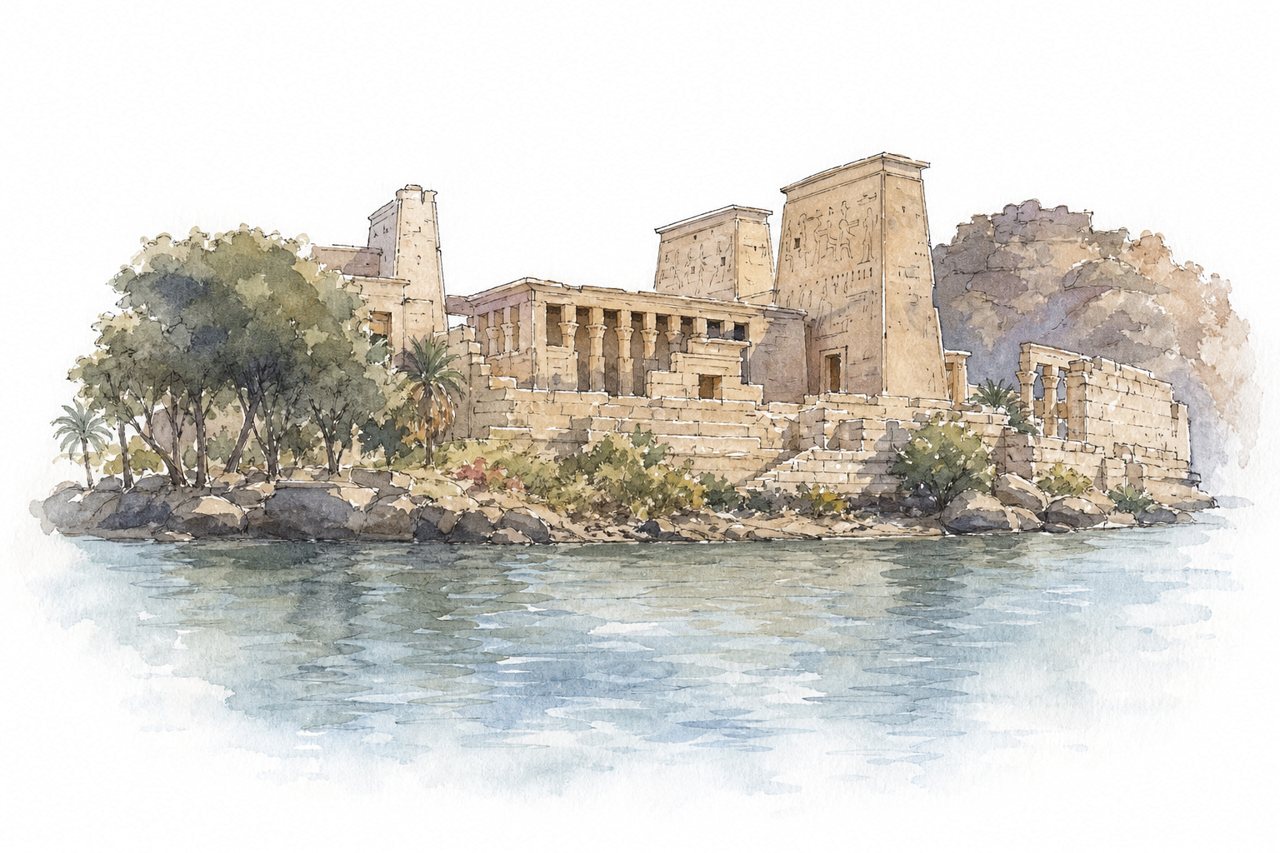
Ptolemaic temple complex on Agilkia Island in the Nile near Aswan, rebuilt there after the dam works. Visitors walk among columns, gateways and reliefs of the Temple of Isis, with the Hathor temple and Trajan's Kiosk nearby.
Highlights
- Temple of Isis
- Carved reliefs and inscriptions
- Trajan's Kiosk
Good to know
- Access by boat only, negotiate the fare
- Entrance ticket bought before boarding
- Allow about two hours
-
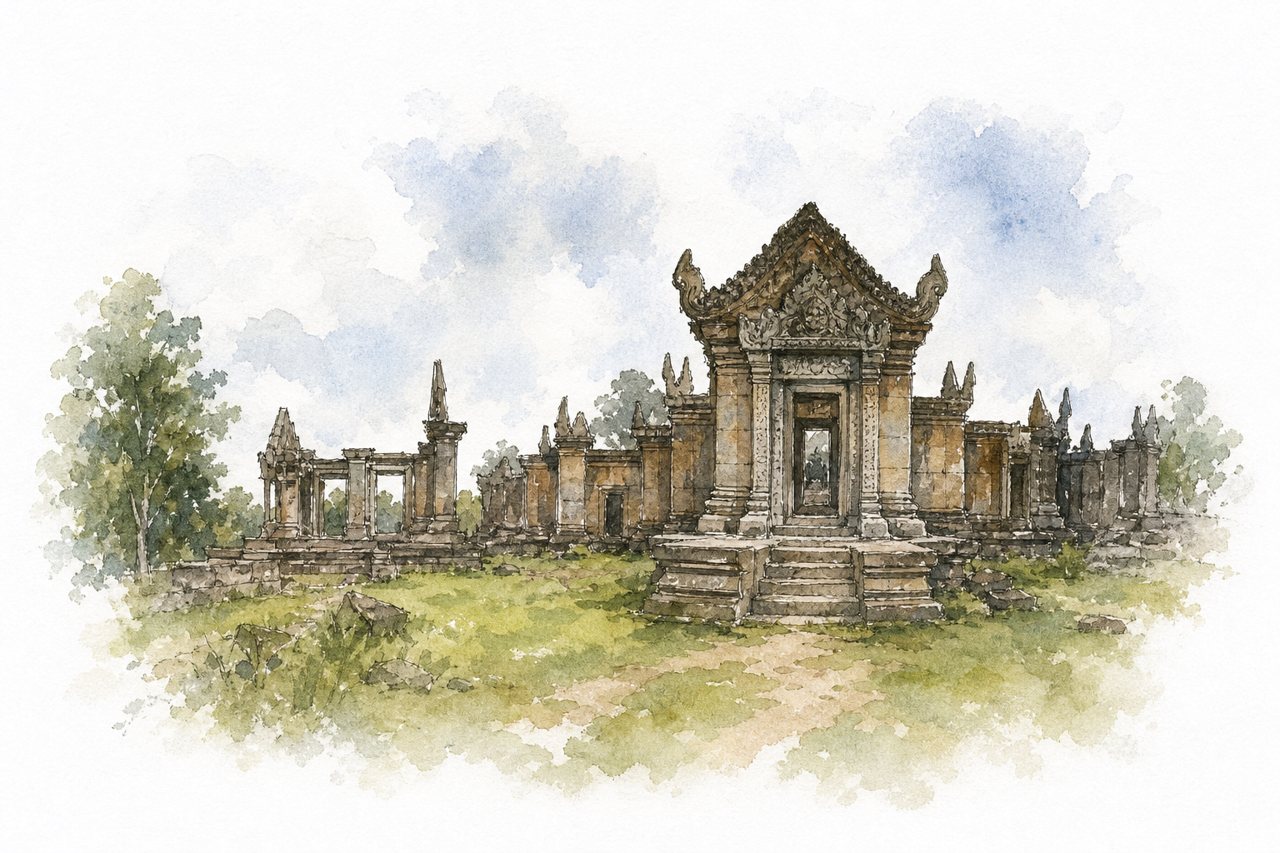
A Hindu temple complex on a cliff in the Dangrek Mountains of northern Cambodia, overlooking the plain below. Visitors walk an 800-metre axis of sanctuaries linked by pavements and staircases, with views south over the plain.
Highlights
- Cliff edge viewpoint
- Long north-south axis
- Stone sanctuaries and staircases
Good to know
- Ticket office at the foot of the mountain
- Pickup truck or scooter up the steep road
- Bring water, walking takes time
-
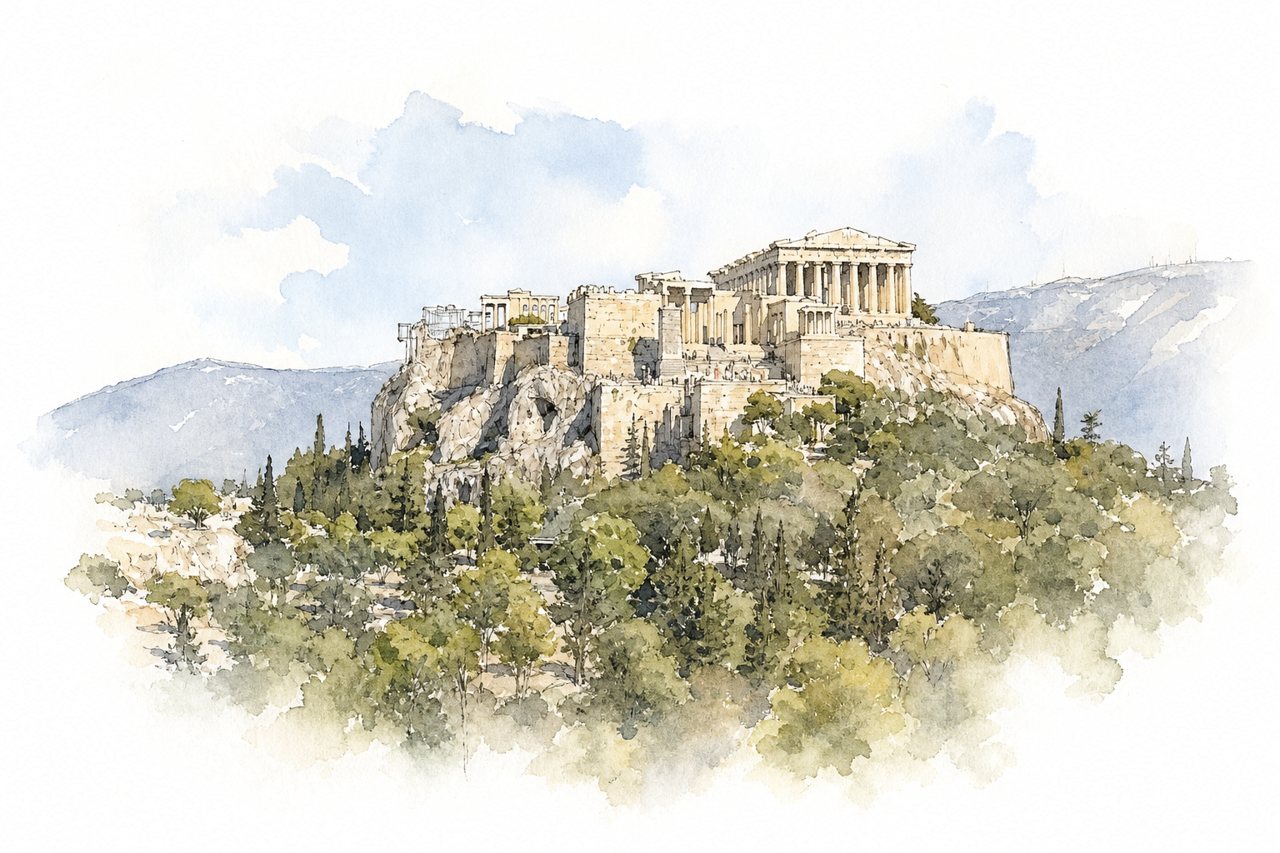
A hilltop citadel of ancient ruins above central Athens, Greece. Visitors climb worn marble paths and steps past the Parthenon and temples to viewpoints over the city.
Highlights
- Parthenon
- Erechtheion
- Views over Athens
Good to know
- Book tickets online in advance with a time slot
- Entry costs 30 euros, with reduced rates for some visitors
- No shade on top, bring water and a hat
-
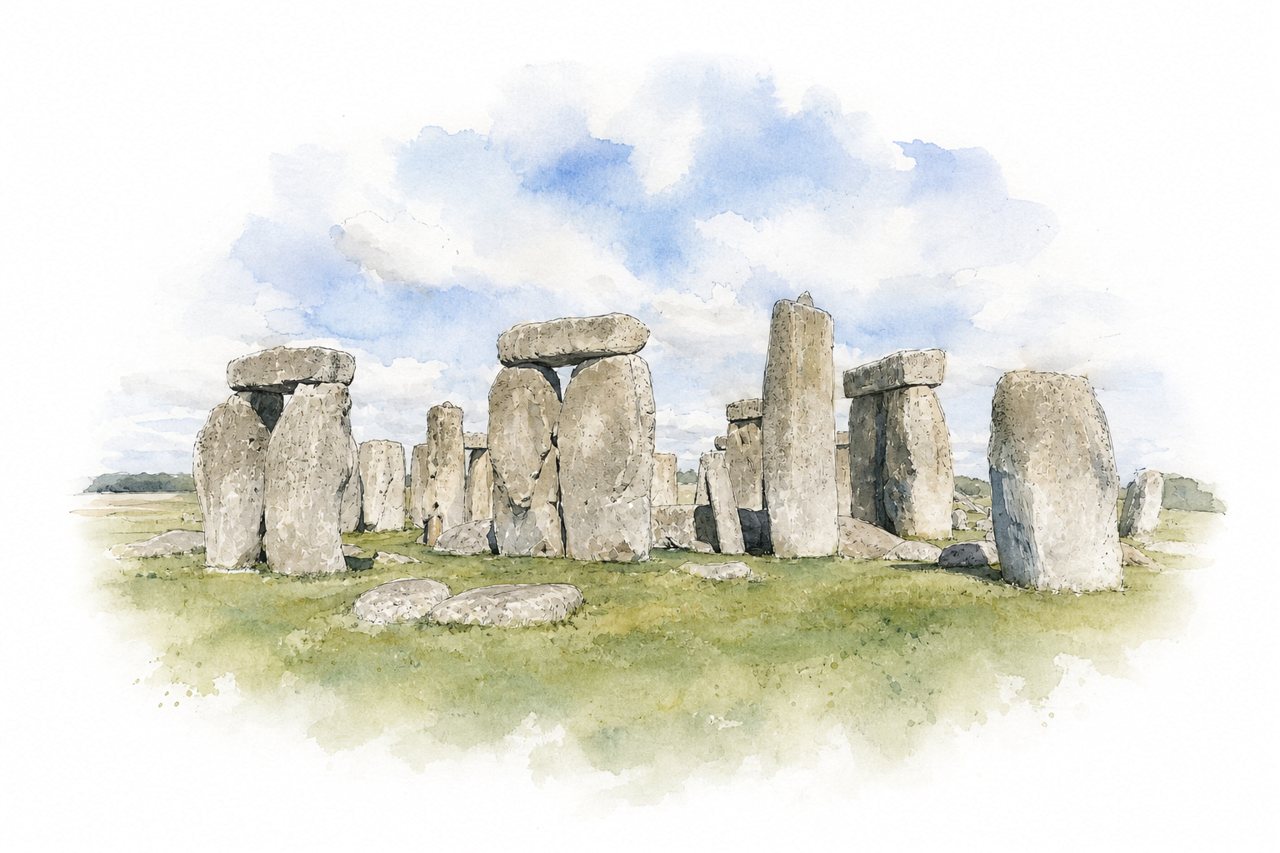
A prehistoric circle of massive sarsen stones stands in an open field on Salisbury Plain near Amesbury. Visitors follow a path around the stones, and guided tours allow walking inside the circle.
Highlights
- Sarsen stone circle
- Visitor centre exhibition
- Barrows and earthworks
Good to know
- Book tickets online in advance
- Shuttle bus from visitor centre, or walk
- Parking paid via RingGo app
-
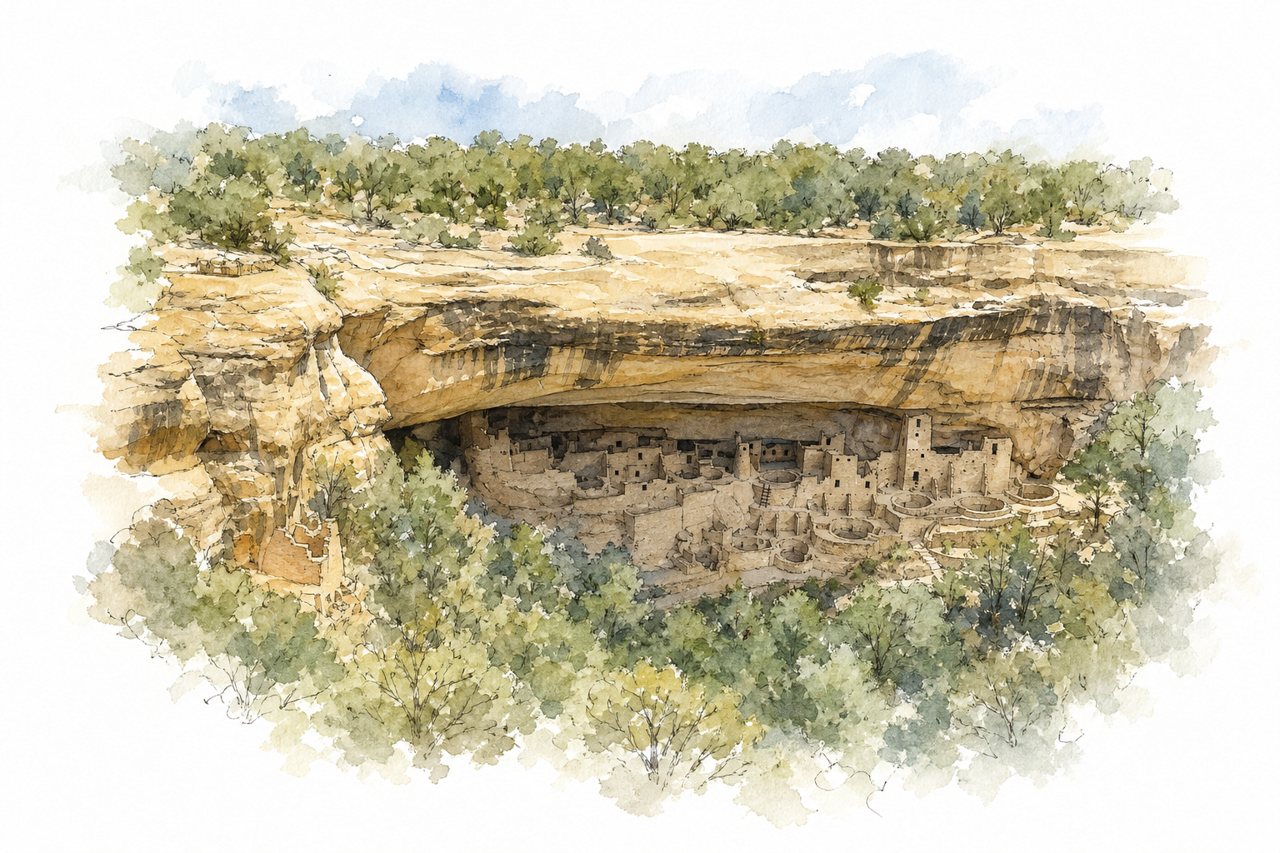
Ancestral Puebloan cliff dwellings in southwest Colorado, a UNESCO World Heritage Site, set on a mesa above canyons. Visitors take ranger-led tours through cliff houses such as Cliff Palace and Balcony House, climbing ladders and walking the mesa-top loop.
Highlights
- Cliff Palace
- Balcony House
- Spruce Tree House
Good to know
- Tours book up fast on recreation.gov
- Bring water, hat and sunscreen, as altitude causes thirst
- Balcony House has ladders and a narrow crawlspace
-
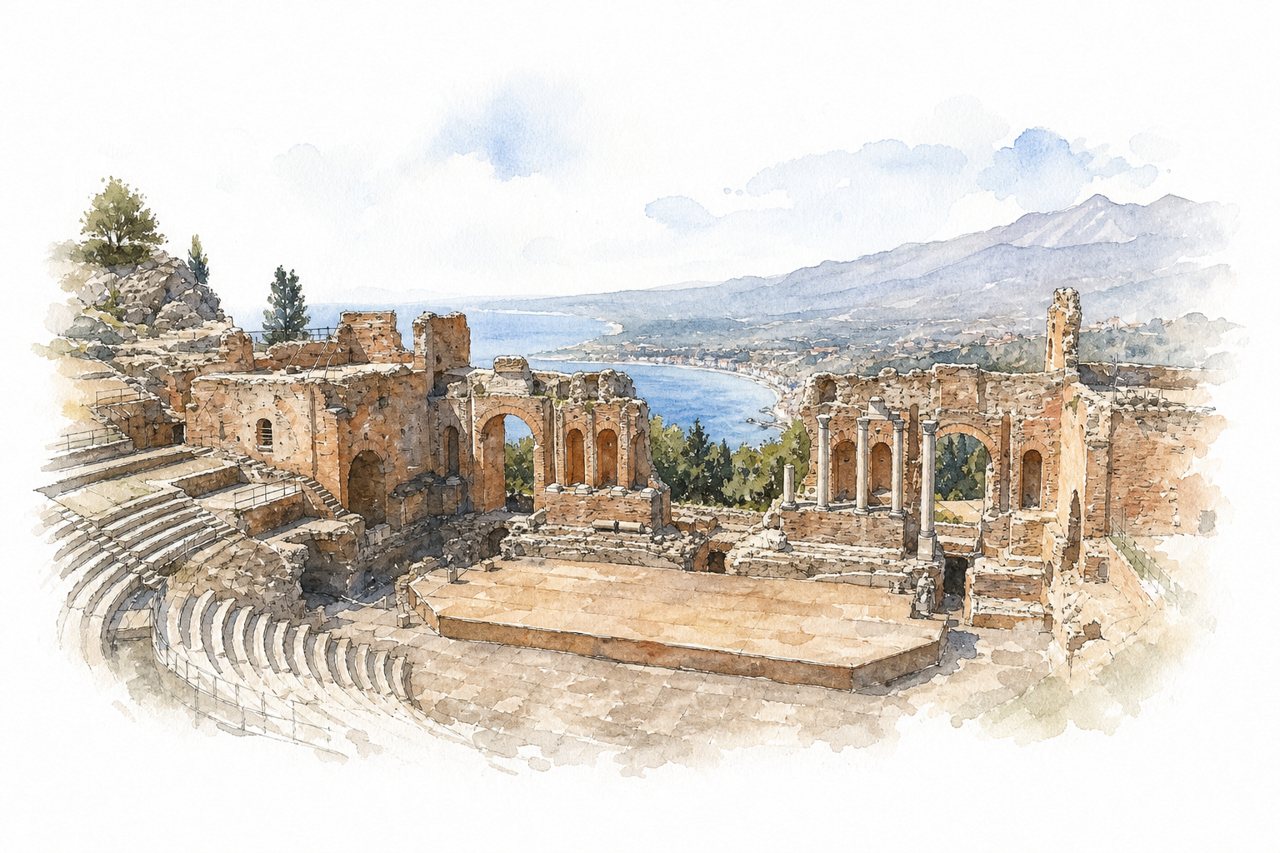
A Greek theatre rebuilt by the Romans, carved into the slopes of Monte Tauro above the town. Visitors walk up the stone tiers and among the ruins, with views of the Ionian Sea and Mount Etna.
Highlights
- Stone seating tiers
- Scaenae frons stage wall
- Views of Mount Etna
Good to know
- Tickets cost 14 euros, book online
- Ticket line can be long at opening
- Little shade, many steps to climb
-
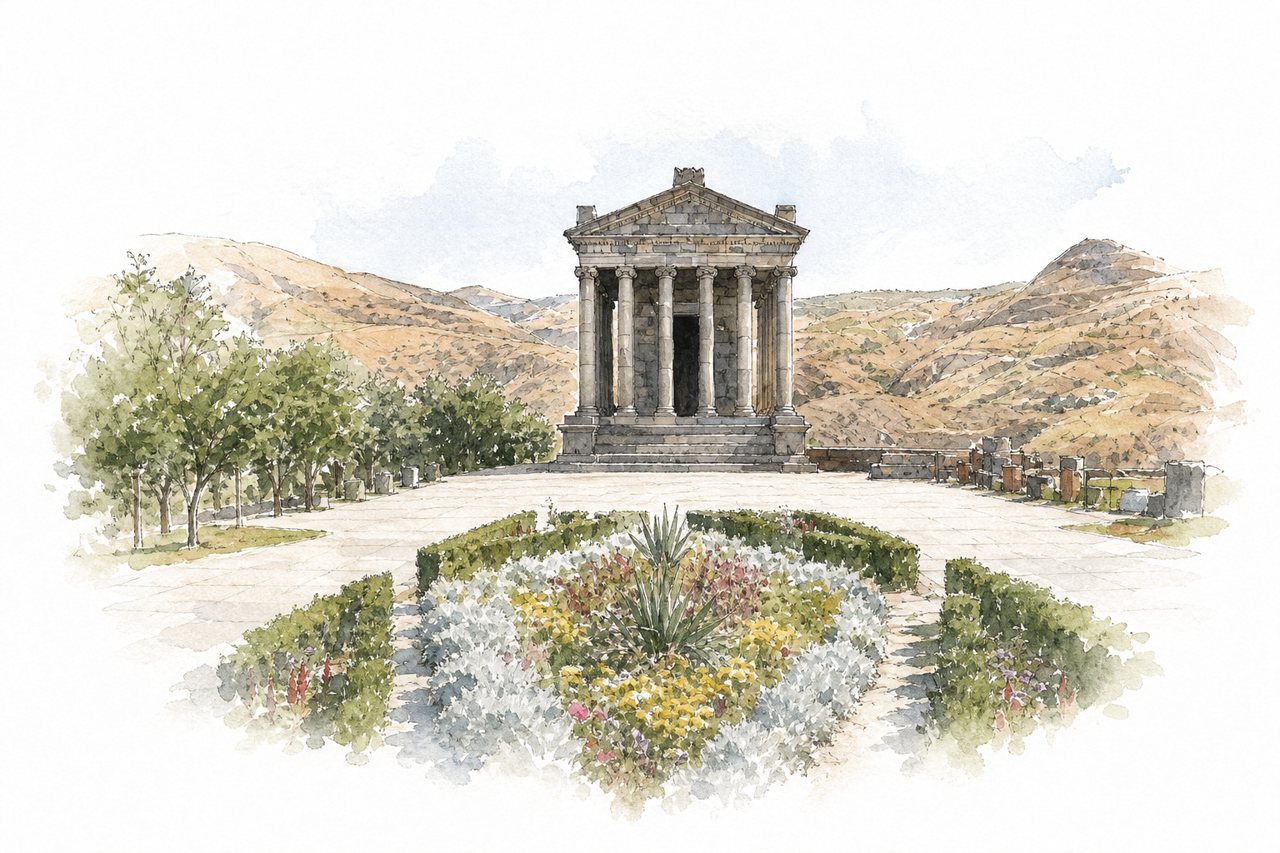
A Greco-Roman colonnaded temple on a basalt cliff above the Azat River gorge in Armenia. Visitors walk around the temple grounds and the adjacent Roman bathhouse, with mountain and gorge views.
Highlights
- Ionic colonnaded temple
- Azat River gorge views
- Roman bathhouse mosaic
Good to know
- Entry 1,500 drams per person, card accepted
- Parking 200 to 300 drams
- Bus 266 from Gai Avenue, 30-35 minutes
-
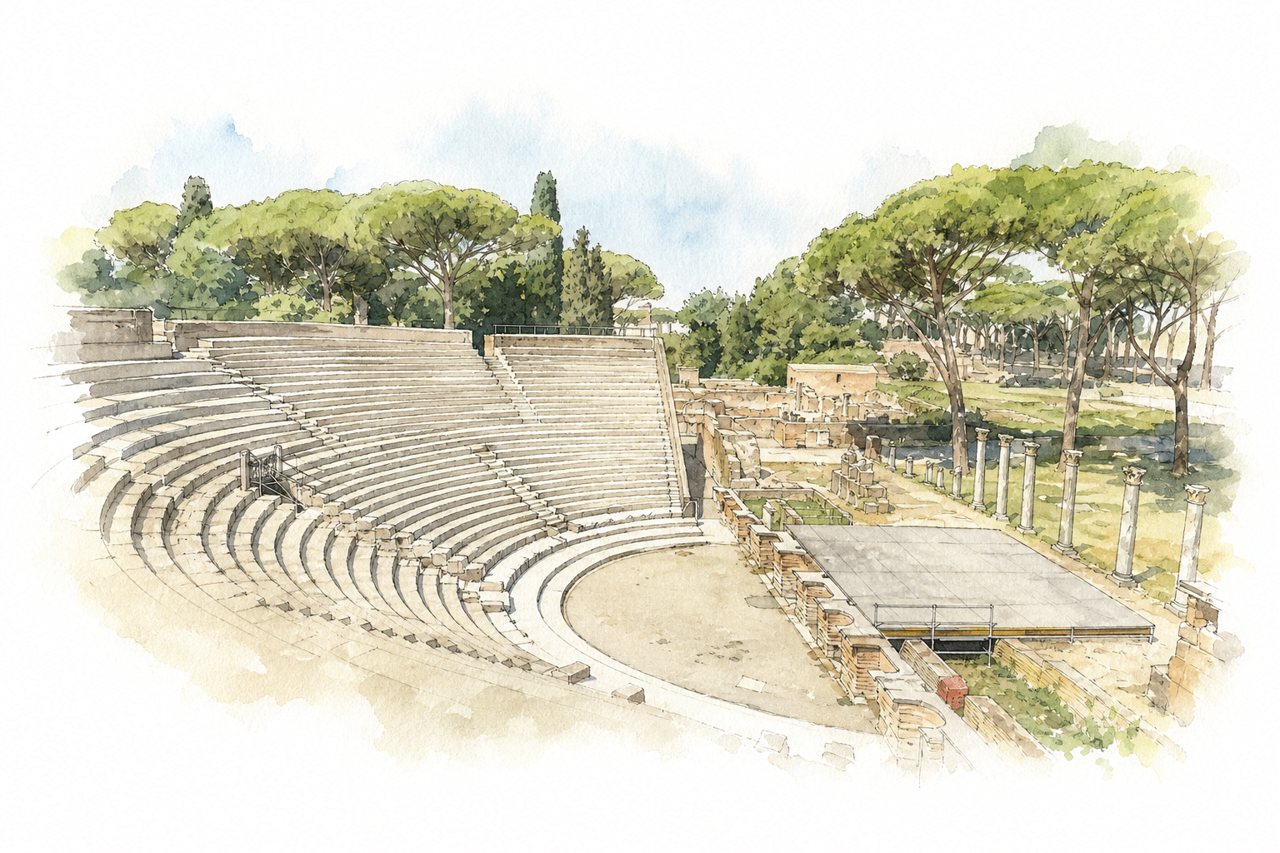
An excavated Roman port city at the mouth of the Tiber, reached from Rome by train. Visitors walk the paved Decumanus Maximus past baths, houses, shops, warehouses and a theatre, with mosaics and information boards along the way.
Highlights
- Roman theatre
- Decumanus Maximus
- Floor mosaics of guilds
Good to know
- Tickets can be bought on site or in advance
- Plan at least three to four hours
- Bring water and a hat, shade is limited
-
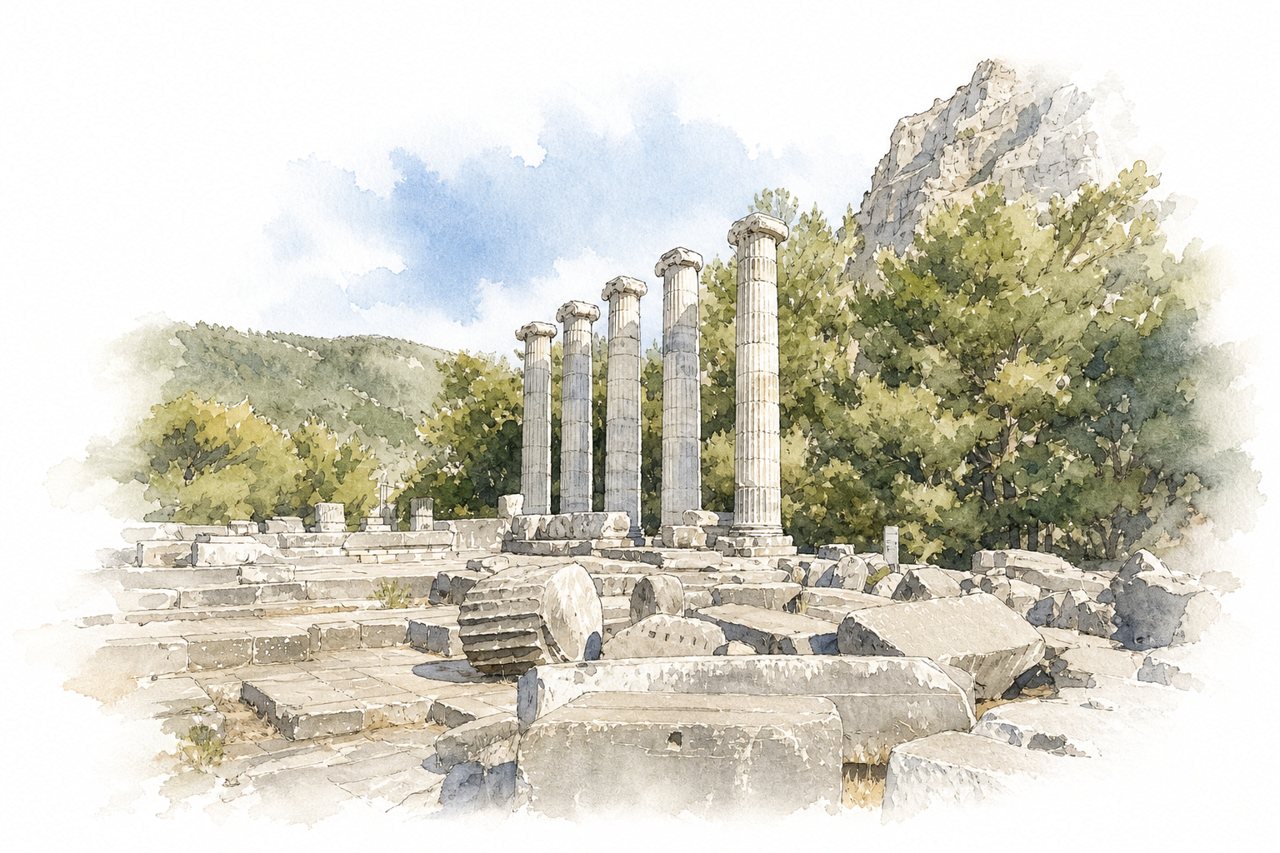
A Greek Ionian city ruin on the southern slope of Mount Mykale, near Güllübahçe in Söke. Visitors climb past the theatre and Temple of Athena and walk the grid-planned streets, with views over the Söke plain.
Highlights
- Temple of Athena
- Ancient theatre
- Grid-planned main street
Good to know
- Museum pass accepted at the entrance
- Steep, rocky paths; wear comfortable shoes
- Go in morning or late afternoon in summer
-
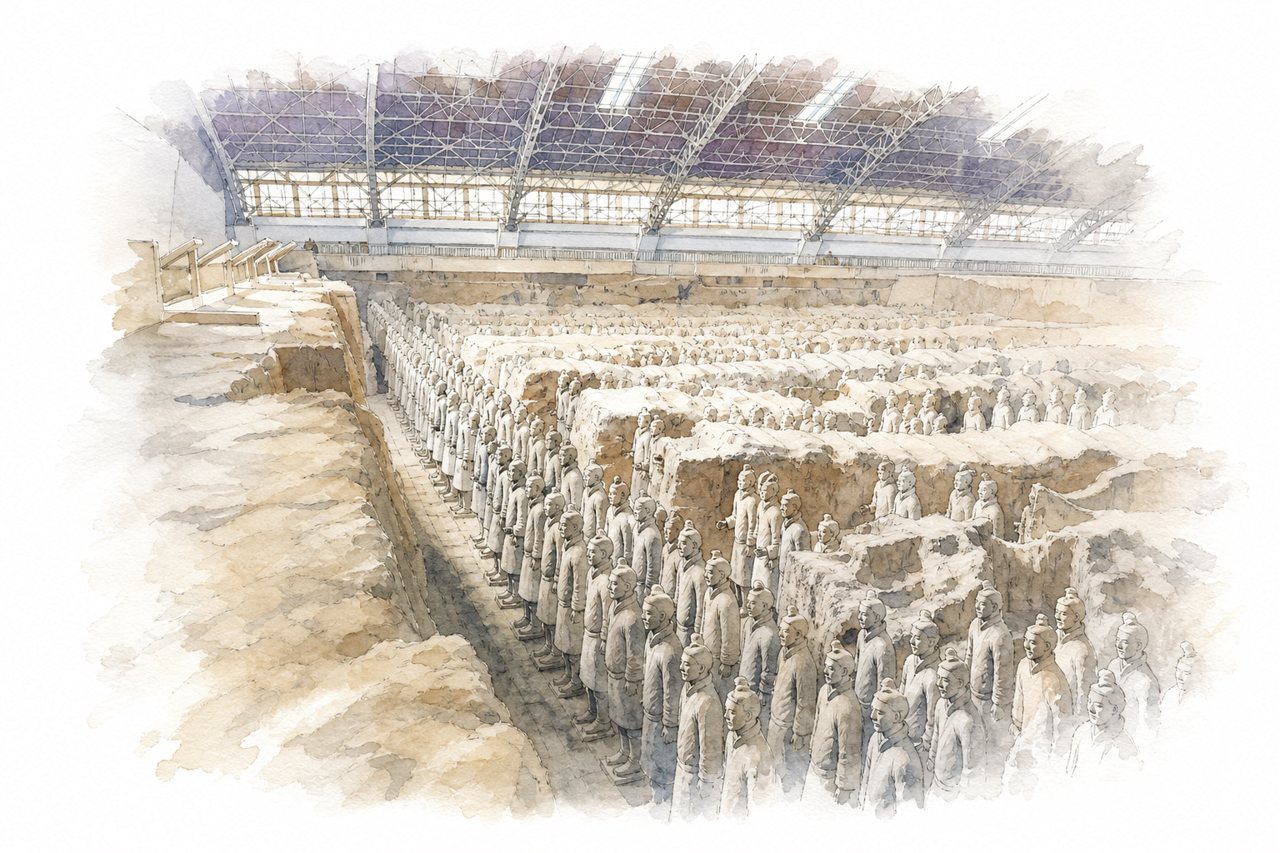
The Terracotta Army lies near Xi'an in Lintong District, where clay soldiers, horses and chariots are displayed in covered pits. Visitors walk along raised corridors above the excavations, with Pit 1 the most seen.
Highlights
- Pit 1 main army
- Pit 2 specialised forces
- Pit 3 command post
Good to know
- Passport needed to buy tickets
- Booking ahead and early arrival advised
- Crowds heaviest during holidays and in August
-
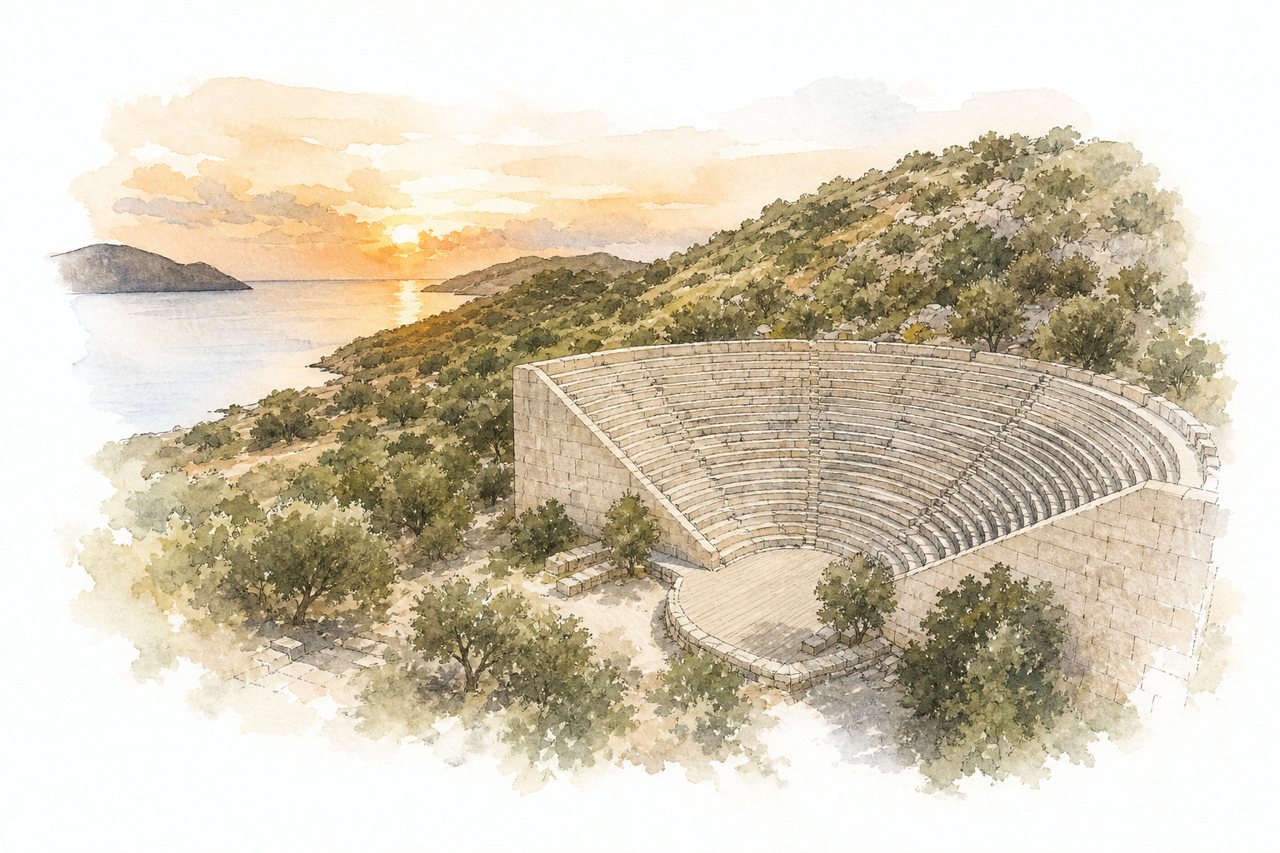
An ancient Hellenistic theatre and city site on the edge of Kaş, Türkiye, a short walk from the town centre. Visitors climb the stone rows of the theatre, which faces the sea, and watch the sunset over the bay.
Highlights
- Ancient theatre seating rows
- Sea-facing stage view
- Sunset viewpoint from upper rows
Good to know
- Entry is free, no tickets required
- Arrive 30 to 60 minutes before sunset
- Parking is hard in evenings; walk from centre
-
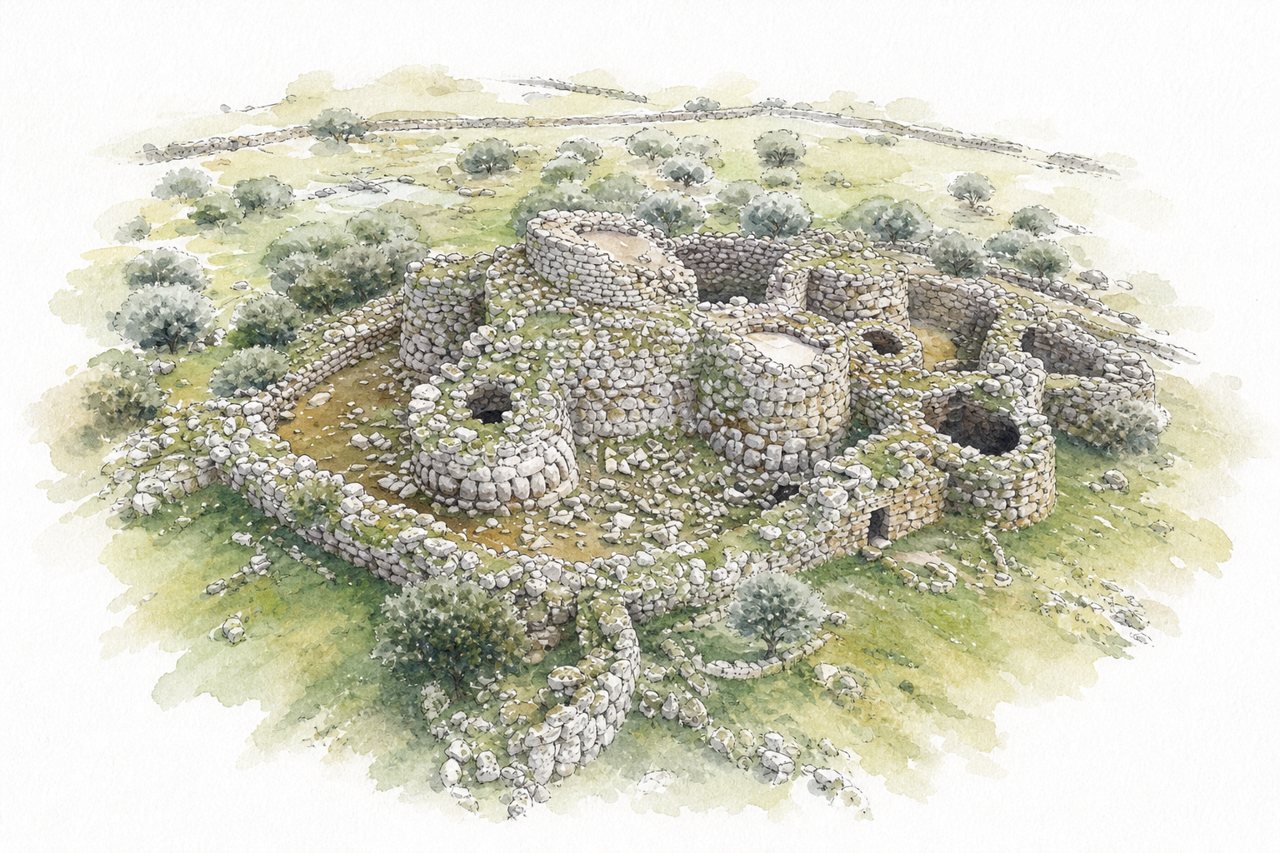
A Nuragic megalithic complex of basalt towers on a plateau in the interior of Sardinia, near Orroli. Visitors walk through the partly reconstructed site and its inner courtyard, with the central tower and surrounding towers in view.
Highlights
- Central tower
- Inner courtyard
- Surrounding lateral towers
Good to know
- Entry costs €5, guided tour €8
- Combined ticket covers two nearby sites
- Café often closed, bring water in summer
-
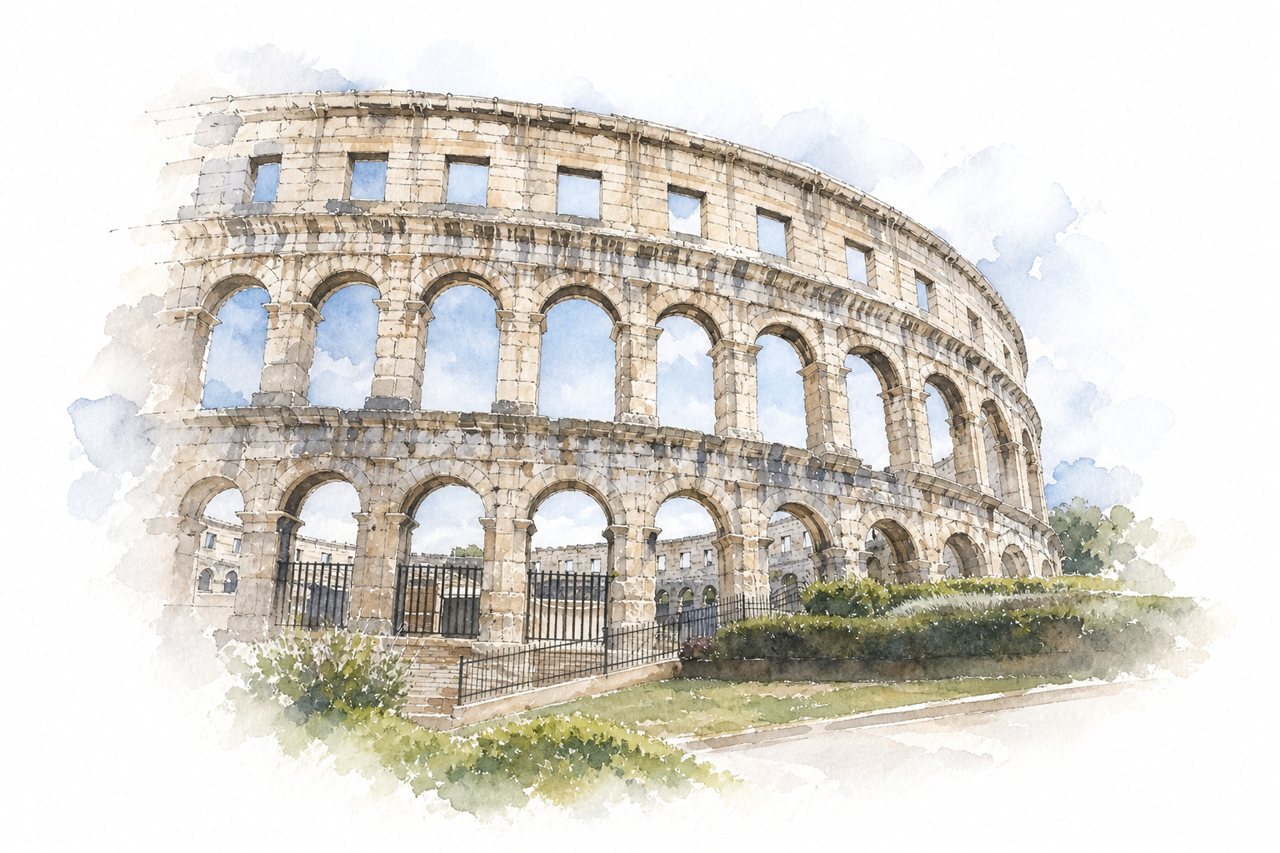
A Roman amphitheatre in the centre of Pula, Croatia, close to the sea, with outer walls of local limestone. Visitors walk around the outside for free, then go inside to the arena, the seating and an underground museum.
Highlights
- Three-storey limestone outer walls
- Underground amphora museum
- Arena floor and seating
Good to know
- Admission €10 adults, €5 children and students
- Advance tickets help at busier times
- Outside walk takes about 10 minutes
-
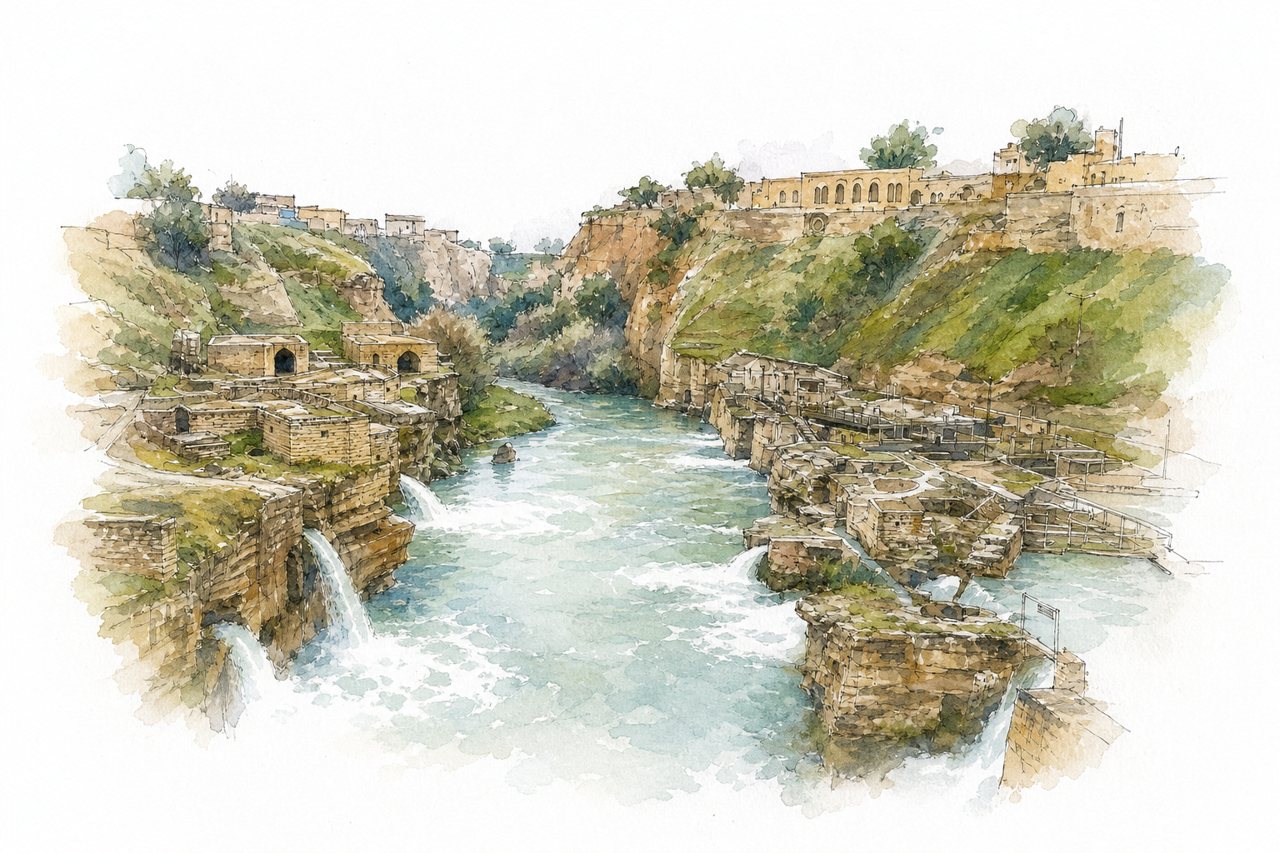
A complex of 13 water structures in the city of Shushtar, Khuzestan Province, Iran. Visitors walk among bridges, dams, watermills, waterfalls and water tunnels fed by the Karun River.
Highlights
- Shushtar watermills
- Karun River waterfalls
- Water tunnels
Good to know
- Entry about 30,000 tomans per person
- Boat rides on the Karun available
- Many stairs, hard for elderly visitors